
My grandmother had this needlepoint hanging in her hallway for as long as I can remember. Faded blue thread, slightly crooked frame, and one line stitched across the middle: “Blessed are the peacemakers, for they shall be called the children of God.”
As a kid, I walked past it a hundred times without really reading it. It was just… there. Wallpaper. But a few years ago, after a brutal falling-out with a close friend, I found myself standing in that same hallway, staring at those words like I’d never seen them before.
That’s the thing about this verse. It doesn’t hit you until you actually need it.
If you’ve ever tried to mend a broken relationship, calm a family feud, or simply keep your own heart from turning bitter, you already know that being a peacemaker is hard. It’s not passive. It’s not weak. And honestly, it might be one of the most demanding things Jesus ever asked of us.
Let’s talk about what “blessed are the peacemakers” actually means, where it comes from, and how it applies to your very real, very messy life.
Where Does “Blessed Are the Peacemakers” Come From?
This line comes from the Sermon on the Mount, specifically Matthew 5:9. It’s one of eight statements Jesus makes at the start of his sermon, collectively known as the Beatitudes.
Each Beatitude follows the same pattern: “Blessed are the ___, for they ___.” Blessed are the poor in spirit. Blessed are those who mourn. Blessed are the merciful. And then, right near the end, blessed are the peacemakers.
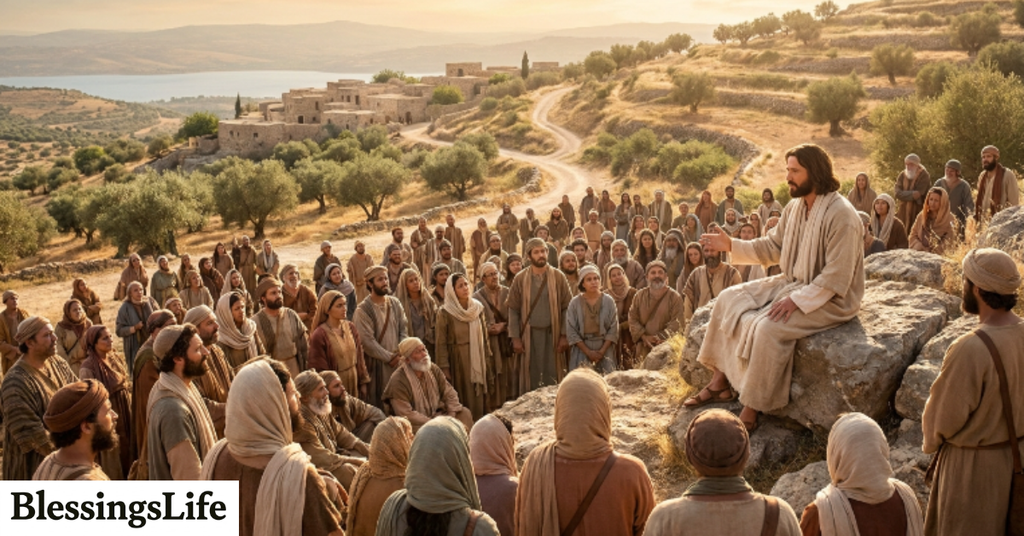
Jesus wasn’t handing out generic feel-good advice here. He was standing on a hillside, talking to people living under Roman occupation — people who knew conflict intimately, who had every reason to hate their oppressors, and who were hungry for a Messiah who’d bring a sword, not an olive branch.
And into that tension, he says: blessed are the peacemakers.
It must have landed strangely. Maybe it still does.
What Does “Peacemaker” Actually Mean?
Here’s where a lot of us get it wrong. We hear “peacemaker” and picture someone soft-spoken, someone who avoids conflict, someone who just wants everyone to get along.
That’s not quite it.
The original Greek word used here is eirenopoios, which literally translates to “peace” plus “maker” — someone who actively produces or manufactures peace. Not someone who stumbles into it. Someone who builds it, brick by brick, often at real personal cost.
Think about it this way:
- A peacekeeper avoids conflict to maintain calm.
- A peace-faker pretends everything’s fine while resentment quietly rots underneath.
- A peacemaker steps directly into the mess and does the hard work of reconciliation.
Blessed are the peacemakers isn’t a blessing for people who dodge hard conversations. It’s a blessing for the ones who have them anyway.
Why This Beatitude Feels So Countercultural
We live in a world that rewards being right more than being reconciled. Scroll through any comment section for five minutes and you’ll see it — everyone digging in, nobody backing down, and “winning” the argument treated like the highest possible goal.
Blessed are the peacemakers flips that script entirely.
It says the goal isn’t to win. It’s to heal. And healing usually means somebody has to go first — apologize first, forgive first, extend the hand first, even when they weren’t the one who caused the wound.
That’s a hard sell in a culture obsessed with being vindicated.
I think about my own father, who spent almost a decade estranged from his older brother over something so small neither of them could remember exactly how it started. It was my dad who finally picked up the phone. Not because he was wrong. Because he was tired of the silence being louder than his pride.
That phone call didn’t fix everything overnight. But it started something. That’s what being a peacemaker looks like in real life — it’s rarely a grand gesture. It’s a phone call. A text you almost don’t send. A door you choose to walk back through.
The Promise Attached to the Blessing
Every Beatitude comes with a reward, and this one is beautiful: “for they shall be called children of God.”
Not servants. Not followers. Children.
In Jewish tradition, being called someone’s child often meant you carried their character, their family likeness. So when Jesus says peacemakers will be called children of God, he’s essentially saying they reflect God’s own nature — because God himself is described throughout scripture as a reconciler, someone actively working to restore what’s broken between himself and humanity.
When you make peace, you’re not just doing a nice thing. You’re doing a God-like thing.
That reframes everything, doesn’t it? Blessed are the peacemakers isn’t just a call to be a good person. It’s an invitation to reflect something divine in a very human, very messy moment.
What Peacemaking Looks Like in Everyday Life
You don’t need a war zone or a courtroom to practice this. Most of us will never negotiate a treaty. But we will sit across from a sibling who hurt us. We will manage a team with two people who can’t stand each other. We will decide, again and again, whether to let a small offense turn into a permanent wall.
Here’s what peacemaking can look like on an ordinary Tuesday:
- Choosing to listen before defending yourself in an argument with your spouse.
- Reaching out first after a fight, even if you weren’t entirely at fault.
- Refusing to gossip about a coworker you’re frustrated with — and talking to them directly instead.
- Setting a boundary calmly instead of exploding after weeks of resentment.
- Praying for someone you’re struggling to forgive, even before you feel ready to forgive them.
None of these are dramatic. All of them are hard.
Blessed are the peacemakers doesn’t ask you to be a hero on a global stage. It asks you to be brave in your own kitchen, your own group chat, your own family dinner.
Quotes and Reflections on Peacemaking
Sometimes the right words from others help the truth settle in a little deeper. Here are a few that sit alongside this Beatitude beautifully:
“Peace is not the absence of conflict, but the presence of Christ, regardless of the conflict.” — Unknown
“Blessed are the peacemakers, for they shall be called the children of God.” — Matthew 5:9
“You will never be able to make everyone happy, but you can always choose to be a source of peace rather than division.” — Unknown
“If it is possible, as far as it depends on you, live at peace with everyone.” — Romans 12:18
“Peacemaking is not about the absence of tension, but the presence of grace within it.” — Unknown
Read those a couple of times. Let them sit. There’s a reason this idea keeps echoing across scripture and centuries — because peace really is that hard to hold onto, and that valuable when we do.
When Peacemaking Doesn’t Mean What You Think
Let’s clear up a few misconceptions, because this matters.
Peacemaking isn’t the same as being a doormat. You can make peace and still hold boundaries. In fact, healthy boundaries are often what real peace is built on. Peace without honesty isn’t peace — it’s just suppressed conflict waiting to resurface.
Peacemaking doesn’t mean avoiding all conflict. Sometimes making peace means having the uncomfortable conversation nobody wants to have. Silence isn’t always peace. Sometimes it’s just avoidance wearing peace’s clothing.
Peacemaking isn’t always mutual. You can offer peace and still have it rejected. Jesus doesn’t promise that peacemakers will always succeed in reconciling every relationship — only that they’re blessed for trying, for embodying that spirit even when the outcome is out of their hands.
That last one matters. You are not responsible for the peace someone else refuses to accept. You’re only responsible for the peace you’re willing to offer.
A Small Story Worth Remembering
There’s an old story about two brothers who inherited a farm from their father. For years they worked it side by side, splitting everything evenly, until one brother married and had children while the other stayed single.
One night, the married brother thought: my brother has no children to provide for him in old age, he needs more from our harvest than I do. So he secretly carried sacks of grain across the field to his brother’s storehouse each night.
That same night, the single brother thought: my brother has a family to feed, mouths I don’t have to worry about, he needs more grain than I do. So he secretly carried sacks of grain in the opposite direction.
For years, neither pile ever seemed to shrink. Until one night, they ran into each other in the middle of the field, sacks in hand, and finally understood what the other had been doing all along.
That field, according to legend, became the site later chosen for a temple of peace — because it was the one place where two people had quietly, sacrificially, tried to give the other more than themselves.
That’s the heart behind blessed are the peacemakers. It’s not loud. It’s not public. It’s two people in a field at night, each trying to give more than they take.
How to Become a Peacemaker When It Feels Impossible
Some conflicts feel too big, too old, too painful to touch. If that’s where you are, here’s a gentler way to start:
- Pray before you speak. Ask for the right heart before the right words.
- Separate the person from the problem. You can love someone and still disagree with them fiercely.
- Apologize for your part, even if it’s 10% of the issue. Owning your piece often disarms the whole fight.
- Give it time. Peace rarely arrives on your schedule.
- Accept that peace and agreement aren’t the same thing. You can be at peace with someone without seeing eye to eye on everything.
Blessed are the peacemakers isn’t a one-time achievement you check off a list. It’s a posture you keep choosing, sometimes daily, sometimes in the same relationship over and over again.
Living Out This Blessing Today
So maybe you’re not about to broker world peace. Most of us aren’t. But somewhere in your life right now, there’s a relationship that needs a little bit of grace — a sibling, a friend, an old wound that never quite closed.
Blessed are the peacemakers is God’s gentle nudge that this work, however small it feels, matters. It matters to the person on the other end of it. And according to Jesus, it matters to God too.
You don’t have to fix everything today. You just have to take one small step toward peace instead of one more step away from it.
What would that step look like for you this week?
FAQs
What does “blessed are the peacemakers” mean in the Bible?
It’s part of the Beatitudes in Matthew 5:9, spoken by Jesus during the Sermon on the Mount. It means those who actively work to create peace and reconciliation — not just avoid conflict — are blessed and reflect God’s own character.
Who said “blessed are the peacemakers, for they shall be called sons of God”?
Jesus said this during the Sermon on the Mount, recorded in Matthew 5:9. It’s one of eight Beatitudes he taught at the beginning of that famous sermon.
What is the difference between a peacemaker and a peacekeeper?
A peacekeeper tries to avoid conflict to maintain calm, often by staying silent. A peacemaker actively steps into conflict to bring genuine healing and reconciliation, even when it’s uncomfortable.
Why are peacemakers called children of God?
Because God himself is portrayed throughout scripture as a reconciler who restores broken relationships. When someone makes peace, they reflect that same character, earning the title “children of God.”
How can I become a peacemaker in my everyday life?
Start small — listen before defending yourself, apologize for your part in conflicts, avoid gossip, and reach out first after disagreements. Peacemaking is built through consistent, humble choices, not grand gestures.
Does being a peacemaker mean avoiding all conflict?
No. True peacemaking sometimes requires having hard, honest conversations. Avoiding conflict altogether can actually delay real peace rather than create it.