
Introduction
I remember standing in a tiny stone chapel in Italy, staring up at rows of painted faces on the ceiling, and asking our tour guide a question that had been nagging me for years: how many Catholic saints are there, exactly?
She laughed. “Nobody really knows the exact number,” she said. “But it’s in the thousands.”
That answer stuck with me. If you’ve ever wondered the same thing while lighting a candle, reading about your patron saint, or just falling down a late-night internet rabbit hole, you’re not alone. This is one of those questions that seems like it should have a simple answer but really doesn’t.
So let’s dig into it together — properly, honestly, and without the dry textbook tone.
So, How Many Catholic Saints Are There Really?
Here’s the short answer: the Catholic Church has officially canonized around 10,000 saints, though the exact figure is impossible to pin down with total certainty.
Why the fuzziness? Because record-keeping in the early centuries of Christianity wasn’t exactly the Vatican’s strong suit. Many saints from the first few centuries were recognized locally, by word of mouth and community devotion, long before any formal canonization process existed.
So when people ask how many Catholic saints are there, the honest answer is: more than we can count precisely, but somewhere in the ballpark of 10,000.
That number keeps growing too. Every year, the Pope canonizes new saints, adding fresh names to an already enormous list.
Why Isn’t There an Exact Count?
This surprised me too. You’d think an institution as organized as the Catholic Church would have a neat spreadsheet somewhere. But sainthood is messier than that, historically speaking.
Here’s why:
- Early Christianity had no formal process. For the first thousand years or so, communities simply recognized holy people as saints through popular acclaim, not paperwork.
- Many records were lost. Wars, fires, and the sheer passage of time wiped out documentation for countless local saints.
- Regional saints never got “official” global recognition. Some saints are venerated only in specific dioceses or countries and never make it into universal Church records.
- The Eastern and Western Churches split. After 1054, saints recognized in Eastern Christianity and Western Catholicism started diverging, making a single unified count even trickier.
Think of it like trying to count every person who’s ever been called a “hero” in their hometown newspaper. Some get national fame. Most don’t. But they still mattered to the people who knew them.
The Difference Between Canonized and Recognized Saints
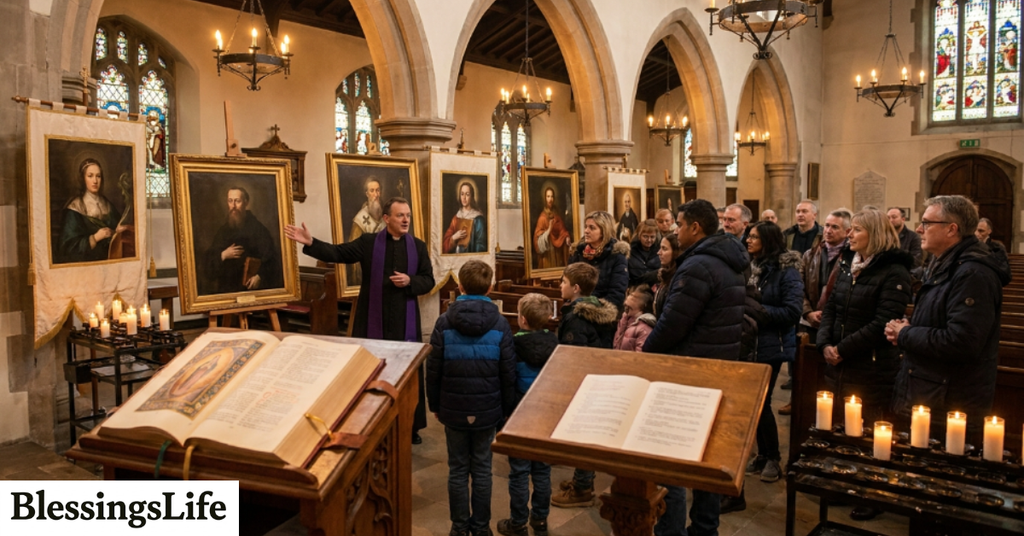
This is where a lot of confusion happens. Not every saint went through the same formal process.
Canonized Saints
These are saints who went through the Vatican’s official process — investigation, verified miracles, and a formal declaration by the Pope. This is the group most people mean when they ask how many Catholic saints are there.
Pre-Congregation Saints
These are saints recognized before the formal canonization process was created around the 10th century. Think of names like Saint Peter, Saint Paul, or Mary Magdalene. They were never “canonized” in the modern sense — they were simply always considered saints by the early Church.
Beatified Individuals (Blesseds)
Before someone becomes a full saint, they’re often beatified first, meaning they’re honored as “Blessed.” This is one step below full sainthood and requires one confirmed miracle instead of two.
So really, when you add up canonized saints, pre-congregation saints, and locally venerated figures, you start understanding why the Church itself avoids giving a hard number.
How Does Someone Actually Become a Saint?
I find this part genuinely moving. It’s not just about being a “good person.” It’s a long, rigorous, sometimes decades-long process.
Here’s a simplified breakdown of the steps:
- Servant of God – The process begins, usually years after the person’s death, with an investigation into their life.
- Venerable – The Church confirms the person lived a life of “heroic virtue.”
- Blessed (Beatification) – One miracle attributed to the person’s intercession is verified.
- Saint (Canonization) – A second miracle is confirmed, and the Pope formally declares them a saint.
There’s an exception, though: martyrs. People who died for their faith often skip the miracle requirement for beatification, because their death itself is considered the ultimate act of faith.
I think about Saint Maximilian Kolbe here. He volunteered to die in place of a stranger at Auschwitz. No miracle needed to prove his heart. His sacrifice spoke loud enough on its own.
Famous Examples That Show the Range of Sainthood
To really understand how many Catholic saints are there, it helps to look at who actually makes the list. It’s a wildly diverse group.
- Saint Francis of Assisi – Known for his love of animals and simple living.
- Saint Teresa of Calcutta (Mother Teresa) – Canonized in 2016, within living memory for most of us.
- Saint Joan of Arc – A teenage girl who led an army and was later burned at the stake, only to be canonized centuries later.
- Saint Thérèse of Lisieux – Died at just 24, yet became one of the most beloved saints in Church history.
- Saint Augustine – Once lived a wild, indulgent youth before transforming into one of Christianity’s greatest theologians.
These aren’t distant, flawless figures. They were real people — flawed, scared, stubborn, brilliant, broken in places. That’s honestly what makes sainthood so relatable.
A Quick Quotes & Reflection Box
Here are a few short reflections tied to sainthood that people often search for or share:
“Saints are sinners who kept on going.” — often attributed in spirit to St. Thérèse of Lisieux
“Do not wait for extraordinary circumstances to do good; use ordinary situations.” — inspired by the teachings of St. Jean-Baptiste de La Salle
“It is not how much we do, but how much love we put into the doing.” — reflection commonly associated with Mother Teresa’s teachings
These aren’t just pretty words for a plaque. They’re reminders that sainthood was never about perfection — it was about persistence.
Patron Saints: A Saint for Almost Everything
Here’s a fun detail that surprises a lot of people. With so many saints, the Church has assigned patronages for nearly every profession, situation, and struggle imaginable.
- Saint Anthony – lost items
- Saint Christopher – travelers
- Saint Cecilia – musicians
- Saint Jude – hopeless causes
- Saint Monica – mothers of difficult children
Honestly, that last one hit close to home for a friend of mine going through a rough patch with her teenage son. She started praying to Saint Monica, not because she expected a miracle, but because it gave her a sense of companionship in her struggle. Knowing someone, even centuries ago, went through something similar? That’s comforting.
Why the Number Keeps Growing
Every Pope adds new names to the list. Pope John Paul II alone canonized over 480 saints during his papacy — more than most of his predecessors combined.
This reflects something important: sainthood isn’t frozen in ancient history. It’s still happening, in real time, all over the world.
So if you ask how many Catholic saints are there today versus twenty years ago, you’ll get a different number. And in twenty more years, it’ll be different again.
The Emotional Side of Sainthood
Beyond the numbers and processes, there’s something deeply human about why sainthood matters to people.
It’s not really about the statistics. It’s about connection. About having someone to talk to who “gets it.” About believing that ordinary, flawed people can still become extraordinary.
Whether you’re Catholic, curious, or somewhere in between, there’s something comforting about a list of names that keeps proving one simple thing: goodness, no matter how quiet or imperfect, doesn’t go unnoticed forever.
Final Thoughts
So, how many Catholic saints are there? Somewhere around 10,000 officially canonized, with countless more recognized locally or historically before formal record-keeping began. It’s not a clean, tidy number — and honestly, maybe that’s exactly the point.
Sainthood was never about perfection or precision. It was about real people living real, often messy lives, and choosing love and faith anyway.
If this gave you a little clarity — or even just a moment of curiosity satisfied — feel free to share it with someone who might be wondering the same thing. Or drop a comment about your own patron saint. I’d genuinely love to hear the story behind it.
FAQs
How many Catholic saints are there in total?
There are roughly 10,000 officially canonized saints, though the exact number isn’t fully documented due to lost early records and locally recognized saints.
Who decides how many Catholic saints there are?
The Vatican, through a formal canonization process overseen by the Pope, decides. This process involves investigations, verified miracles, and official declarations.
Can new saints still be added today?
Yes. New saints are canonized regularly. Popes continue to recognize modern figures, meaning the total number grows over time.
What’s the difference between a saint and a “Blessed”?
A “Blessed” has one confirmed miracle and is one step below sainthood. A saint requires two confirmed miracles (except martyrs).
Why don’t we know the exact number of saints?
Early Christian record-keeping was inconsistent, many saints were recognized locally without documentation, and some records were lost over centuries.
Which Pope canonized the most saints?
Pope John Paul II canonized over 480 saints during his papacy, more than many previous Popes combined, significantly increasing the overall total.