
Introduction
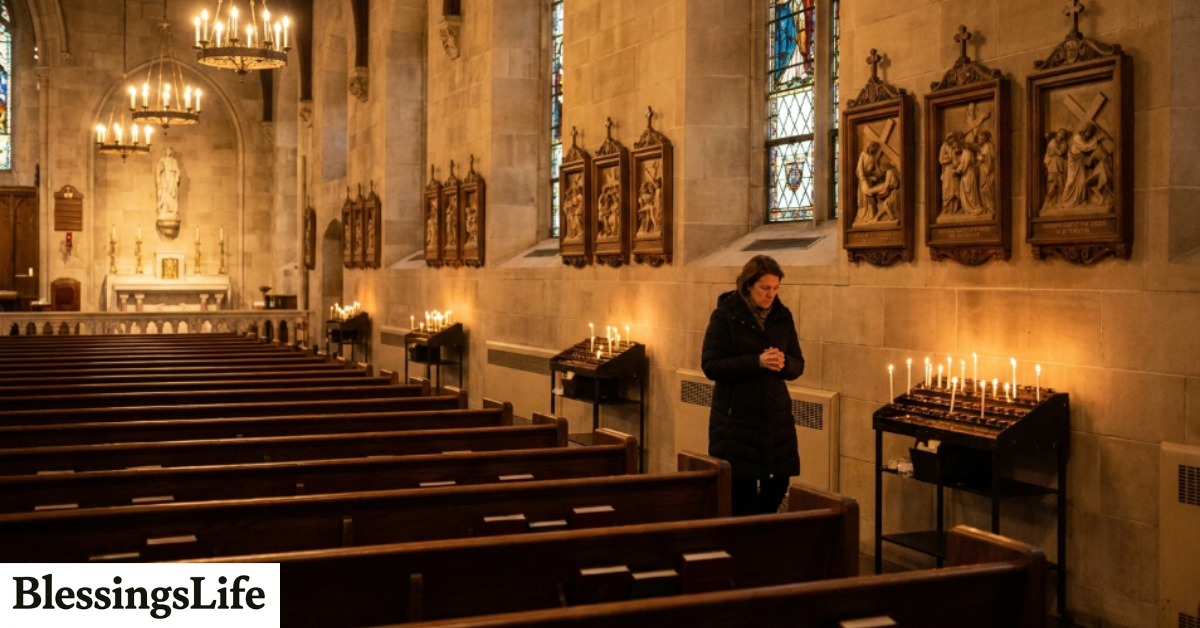
I still remember the first time I walked the Stations of the Cross Catholic tradition with my grandmother. I was maybe nine years old, restless, more interested in the stained glass than the prayers. But somewhere around the fifth station, watching her lips move silently and her eyes glisten, something shifted in me. I didn’t fully understand it then. I do now.
If you’ve ever wondered what the Stations of the Cross Catholic devotion actually means, why Catholics walk from image to image during Lent, or how to pray them yourself, you’re in the right place. This isn’t going to be a dry theology lecture. It’s going to feel more like a conversation—the kind you’d have with someone who’s walked this path many times and wants to walk it with you too.
By the end, you’ll understand not just the “what” but the “why” behind one of Catholicism’s most moving traditions.
What Are the Stations of the Cross, Really?
At its core, the Stations of the Cross Catholic practice is a journey. It retraces the final hours of Jesus Christ—from his condemnation to his burial—through fourteen distinct moments, or “stations.”
Each station represents a specific event. Together, they form a spiritual pilgrimage you can take without ever leaving your parish.
Think of it like this: imagine walking through a photo album of someone’s worst day, except every photo also whispers hope. That’s what these fourteen moments do.
Catholics have practiced this devotion for centuries, especially during Lent, though many parishes offer it year-round. It’s not just history—it’s meant to be lived, felt, and internalized.
A Quick Look at the Fourteen Stations
Here’s a simple breakdown of what you’ll encounter:
- Jesus is condemned to death
- Jesus carries his cross
- Jesus falls the first time
- Jesus meets his mother, Mary
- Simon of Cyrene helps carry the cross
- Veronica wipes the face of Jesus
- Jesus falls the second time
- Jesus meets the women of Jerusalem
- Jesus falls the third time
- Jesus is stripped of his garments
- Jesus is nailed to the cross
- Jesus dies on the cross
- Jesus is taken down from the cross
- Jesus is laid in the tomb
Some parishes add a fifteenth station—the Resurrection—as a way of closing the journey with hope rather than sorrow.
Where Did This Tradition Come From?
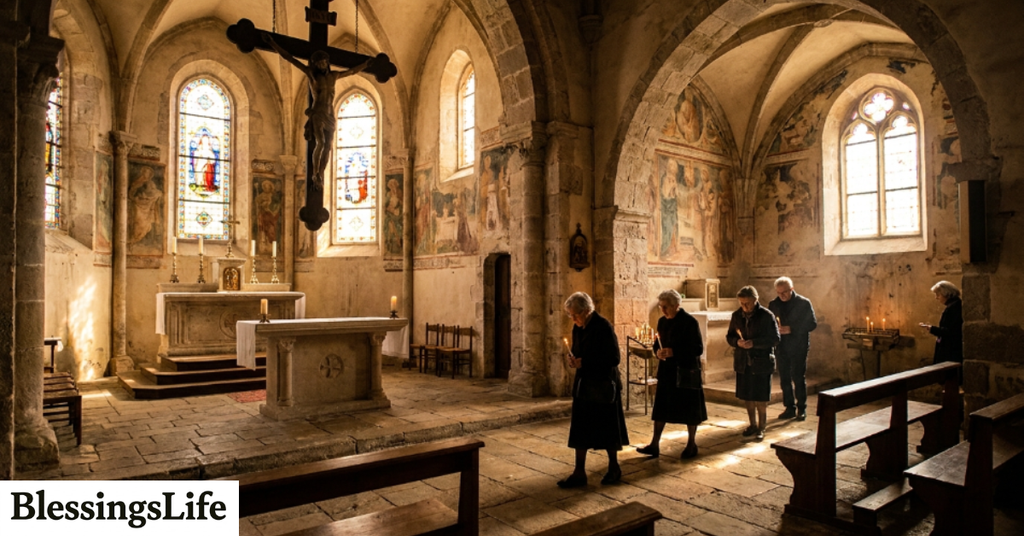
The origins of the Stations of the Cross Catholic devotion trace back to early pilgrims in Jerusalem. They wanted to walk the actual path Jesus walked—the Via Dolorosa, or “Way of Sorrows.”
But not everyone could travel to the Holy Land. Long journeys were expensive, dangerous, even impossible for most ordinary believers.
So the Church, in its wisdom, brought Jerusalem to the people. By the late Middle Ages, churches across Europe began installing station markers—paintings, carvings, or simple crosses—so the faithful could make this same spiritual journey locally.
It’s a beautiful idea when you think about it. You don’t need a plane ticket to walk with Christ. You just need a quiet church and an open heart.
Why Catholics Still Practice This Today
I’ve spoken with people who find the Stations of the Cross Catholic tradition repetitive, even a little uncomfortable. And honestly? That discomfort is kind of the point.
We live in a culture that rushes past suffering. We scroll past bad news. We distract ourselves from pain—our own and others’.
The Stations force you to slow down. To sit with grief. To acknowledge that suffering was real, that it mattered, and that it led somewhere meaningful.
A friend of mine, Maria, told me she started praying the Stations after losing her husband. She said the station where Jesus falls—not once, but three times—gave her permission to fall too. To be human. To get back up anyway.
That’s the quiet power of this devotion. It doesn’t rush your grief. It walks beside it.
How the Stations Are Traditionally Prayed
Every parish does this slightly differently, but the general structure of the Stations of the Cross Catholic prayer looks something like this:
- The priest or leader moves from station to station
- At each stop, a short reading or reflection is offered
- The congregation responds with a prayer, often “We adore you, O Christ, and we bless you”
- A moment of silent reflection follows
- The group then moves to the next station
Some parishes sing hymns like the Stabat Mater between stations. Others keep it completely silent, letting the imagery speak for itself.
There’s no single “correct” way to do this. What matters is presence—showing up, station by station, and letting the story unfold in your heart.
Praying the Stations of the Cross Alone
You don’t need a group to walk this path. Many Catholics keep a small set of station images at home, or simply use a prayer booklet.
Here’s a simple way to begin on your own:
- Find a quiet space, even just a corner of a room
- Light a candle if you have one
- Read the description of each station slowly
- Ask yourself: where do I see myself in this moment?
- Sit in silence for a minute before moving to the next station
It doesn’t have to be perfect. It doesn’t have to take an hour. Even ten minutes of honest reflection can change how you carry your own week.
Quotes and Reflections Box
Sometimes words say what our own hearts can’t quite form. Here are a few reflections often shared during this devotion:
“We adore you, O Christ, and we bless you, because by your holy cross you have redeemed the world.”
“Lord, help me carry my cross the way you carried yours—not perfectly, but faithfully.”
“In every fall, there is a rising. In every station, there is grace waiting.”
“Simon of Cyrene didn’t choose the cross, yet he still helped carry it. Who are you helping carry theirs today?”
These aren’t just pretty lines for a plaque. They’re invitations—to reflect, to pray, and to notice where your own life intersects with this ancient story.
The Emotional Weight Behind Each Station
Let’s be honest for a second. Some stations are hard to sit with.
Station Ten, for instance—Jesus is stripped of his garments—isn’t comfortable to picture. Neither is Station Eleven, the nailing. These aren’t meant to be pleasant.
But the Stations of the Cross Catholic devotion was never designed for comfort. It was designed for truth.
And within that truth, there’s tenderness too. Station Four, where Jesus meets his mother, is one many people find hardest to get through. Every parent who’s ever watched their child suffer understands that look, even without a single word being spoken.
Station Six, where Veronica wipes his face, reminds us that small acts of kindness matter—even in the middle of someone else’s worst day.
How Parishes Celebrate During Lent
Fridays during Lent are when most parishes hold communal Stations of the Cross Catholic services. It’s often paired with fish fries, potlucks, or fellowship time afterward, which sounds almost strange next to something so solemn.
But that’s Catholic life, isn’t it? Sorrow and community, side by side.
Good Friday especially draws large crowds. Some parishes even do outdoor processions, carrying a large cross through the streets, station by station, in full view of the neighborhood.
It’s a public witness. A visible reminder that this story still matters, even in a world that’s moved on to a thousand other things.
Bringing the Stations Into Daily Life
Here’s something worth thinking about: the Stations aren’t only for church.
You can carry their lessons into ordinary Tuesdays. When you’re exhausted and want to give up on something hard—that’s a “falling” moment. When someone helps you through a rough patch—that’s your Simon of Cyrene.
Recognizing these patterns doesn’t diminish the sacredness of the original story. If anything, it makes the story feel closer, more alive, more relevant to whatever you’re carrying this week.
A Personal Note Before We Wrap Up
I’ll be honest with you—I don’t always feel spiritually “on” when I walk the Stations of the Cross Catholic tradition. Some years it feels routine. Other years, usually the hard ones, it feels like the only thing keeping me upright.
Maybe that’s the point. This devotion doesn’t ask for perfect faith every time. It just asks you to show up, station by station, and let the story do its work.
Final Thoughts
Whether you’ve walked this path a hundred times or you’re considering it for the first time this Lent, know this—the Stations of the Cross Catholic tradition isn’t about performing grief. It’s about honoring it, sitting with it, and trusting that it leads somewhere beyond itself.
If this reflection moved something in you, consider sharing it with someone who might need it this season. Or better yet, find a quiet moment this week and walk the stations yourself—even if it’s just in your own living room.
Sometimes the most sacred journeys are the ones we take slowly, one station at a time.
FAQs
What are the Stations of the Cross in the Catholic Church?
They’re a series of fourteen images or moments depicting Jesus’s journey from condemnation to burial. Catholics use them for reflection and prayer, especially during Lent.
Why do Catholics pray the Stations of the Cross?
It’s a way to spiritually walk alongside Christ’s suffering, deepen faith, and reflect on themes of sacrifice, forgiveness, and hope without traveling to Jerusalem.
When are the Stations of the Cross typically prayed?
Most commonly on Fridays during Lent and especially on Good Friday, though many parishes offer this devotion throughout the year.
Can I pray the Stations of the Cross alone at home?
Yes, absolutely. Many Catholics use prayer booklets or small station images at home for personal, quiet reflection anytime.
How long does it take to complete the Stations of the Cross?
A communal service usually takes 30-45 minutes, but a personal, unhurried reflection can take as long as you need—even just ten quiet minutes.
Is there a fifteenth station?
Some parishes add a fifteenth station representing the Resurrection, closing the devotion with a note of hope rather than sorrow alone.