
An Old Couple, an Impossible Promise
Imagine being told, after decades of disappointment, that your deepest prayer is finally about to come true. That’s exactly where Zechariah and Elizabeth found themselves.
They were old. Elizabeth was barren. In their world, that wasn’t just a medical fact — it was a quiet, daily heartbreak they’d carried for years.
Then everything changed.
The birth of John the Baptist didn’t begin with a birth at all. It began with a moment of terror in a temple, an angel, and a promise so unbelievable that the man who received it couldn’t even speak for months afterward.
This is one of those stories that feels almost too perfectly written to be real — and yet it’s remembered, retold, and cherished precisely because it speaks to something so human: the ache of waiting, and the wonder of finally receiving.
Who Were Zechariah and Elizabeth, Really?
Before we get to the miracle, it helps to understand the people at the center of it.
Zechariah was a priest. Not a famous one, not a powerful one — just a faithful man doing his rounds of duty in the temple, the way priests had done for generations before him.
Elizabeth, his wife, came from a respected priestly line too. Scripture describes both of them as righteous, careful to walk blamelessly in their faith.
And yet, for all their devotion, they had one unanswered prayer hanging over their entire marriage.
- They were “well along in years”
- Elizabeth could not conceive
- Every year that passed made the possibility feel more distant
Can you imagine that kind of quiet grief? Watching other families grow while yours stays the same, year after year, and still choosing to stay faithful anyway?
That’s the emotional backdrop the birth of John the Baptist grows out of. It’s not a story about strangers. It’s a story about ordinary people who kept believing long after it seemed reasonable to stop.
The Angel in the Temple
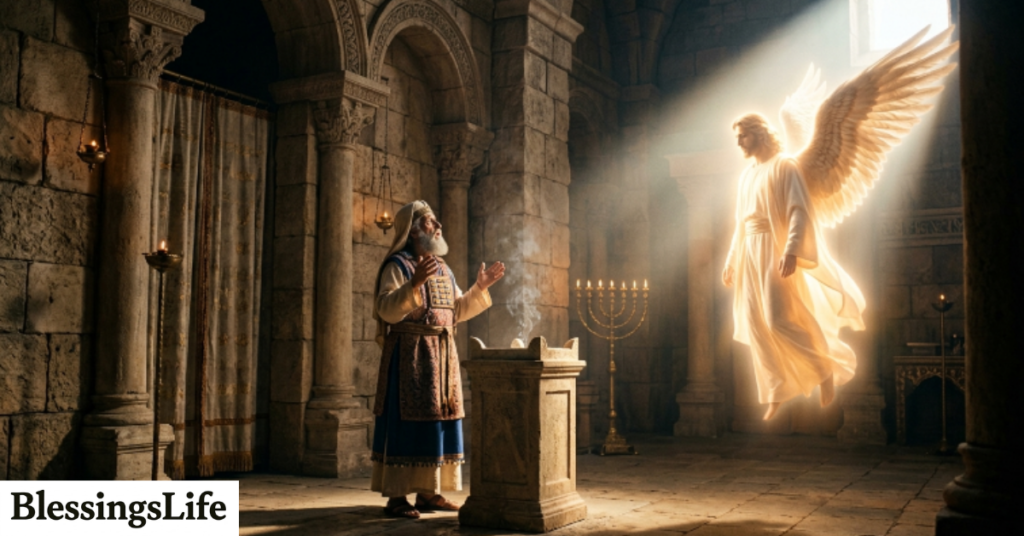
One day, it was Zechariah’s turn — a rare honor determined by lot — to enter the inner sanctuary and burn incense before the Lord.
He was alone. The people were outside, praying, as was custom.
And then, suddenly, he wasn’t alone at all.
An angel appeared beside the altar. Not in a dream. Not in a vision. Right there, in the middle of his ordinary duty.
Zechariah was, understandably, terrified.
The angel spoke gently but directly: his prayer had been heard. Elizabeth would bear him a son. He was to name the boy John.
This wasn’t going to be an ordinary child, either. The angel described a boy who would bring joy and delight to many, who would be great in the eyes of the Lord, and who would be filled with a special calling from the very beginning of his life.
He would prepare the way for someone far greater — turning hearts, restoring what was broken, and making people ready for what was coming.
“How Can I Be Sure?”
Here’s where the story gets beautifully, achingly human.
Zechariah, faced with a literal angel delivering literal good news, responded the way most of us probably would: with doubt.
He asked how he could be certain, pointing out — quite reasonably — that he was old and his wife was well past the age of having children.
It’s such a relatable moment, isn’t it? Even in the presence of the miraculous, our first instinct is often skepticism. We want proof. We want logic to make sense of the impossible.
The angel’s response was firm. Because Zechariah didn’t believe, he would be unable to speak until the child was born.
Silence, as a consequence — and, in a way, as a kind of sacred pause.
Nine Months of Waiting (and Wondering)
Zechariah walked out of the temple that day and couldn’t say a word to the crowd waiting for him. He could only gesture, and they realized something extraordinary had happened.
He went home. And not long after, Elizabeth conceived.
She stayed in seclusion for five months, saying simply that God had done this for her, taking away the disgrace she’d carried among her people for so long.
That single sentence carries so much weight. In her culture, childlessness wasn’t just a private sorrow — it was a public one. There were assumptions, whispers, judgments.
For Elizabeth, this pregnancy wasn’t only about a baby. It was about being seen again. Being restored.
A Meeting Between Two Miracles
During this time, something else remarkable happened. Elizabeth’s relative, Mary — pregnant herself with Jesus — came to visit.
The moment Elizabeth heard Mary’s greeting, the baby within her leapt. Elizabeth, filled with a deep and sudden joy, blessed Mary and the child she carried.
Two women. Two impossible pregnancies. Two futures about to change history — sharing a quiet, tender moment together before the world knew anything at all.
It’s one of the most human details in the entire narrative: before angels announced anything publicly, before crowds gathered, it was just two relatives, embracing, weeping, believing together.
The Birth of John the Baptist
Finally, the day came.
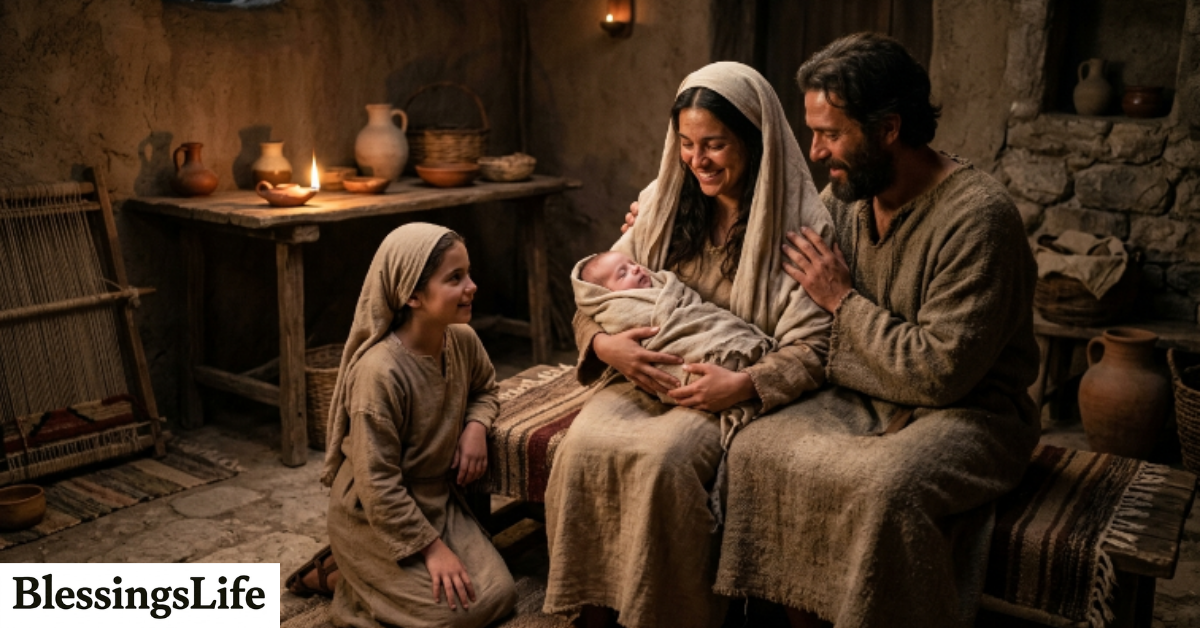
Elizabeth gave birth to a son, and her neighbors and relatives were overjoyed with her, sharing in a happiness that had been so long delayed.
On the eighth day, following tradition, they gathered to circumcise the child and name him — and everyone assumed he’d be named after his father, Zechariah.
Elizabeth spoke up. “No. He is to be called John.”
Confused, they turned to Zechariah, since no one in the family carried that name. He motioned for a writing tablet and wrote: “His name is John.”
Immediately — and this is the part that still gives people chills — Zechariah’s voice returned. After months of silence, the first thing he did was praise God.
The neighbors were struck with awe. Word of what had happened spread through the hill country. People wondered aloud, “What then is this child going to be?”
It’s such a powerful question, isn’t it? One that echoes across every child ever born into uncertainty and promise.
Zechariah’s Song of Praise
Once Zechariah could speak again, he didn’t waste his words on small talk. Filled with something deeper than relief, he broke into a prophecy — a song now known as the Benedictus.
He spoke of God’s faithfulness to His people, of rescue and mercy, of a covenant remembered after generations of waiting.
And then, turning to his newborn son, he said something that still stops readers in their tracks:
“And you, my child, will be called a prophet of the Most High; for you will go on before the Lord to prepare the way for him.”
Can you imagine holding your newborn son and already knowing — with certainty — the weight of the purpose he was born for?
A Quotes & Reflections Box
Here are a few of the moments from this story worth sitting with:
- “Nothing is impossible with God.” — spoken to Mary, but echoing through Elizabeth’s story too
- “Your prayer has been heard.” — the angel’s words to Zechariah, after what must have felt like silence for far too long
- “He will be great in the sight of the Lord.” — a promise spoken before John ever took a single breath
- “What then is this child going to be?” — the question of every parent, every generation, every new beginning
These aren’t just old words. They’re reminders that waiting is rarely wasted, and that some of the most important stories start quietly, in ordinary places, with ordinary people.
Why This Story Still Matters Today
You might be wondering — why does a story from thousands of years ago still resonate with people now?
Because it’s not really about ancient customs or old traditions. It’s about things we still feel today:
- The pain of waiting for something you’re not sure will ever come
- The doubt that creeps in even when you desperately want to believe
- The relief and joy of finally being seen, finally being answered
- The wonder of watching a child grow into a purpose bigger than themselves
The birth of John the Baptist isn’t just a historical or religious event. It’s a deeply emotional story about faith surviving disappointment, and about how the answers we’ve stopped expecting sometimes arrive exactly when we need them most.
Elizabeth’s five months of quiet joy. Zechariah’s months of forced silence. Mary’s visit. The neighbors’ astonishment. Every piece of this story feels achingly, beautifully human.
What John’s Life Went On to Mean
John didn’t stay a baby in a miraculous birth story forever, of course. He grew up to live in the wilderness, wearing simple clothing, eating what the land offered him, and preaching a message of repentance and preparation.
People came from everywhere to hear him. He baptized crowds in the Jordan River, urging people to turn their lives around before someone greater arrived.
And when that someone — Jesus — did arrive, John was the one who recognized him, who baptized him, who pointed others toward him instead of keeping the attention on himself.
He once said, of Jesus, “He must become greater; I must become less.”
That kind of humility, especially after such a miraculous, prophecy-laden birth, says everything about who John became. He never let his origin story make him arrogant. He let it make him purposeful.
A Story Worth Remembering
So why does the birth of John the Baptist still get told, generation after generation?
Maybe because we all know what it feels like to wait. To doubt. To wonder if our prayers are actually being heard.
And maybe we need stories like this one — stories where the waiting ends, where silence breaks into praise, where an ordinary couple becomes part of something extraordinary — to remind us that it’s okay to keep hoping.
If this story moved you, share it with someone who needs a little encouragement today. Sometimes the best way to hold onto hope is to pass it along.
FAQs
Why is the birth of John the Baptist considered a miracle?
Elizabeth was elderly and had been unable to conceive for her entire marriage. Her pregnancy, announced by an angel, was seen as a direct act of divine intervention rather than a natural occurrence.
Why did Zechariah lose his ability to speak?
Zechariah doubted the angel’s announcement that Elizabeth would have a son, questioning it due to their old age. As a consequence, he was unable to speak until after John was born and named.
Why was the name “John” so significant?
No one in Zechariah and Elizabeth’s family had ever been named John. Choosing this name, exactly as the angel instructed, was itself an act of obedience and faith.
What is the connection between John the Baptist and Jesus?
John was Jesus’s relative, born about six months before him. John later baptized Jesus and publicly identified him as the one he had been sent to prepare the way for.
What is the Benedictus?
The Benedictus is the prophetic song Zechariah sang after regaining his speech. In it, he praised God and foretold his son John’s future role in preparing people for the Messiah.
What can we learn from the story of John the Baptist’s birth?
It’s a powerful reminder that unanswered prayers aren’t necessarily forgotten ones, and that faith, even when mixed with doubt, can still lead to extraordinary outcomes.