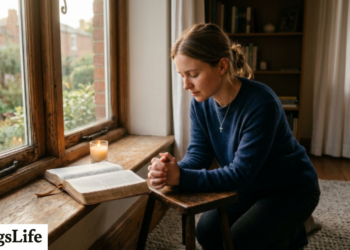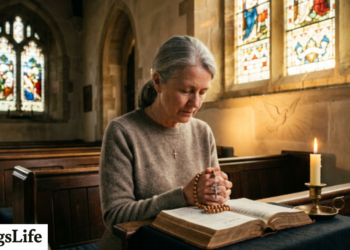

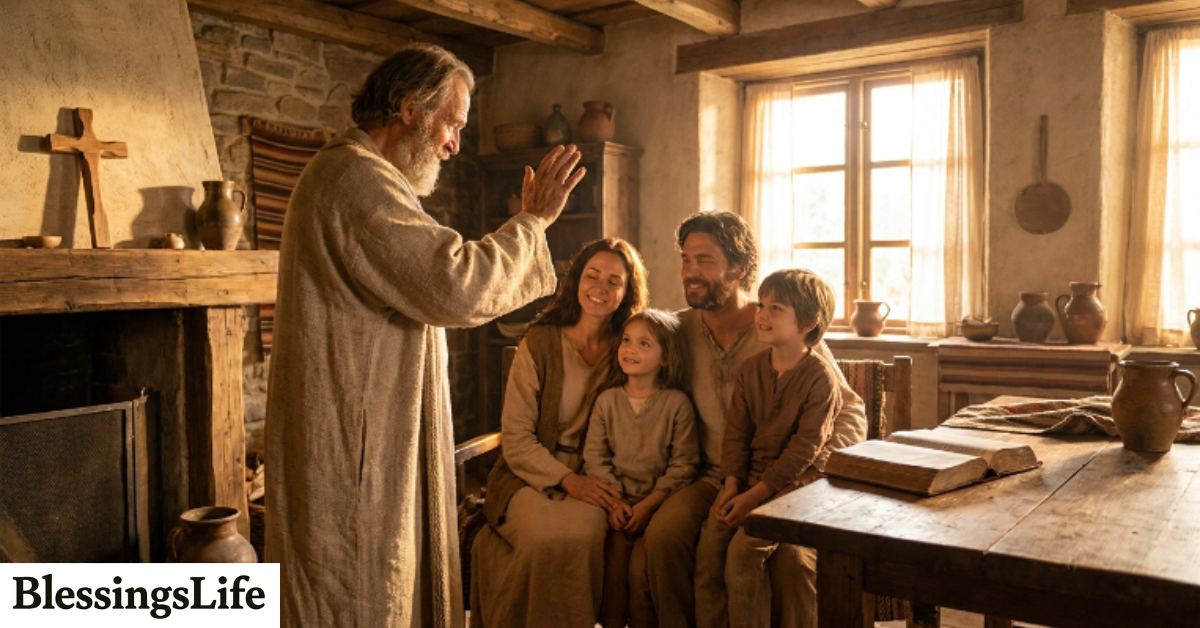
My grandmother used to place her hands on my head every Friday evening and whisper words I didn’t fully understand as a child. It wasn’t until years later, sitting in a quiet synagogue on a Saturday morning, that I realized what she’d been giving me all along was the priestly blessing — a prayer older than most nations, older than most languages, and somehow still exactly what people need to hear.
If you’ve ever wondered where this blessing comes from, why it’s whispered over newborns, spoken at weddings, or sung at the close of a long, hard week, you’re not alone. Millions of people search for the meaning behind these words every year, hoping to understand something that feels sacred even before they know why.
This article walks through the history, meaning, and modern use of the priestly blessing — not as a dry religious lecture, but as the living, breathing tradition it actually is.
What Is the Priestly Blessing, Exactly?
The priestly blessing, also known as the Aaronic Blessing or Birkat Kohanim in Hebrew, comes from the Book of Numbers (6:24-26). God instructs Moses to tell Aaron and his sons — the priests — to bless the people of Israel with these exact words:
- “The LORD bless you and keep you.”
- “The LORD make His face shine upon you and be gracious to you.”
- “The LORD turn His face toward you and give you peace.”
Three short lines. And yet, for over three thousand years, they’ve been repeated in homes, temples, hospital rooms, and battlefields.
What makes the priestly blessing so enduring isn’t just its age. It’s the way it moves — from protection, to grace, to peace — almost like a parent walking a child through every stage of comfort they might need.
Where the Priestly Blessing Comes From
To really appreciate the priestly blessing, it helps to picture the world it was born into.
The Israelites had just left Egypt. They were wandering, uncertain, rebuilding their identity from scratch. In the middle of that chaos, God gives them something startlingly tender — a formula for blessing, meant to be spoken over ordinary people, not just kings or prophets.
Aaron, as the first High Priest, was given the honor of speaking these words first. From there, the tradition passed down through generations of Kohanim (priests), who continued reciting the priestly blessing during temple services.
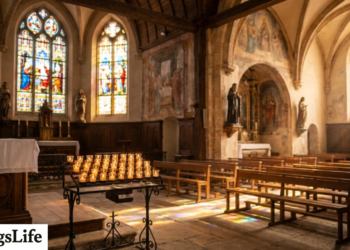
Even after the Second Temple was destroyed in 70 CE, the blessing didn’t disappear. It moved into synagogues, then into homes, then into hearts. That’s the quiet magic of it — it outlived buildings.
The Meaning Behind Each Line
It’s easy to read the priestly blessing quickly and miss what’s actually being said. So let’s slow down.
“The Lord Bless You and Keep You”
This isn’t a vague wish for good luck. In Hebrew tradition, blessing often implies material and spiritual abundance, while “keep” suggests protection — a kind of divine fence around a person’s life.
Think of a parent watching their child cross a busy street. That instinctive urge to shield them? That’s the spirit behind this line.
“The Lord Make His Face Shine Upon You”
This line is about presence, not distance. A shining face suggests warmth, attention, delight — the way your own face might light up seeing someone you love walk through the door.
It’s a beautiful contrast to feeling forgotten or invisible, which, let’s be honest, most of us feel at some point.
“The Lord Turn His Face Toward You and Give You Peace”
The Hebrew word for peace here is shalom — but shalom means far more than the absence of conflict. It implies wholeness, completeness, nothing missing and nothing broken.
So the priestly blessing doesn’t just wish you well. It wishes you whole.
Why the Priestly Blessing Still Matters Today
You might be thinking — this is a beautiful piece of history, but does it still mean anything now?
Ask any parent who has whispered the priestly blessing over a sleeping child. Ask a rabbi who has spoken it over a couple on their wedding day. Ask a soldier’s family who clung to those words during deployment.
The priestly blessing shows up in some surprisingly modern places:
- Friday night dinners — Many Jewish parents place their hands on their children’s heads and recite the blessing before the Shabbat meal.
- Weddings — Rabbis often close a ceremony with these same ancient words.
- Hospital visits — Chaplains and family members use the priestly blessing to comfort the sick.
- Christian churches — Many pastors use the Aaronic Blessing as a benediction to close Sunday services.
- Military send-offs — Families recite it over loved ones heading into uncertainty.
There’s something almost stubborn about how this blessing refuses to become irrelevant. Maybe that’s because the things it asks for — protection, presence, peace — never go out of style.
A Quotes & Examples Box: The Priestly Blessing in Everyday Life
“Every Friday night, my father placed his hands on my head and said the priestly blessing. I didn’t understand the Hebrew as a kid. I just understood I was loved.” — A Shabbat tradition shared by many Jewish families
“At my daughter’s wedding, the rabbi closed with the priestly blessing, and I watched three generations of women in my family cry at the same time.” — A common wedding memory
“I said the priestly blessing over my son the night before his surgery. It didn’t take away my fear, but it gave me somewhere to put it.” — A parent’s reflection
These aren’t quotes from famous people. They’re the kind of moments that happen in living rooms and hospital hallways — proof that the priestly blessing isn’t just recited, it’s lived.
How the Priestly Blessing Is Performed in Jewish Tradition
If you’ve ever visited a synagogue during a festival, you may have witnessed something striking — Kohanim standing at the front, hands raised, fingers split into a distinctive V-shape (yes, the same gesture Leonard Nimoy borrowed for Spock’s Vulcan salute).
This ritual, called Duchaning, usually happens during specific holidays and includes:
- The Kohanim removing their shoes before ascending the platform.
- Covering their heads and hands with a prayer shawl (tallit).
- Facing the congregation and reciting the priestly blessing in a specific melodic chant.
- The congregation traditionally avoiding eye contact with the Kohanim’s raised hands during the blessing, out of reverence.
It’s a striking, almost theatrical moment — but underneath the ritual is something simple. A blessing being physically, intentionally given, hand to heart.
The Priestly Blessing in Christianity
Christians will likely recognize this blessing too, often called the Aaronic Benediction. It’s frequently used to close worship services, especially in liturgical traditions like Catholic, Lutheran, and Anglican churches.
Pastors often modify the wording slightly, but the heart of it remains the same — a prayer of protection, presence, and peace spoken over a congregation before they step back into the world.
There’s something moving about a blessing this old still being the last thing people hear before they walk out into a Monday morning.
How Families Use the Priestly Blessing at Home

You don’t need to be a priest, rabbi, or pastor to use the priestly blessing. Many families incorporate it into home life in deeply personal ways:
- Parents blessing children before bed
- Grandparents blessing grandchildren during holiday visits
- Couples blessing each other before a difficult season
- Friends praying it over someone going through illness or loss
One mother described placing her hands on each of her three children’s heads every single night, saying the words softly even when they were too old to admit they still wanted it. “They’ll never say it out loud,” she said, “but they still lean their heads down for it.”
That’s the quiet power of the priestly blessing — it doesn’t need an audience to matter.
Common Mistakes People Make When Reciting It
If you’re planning to use the priestly blessing yourself, a few gentle notes:
- Don’t rush it. The blessing is short, but it’s meant to be spoken slowly, with intention.
- Don’t overthink the Hebrew pronunciation. Many people say it in English, and that’s completely acceptable in personal or family settings.
- Don’t treat it like a magic formula. It’s a prayer, not a spell — the power is in sincerity, not perfection.
Bringing the Priestly Blessing Into Your Own Life
You don’t have to be part of a formal religious service to experience the priestly blessing. Some people:
- Write it on a card and tuck it into a loved one’s suitcase before a trip
- Frame it and hang it in a nursery
- Say it quietly over themselves during hard mornings
- Send it as a text message to someone going through grief
It travels well, this blessing. It fits into pockets and phone screens just as easily as it once fit into ancient temple courtyards.
Final Thoughts
There’s a reason the priestly blessing has survived exile, war, temple destruction, and thousands of years of change. It doesn’t ask for much — no elaborate ritual, no perfect faith, no flawless pronunciation. It simply offers protection, presence, and peace, and lets the listener take what they need from it.
Maybe that’s why my grandmother never explained the words to me. She didn’t need to. Some blessings you feel before you understand them.
If this article gave you a little more insight into the priestly blessing, consider sharing it with someone who might need those words today — a new parent, a worried friend, someone heading into an uncertain season. Sometimes the most meaningful thing you can give someone is three ancient lines and a moment of your full attention.
FAQs
What is the priestly blessing in the Bible?
The priestly blessing is a prayer found in Numbers 6:24-26, given by God to Moses for Aaron and the priests to speak over the people of Israel. It asks for protection, grace, and peace.
Who is allowed to say the priestly blessing?
Traditionally, only Kohanim (descendants of Aaron) recite it during formal synagogue services. However, parents, clergy, and individuals commonly say it informally at home or in personal prayer.
What does “the Lord make His face shine upon you” mean?
It’s a poetic way of describing God’s warm attention and favor, similar to how a loved one’s face lights up when they see you. It represents closeness rather than distance.
Is the priestly blessing only used in Judaism?
No. While it originates in Jewish tradition, many Christian denominations use it as a closing benediction in church services, often called the Aaronic Blessing.
Can I say the priestly blessing over my own children?
Yes. Many Jewish families recite it over their children every Friday night, and people from many other backgrounds also use it as a personal or family blessing.
Why do Kohanim raise their hands in a V-shape during the blessing?
This hand gesture represents the Hebrew letter “Shin,” symbolizing Shaddai (a name for God). It’s part of the traditional ritual known as Duchaning, performed during specific Jewish holidays.