

Introduction
There’s a particular kind of exhaustion that comes from trying to live the Christian life on your own strength. You pray, you read your Bible, you show up to church, and yet something still feels disconnected — like you’re running a race without ever catching your breath.
If that’s you right now, John 15 has words that might change everything: “Abide in me, and I in you.” Jesus didn’t say try harder or do more. He said stay. He said remain. He said abide in me and I in you, and in that one sentence, He handed us the secret to a faith that doesn’t burn out.
This isn’t a theology lecture. It’s an invitation — one that farmers, gardeners, tired parents, and weary believers have leaned on for two thousand years. Let’s walk through what it actually means to abide in me and I in you, and how it can reshape the way you pray, work, love, and rest.
What Does “Abide in Me and I in You” Actually Mean?
The phrase comes from John 15:4, where Jesus is speaking to His disciples just hours before His arrest. He uses the image of a vine and its branches.
“I am the vine, you are the branches,” He says. And then comes the heart of it: abide in me and I in you.
The Greek word translated “abide” is meno — it means to remain, to stay, to dwell continuously. It’s not a one-time decision. It’s a daily, moment-by-moment posture.
Think about it this way:
- A branch doesn’t produce fruit by effort. It produces fruit by connection.
- A branch cut off from the vine doesn’t just struggle — it dies.
- The vine does the work of sending nutrients; the branch simply stays attached.
When Jesus says abide in me and I in you, He’s describing a relationship of mutual indwelling — He lives in us, and we’re called to live in Him. It’s not a transaction. It’s a home.
Why This Phrase Hit the Disciples So Hard
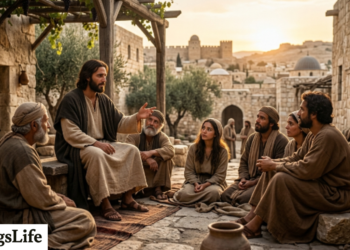
Picture the scene. The disciples had walked with Jesus for three years. They’d seen miracles, eaten thousands of meals together, watched Him weep and laugh and teach in parables that left crowds speechless.
And now He was telling them He was leaving.
Can you imagine the fear in that upper room? Their teacher, their friend, the one they’d staked their entire lives on, was talking about departure. So when Jesus said abide in me and I in you, He wasn’t offering a nice devotional thought. He was offering comfort in the middle of loss.
He was saying: I’m not really leaving. Stay connected to me, and I’ll stay connected to you — even when you can’t see me.
That’s a promise many of us need today, especially in seasons when God feels distant.
The Vine and Branches: A Story Everyone Understood
Jesus rarely explained spiritual truths in abstract terms. He used pictures people already knew.
In first-century Israel, vineyards were everywhere. Everyone understood how a vine worked:
- The root system draws water and nutrients from the soil.
- The vine channels that life up through its branches.
- The branches don’t produce fruit on their own — they simply stay attached and let the vine do its work.
- A pruned branch grows healthier. An unpruned one grows wild and unproductive.
So when Jesus said abide in me and I in you, His listeners immediately understood: I am your source. Apart from me, you can do nothing.
That last phrase — “apart from me you can do nothing” — is humbling. Most of us want to believe we can white-knuckle our way through faith. Jesus says otherwise.
What Abiding Looks Like in Real Life

Let’s get practical, because abide in me and I in you isn’t meant to stay in the realm of theory.
1. It Looks Like Daily Conversation, Not Just Sunday Attendance
A woman named Renee once described her prayer life like checking in with a roommate. “I talk to God while I make coffee,” she said. “I ask Him what He thinks about my day before I even get out of bed.”
That’s abiding. It’s not a scheduled fifteen-minute devotional and then silence for the rest of the day. It’s ongoing conversation — the kind two people who live in the same house naturally have.
2. It Looks Like Returning When You Wander
Nobody abides perfectly. Life pulls us away — busyness, distraction, sin, grief. But abide in me and I in you isn’t about never leaving; it’s about always coming back.
Think of a toddler playing in a backyard. She wanders to chase a butterfly, gets distracted by a bug, wanders further — but she keeps glancing back to make sure her mom is still there. The moment she feels unsettled, she runs back.
That’s the rhythm Jesus invites us into.
3. It Looks Like Trusting the Pruning
John 15:2 says the Father prunes every branch that bears fruit so it can bear more. Pruning hurts. It might look like a lost job, a friendship that fades, a dream that doesn’t work out.
But a gardener I once spoke with put it simply: “I don’t prune the dead branches. I prune the ones that are already growing — because I want them to grow better.” When you’re being pruned, it might actually mean you’re already producing fruit, not that you’ve failed.
Quotes and Scripture Reflections on Abiding
Sometimes the simplest words carry the deepest comfort. Here are a few reflections worth sitting with:
“I am the vine; you are the branches. Whoever abides in me and I in him, he it is that bears much fruit, for apart from me you can do nothing.” — John 15:5
“Abide in me, and I in you.” — John 15:4
“If you abide in my word, you are truly my disciples.” — John 8:31
“Let the word of Christ dwell in you richly.” — Colossians 3:16
These aren’t just verses to memorize. They’re invitations to slow down and remember that fruitfulness was never meant to come from striving — it comes from staying close.
Common Struggles With Abiding (and How to Move Through Them)
Let’s be honest — abiding sounds beautiful, but it’s not always easy to practice. Here’s what tends to get in the way, and gentle ways through it.
- Busyness — Solution: Anchor small moments (your commute, dishes, a walk) as check-in points with God instead of waiting for a “perfect” quiet time.
- Guilt from inconsistency — Solution: Remember abiding is about returning, not perfection. Grace covers the gaps.
- Feeling spiritually dry — Solution: Dryness is often the season right before growth. Keep showing up even when it feels quiet.
- Comparing your walk to others — Solution: Abiding looks different for every person and season. Your rhythm doesn’t need to match anyone else’s.
If any of these sound familiar, you’re not failing. You’re human — and abide in me and I in you was written for humans, not for people who already have it all figured out.
Why Fruitfulness Follows Connection, Not Effort
There’s a quiet kind of relief in realizing this: you were never meant to manufacture spiritual fruit through sheer willpower.
Love, joy, peace, patience, kindness — these don’t come from gritting your teeth and trying harder. They grow naturally out of connection, the same way grapes grow naturally on a healthy vine.
That doesn’t mean effort has no place. Branches still need to stay positioned toward the sun, still need pruning, still need care. But the fruit itself isn’t forced — it’s the natural outcome of staying attached.
This is the freedom hidden inside abide in me and I in you. You don’t have to perform your way into God’s love. You simply stay, and He does the rest.
A Modern-Day Picture of Abiding
Consider a long-distance friendship that’s lasted for years. You don’t call every single day, but the relationship never really goes cold. You know their voice instantly. You pick up right where you left off. There’s a comfort, a familiarity, a home in that connection.
That’s a small picture of what Jesus offers. Abiding isn’t about perfect, unbroken focus every waking second — it’s about a relationship so familiar that you carry Him with you into your ordinary Tuesday, your hard Monday, your quiet Sunday evening.
Bringing It Into Your Everyday Rhythm
Here are a few simple ways people have found to live out abide in me and I in you in ordinary life:
- Start the morning with a short, honest prayer — even one sentence counts.
- Keep a verse like John 15:4 somewhere visible — a mirror, a phone lock screen, a car dashboard.
- Journal short “check-ins” with God throughout the day instead of saving everything for one long entry.
- Invite a friend to ask you, weekly, “How’s your connection with God this week?”
- When you catch yourself striving, pause and simply say, “I’m staying. I’m not leaving.”
None of these are formulas. They’re just small doors that keep swinging open toward connection.
Conclusion
Maybe you came into this article tired — tired of trying to earn something that was never meant to be earned, tired of a faith that feels more like a checklist than a relationship.
Here’s the good news tucked inside those five words: abide in me and I in you. You don’t have to produce the fruit. You just have to stay close to the vine. He does the rest.
So take a breath. Come back to Him today, exactly as you are. And if this reflection brought you some peace, consider sharing it with someone who might need the same reminder — or leave a comment below about what abiding looks like in your own life right now.
FAQs
What does “abide in me and I in you” mean in simple terms?
It means staying continually connected to Jesus — like a branch stays attached to a vine — rather than trying to live the Christian life through willpower alone. It’s an ongoing relationship, not a one-time decision.
Where is “abide in me and I in you” found in the Bible?
This phrase comes from John 15:4, part of Jesus’s teaching on the vine and the branches during the Last Supper discourse, just before His crucifixion.
How can I practically abide in Christ every day?
Start with short, honest prayers throughout your day, read Scripture regularly, return to God quickly when you drift, and treat your relationship with Him like an ongoing conversation rather than a scheduled task.
What happens if I don’t abide in Jesus?
Jesus says apart from Him, we “can do nothing” (John 15:5) — meaning spiritual fruit like love, peace, and lasting purpose can’t be manufactured through self-effort alone; it flows from staying connected to Him.
Why does Jesus use the vine and branches image?
It was a picture His first-century audience understood instantly, since vineyards were common in Israel. It illustrates that fruitfulness comes from connection to the source, not isolated effort.
Is abiding in Christ a one-time event or ongoing practice?
It’s ongoing. The Greek word for “abide” (meno) implies continuous remaining, not a single moment of decision. It’s a daily rhythm of staying close, wandering, and returning.