

My daughter was six when she crawled into my bed at 2 a.m., shaking after a nightmare about our house catching fire. I didn’t have a clever parenting trick ready. What I had was a Bible verse I’d whispered to her a hundred times before: “When you walk through the fire, you will not be burned” (Isaiah 43:2). She stopped crying. Not because the words were magic, but because she’d heard them so often they felt like home.
That’s the real power of Bible promises for children. They’re not just Sunday school decorations or verses to memorize for a gold star. They’re anchors. And in a world that hands kids anxiety before they even learn to tie their shoes, these promises matter more than ever.
If you’re a parent, grandparent, teacher, or Sunday school leader looking for Bible promises for children that actually stick, you’re in the right place. Let’s walk through them together, section by section, story by story.
Why Kids Need Bible Promises More Than We Realize
Kids today are carrying weight most of us never had to at their age. School shooter drills. Social media comparison. Divorce, screens, constant noise.
Bible promises for children aren’t a bandage over these problems. They’re a foundation underneath them.
Think about it this way. A child who grows up knowing God says “I will never leave you nor forsake you” (Hebrews 13:5) has something to reach for when a friend ghosts them at recess or when mom and dad are fighting in the next room.
These aren’t abstract theological ideas. They’re practical, bedtime-story-sized truths that a five-year-old can hold onto just as tightly as a fifty-year-old.
The Difference Between Teaching Facts and Planting Promises
There’s a difference between telling a child “God loves you” as a fact and helping them feel it through a promise they can return to.
Facts fade. Promises get lived in.
When my son struggled with reading in second grade and cried over homework every night, I didn’t lecture him about effort. I read him Philippians 4:13: “I can do all things through Christ who strengthens me.” We said it together every night before homework, like a little ritual. Six months later, he whispered it to himself before a spelling test. Nobody told him to. It had just… settled in.
20 Powerful Bible Promises for Children (With Simple Explanations)
Here’s a list you can print, pin to the fridge, or read one a night. I’ve kept the explanations short enough for young minds but meaningful enough for grown-up hearts too.
- “For I know the plans I have for you,” declares the Lord — Jeremiah 29:11 God already has good things planned, even when today feels confusing.
- “I can do all things through Christ who strengthens me” — Philippians 4:13 Hard things get easier when we remember we’re not doing them alone.
- “The Lord is my shepherd; I shall not want” — Psalm 23:1 God takes care of what we need, like a shepherd watching his sheep.
- “Do not be afraid, for I am with you” — Isaiah 41:10 Fear doesn’t get the final word. God’s presence does.
- “Let the children come to me” — Matthew 19:14 Jesus never thought kids were too small or too young to matter.
- “I will never leave you nor forsake you” — Hebrews 13:5 No matter what changes, God stays.
- “Cast all your anxiety on him because he cares for you” — 1 Peter 5:7 Worries can be handed over, not carried alone.
- “Trust in the Lord with all your heart” — Proverbs 3:5 Trusting doesn’t mean understanding everything. It means believing anyway.
- “Be strong and courageous… for the Lord your God will be with you” — Joshua 1:9 Bravery isn’t the absence of fear; it’s remembering who’s beside you.
- “Your word is a lamp for my feet, a light on my path” — Psalm 119:105 God’s promises light up the next step, not the whole staircase.
- “Love your neighbor as yourself” — Mark 12:31 Kindness is a command, not just a nice suggestion.
- “He heals the brokenhearted” — Psalm 147:3 Sad hearts don’t stay broken forever.
- “With God all things are possible” — Matthew 19:26 Impossible is a human word, not a divine limit.
- “The peace of God… will guard your hearts and minds” — Philippians 4:7 Peace can protect a worried mind like armor.
- “I have loved you with an everlasting love” — Jeremiah 31:3 God’s love doesn’t come with an expiration date.
- “Ask and it will be given to you” — Matthew 7:7 Prayer isn’t a formality; it’s an invitation.
- “He will wipe every tear from their eyes” — Revelation 21:4 One day, there will be no more crying left to cry.
- “Children are a heritage from the Lord” — Psalm 127:3 Every child is a gift, not an accident.
- “You are fearfully and wonderfully made” — Psalm 139:14 No child was designed to be a copy of someone else.
- “Nothing can separate us from the love of God” — Romans 8:38-39 Not distance, not mistakes, not bad days. Nothing.
A Quotes & Comfort Box: Verses for Specific Childhood Struggles
Sometimes you don’t need the whole list — you need the right verse for the right moment. Bookmark this section.
When your child is scared of the dark: “God has not given us a spirit of fear, but of power and of love and of a sound mind.” — 2 Timothy 1:7
When your child feels left out: “I will never leave you nor forsake you.” — Hebrews 13:5
When your child is grieving a loss: “He heals the brokenhearted and binds up their wounds.” — Psalm 147:3
When your child is nervous about a test or performance: “I can do all things through Christ who strengthens me.” — Philippians 4:13
When your child doubts they’re good enough: “You are fearfully and wonderfully made.” — Psalm 139:14
These Bible promises for children work best when they’re tied to real moments, not just recited in the abstract. Context turns a verse into a memory.
How to Actually Teach Bible Promises for Children (Not Just Recite Them)
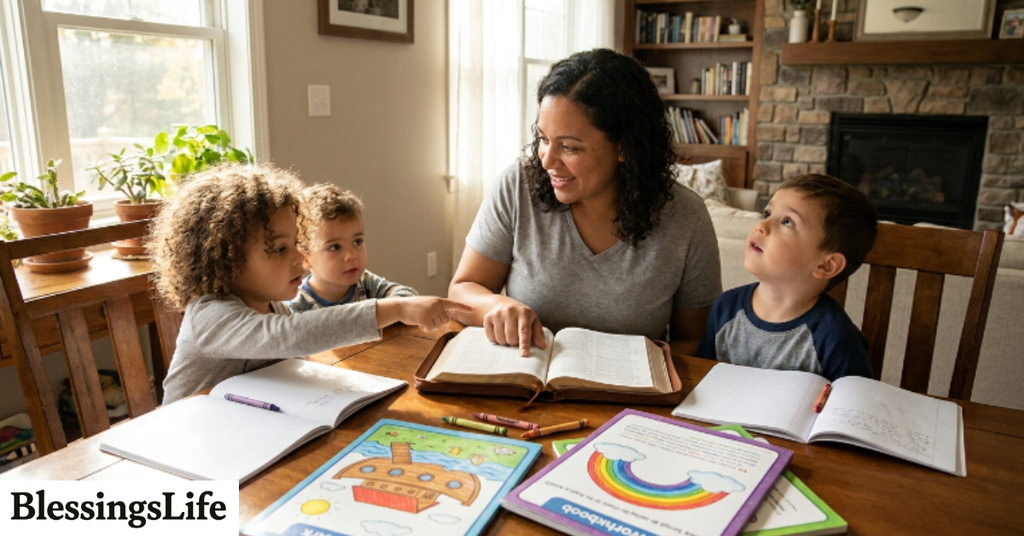
Reading a verse once doesn’t build faith. Repetition does. Ritual does. Story does.
Here’s what’s worked for our family and for dozens of parents I’ve talked to over the years.
1. Turn Verses Into Bedtime Rituals
Pick one promise a week. Say it every single night, same time, same tone. By day three, your child will start saying it with you. That’s not coincidence — that’s how memory works in young brains.
2. Use Their Language, Not Church Language
Instead of saying “the Lord is your shepherd,” try: “God takes care of you like you take care of your favorite stuffed animal, except way better and forever.”
Kids don’t need theology. They need pictures they can hold onto.
3. Connect the Verse to a Real Moment
Did your child fall off their bike and get scared to try again? That’s your moment for Joshua 1:9 — “Be strong and courageous.” Don’t wait for a “teaching moment” to arrive on a schedule. Grab it when it shows up in real life.
4. Let Them Ask Questions — Even Hard Ones
“If God is always with me, why did Grandpa die?” is not a question to dodge. It’s an opening. Sit in it with them. Bible promises for children aren’t meant to erase hard questions — they’re meant to give kids somewhere to bring them.
5. Make It Visual
Write the week’s verse on a sticky note by the mirror. Draw a picture of the promise together. Kids remember what they can see and touch far more than what they only hear once.
A Story Worth Sharing
A Sunday school teacher I know, Mrs. Alvarez, told me about a boy in her class named Diego. His parents were going through a rough divorce, and Diego stopped talking much in class. One week, she taught on Isaiah 41:10 — “Do not be afraid, for I am with you.”
She didn’t push him to speak. She just repeated the verse gently each week for a month.
One Sunday, Diego raised his hand and said, “My mom cried last night. I told her God is with us so we don’t have to be afraid.”
Mrs. Alvarez said she had to step out of the room for a second so the kids wouldn’t see her cry.
That’s what Bible promises for children can do. They don’t just shape the child. Sometimes, they shape the whole family around them.
Common Mistakes Parents Make When Teaching Bible Promises
- Turning it into a memorization contest. Pressure kills connection. Slow down.
- Only bringing up verses during discipline. If Scripture only shows up when a child is in trouble, it starts to feel like punishment instead of comfort.
- Skipping the “why.” Don’t just say the verse — explain, in kid-terms, why it matters right now.
- Assuming they’re too young to understand. Kids grasp emotional truth long before they grasp doctrine. Don’t underestimate them.
Why This Matters Long After Childhood
Here’s the quiet truth nobody tells new parents: the verses you plant now don’t always bloom immediately. Sometimes they surface fifteen years later, in a college dorm room, during a breakup, at a hospital bedside.
A friend of mine, now in her thirties, told me she still hears her grandmother’s voice reciting Philippians 4:13 every time she faces something terrifying. Her grandmother passed away over a decade ago. The verse didn’t.
That’s the long game of Bible promises for children. You’re not just teaching a Bible verse. You’re building a voice they’ll carry for the rest of their lives.
Bringing It All Together
Raising a child in a noisy, uncertain world isn’t easy. None of us have it fully figured out. But you don’t need a theology degree to hand your child something solid to stand on.
Start small. Pick one promise this week. Say it at bedtime. Say it in the car. Say it when they’re scared and when they’re brave.
Bible promises for children aren’t about perfect delivery. They’re about consistent presence — yours, and God’s, standing right there with them.
If this list helped you, share it with another parent who needs it today. And if your family has a favorite verse that’s carried you through a hard season, I’d love to hear it in the comments — sometimes the best promises come from the ones we’ve actually lived through.
FAQs
What is the most important Bible promise for children?
There’s no single “best” one, but Jeremiah 29:11 and Philippians 4:13 are among the most loved because they speak directly to hope and strength — two things every child needs.
What age should I start teaching Bible promises to my child?
You can start as early as toddler age using simple, repeated phrases like “God loves you” and “God is with you.” Understanding deepens naturally as they grow.
How can I help my child memorize Bible verses without pressure?
Repeat the same verse nightly for a week instead of introducing new ones constantly. Repetition through routine works far better than forced memorization drills.
Are there specific Bible promises for children dealing with fear or anxiety?
Yes — Isaiah 41:10, 2 Timothy 1:7, and Philippians 4:6-7 are widely used for calming childhood fear and anxiety in a gentle, age-appropriate way.
How do Bible promises for children help with emotional development?
They give children language for their feelings and a sense of security that isn’t dependent on circumstances, which supports resilience and emotional regulation over time.
Can Bible promises really make a difference for very young kids who don’t fully understand them yet?
Absolutely. Young children absorb emotional tone and repeated comfort long before they grasp full meaning — the security sinks in even before the theology does.