
There’s a reason the birth of Jesus in the Bible gets retold every single year, in churches, in living rooms, in whispered prayers before bed. It’s not just a religious event on a calendar. It’s a story about a scared young woman, a confused fiancé, a long and uncomfortable journey, and a baby born in the most unlikely place imaginable.
Maybe you’ve heard this story a hundred times. Maybe you’re reading it for the first time. Either way, there’s something in it that still lands differently depending on where you are in life.
So let’s slow down and actually walk through it—not the cleaned-up nativity-set version, but what the Bible itself says happened.
What the Bible Actually Says About the Birth of Jesus
The story of the birth of Jesus in the Bible isn’t told in one neat place. It’s pieced together mainly from two Gospels—Matthew and Luke—and each one focuses on a different angle.
Matthew tells it from Joseph’s point of view. Luke tells it from Mary’s. Put them together, and you get the full picture we all grew up hearing about.
The Announcement to Mary (Luke 1)
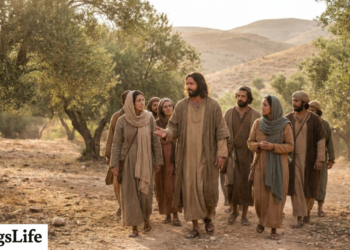
Picture this. You’re a teenage girl in a small town called Nazareth, engaged but not yet married, going about an ordinary day. And then an angel shows up.
Luke 1:26-38 describes the angel Gabriel appearing to Mary and telling her she’ll conceive a son through the Holy Spirit, and that His name will be Jesus. Not exactly the news you’d expect on a random afternoon.
Mary’s response is the part that gets me every time. She doesn’t argue. She doesn’t run. She simply says, “I am the Lord’s servant. May your word to me be fulfilled.”
That’s a heavy thing to say when you don’t know how your family, your fiancé, or your entire village is going to react.
Joseph’s Dilemma and Divine Reassurance (Matthew 1)
Now flip to Joseph’s side of things. He finds out Mary is pregnant, and he knows the baby isn’t his.
Matthew 1:19 tells us Joseph was a righteous man and didn’t want to publicly humiliate her, so he planned to quietly end the engagement. Can you imagine the heartbreak and confusion in that decision?
Before he can act on it, an angel visits him in a dream and tells him not to be afraid to take Mary as his wife, because the child was conceived by the Holy Spirit. Joseph wakes up, and he simply obeys.
Two young people, two overwhelming moments, and both choose faith over fear. That’s really where the birth of Jesus in the Bible begins—not in a stable, but in two hearts saying yes to something they didn’t fully understand.
The Journey to Bethlehem
Here’s a detail people often skip past too quickly: Mary and Joseph didn’t plan to be in Bethlehem when the baby came.
Luke 2:1-5 explains that Caesar Augustus ordered a census, and everyone had to travel to their ancestral hometown to register. For Joseph, that meant Bethlehem, the city of David.
So a very pregnant Mary made a journey of roughly 90 miles, likely on foot or riding a donkey, over rough terrain. No maternity care. No comfortable travel. Just two people trying to follow the rules of an empire that didn’t care about their circumstances.
It’s easy to romanticize this part in movies and paintings. In real life, it would have been exhausting, painful, and more than a little frightening.
The Night Jesus Was Born
This is the moment the whole story builds toward—and it’s surprisingly humble for something so world-changing.
No Room at the Inn
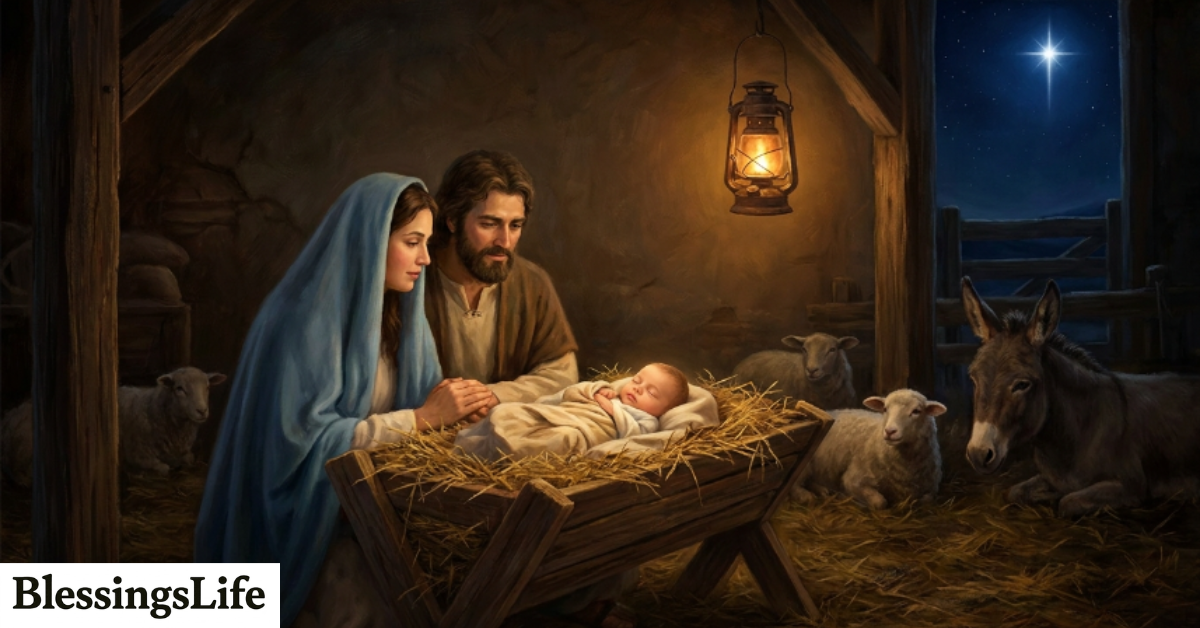
Luke 2:7 says that while they were in Bethlehem, the time came for Mary to give birth, and she wrapped her son in cloths and laid Him in a manger, because there was no guest room available for them.
Not a palace. Not even a proper room. A manger—an animal’s feeding trough.
Think about that for a second. The birth of Jesus in the Bible starts with rejection, in a way. No one had space for this family. And yet, that’s exactly where the story takes root.
If you’ve ever felt like there was “no room” for you somewhere—unseen, overlooked, pushed to the margins—this part of the story might hit closer to home than you expected.
Shepherds and the Angelic Announcement
While Mary and Joseph were settling into that humble space, something extraordinary was happening in the fields nearby.
Luke 2:8-14 describes shepherds keeping watch over their flocks at night when an angel appears, and the glory of the Lord shines around them. Understandably, they were terrified.
The angel tells them not to be afraid, that a Savior has been born in the city of David, and that they’ll find the baby wrapped in cloths, lying in a manger. Then a whole choir of angels joins in, praising God.
Shepherds weren’t exactly high-status people back then. They were often looked down on. But they were the first ones invited to witness the birth of Jesus in the Bible. That’s not an accident—it’s a pattern you’ll see throughout the whole story: God showing up for the overlooked first.
The shepherds don’t just stand there in awe, either. Luke 2:16 says they hurried off and found Mary, Joseph, and the baby lying in the manger. Then they went out and told everyone what they’d seen.
The Wise Men and the Star (Matthew 2)
Sometime later—likely not the same night, despite what most nativity scenes suggest—wise men from the East arrived in Jerusalem, asking where they could find the one born King of the Jews.
Matthew 2:2 says they had seen His star and had come to worship Him. They followed that star all the way to where the child was.
When they finally found Him, Matthew 2:11 tells us they bowed down and worshiped Him, then presented gifts of gold, frankincense, and myrrh.
Those gifts weren’t random, either. Gold for a king. Frankincense for a priest. Myrrh, which was used for burial, hinting at what was still to come. Even in this joyful moment, there’s a quiet thread pointing toward sacrifice.
Bible Verses Worth Remembering
If you only remember a handful of verses about the birth of Jesus in the Bible, these are the ones people return to again and again:
- Luke 2:11 – “Today in the town of David a Savior has been born to you; He is the Messiah, the Lord.”
- Isaiah 9:6 – “For to us a child is born, to us a son is given, and the government will be on His shoulders.”
- Matthew 1:23 – “The virgin will conceive and give birth to a son, and they will call Him Immanuel, which means ‘God with us.'”
- Luke 2:14 – “Glory to God in the highest heaven, and on earth peace to those on whom His favor rests.”
There’s something grounding about reading these verses slowly instead of skimming past them the way we often do during a busy holiday season.
Why the Birth of Jesus in the Bible Still Matters Today

You might be wondering—okay, this is a nice historical story, but why does it still matter two thousand years later?
Here’s the honest answer: it’s less about the history and more about what the story represents.
- Hope in hard circumstances. Mary and Joseph didn’t have it easy. No comfort, no certainty, no five-star delivery room.
- God showing up in ordinary places. Not a palace, not a temple—a feeding trough in a small, forgettable town.
- Everyone gets an invitation. Shepherds. Foreign travelers. People from every walk of life were part of this story from day one.
A friend of mine once told me that the nativity story is the one Bible story that meets people exactly where they are—tired, unsure, maybe even a little scared about what’s ahead. That’s probably why the birth of Jesus in the Bible has stayed relevant for so long. It doesn’t start with power. It starts with humility.
Common Misconceptions About the Nativity Story
Since this story gets retold so often, a few details have quietly drifted from what the Bible actually says.
- The wise men were not at the manger. They likely visited months or even up to two years later, based on Matthew’s account.
- There’s no mention of exactly three wise men. The Bible never states a number—we just assume three because of the three gifts.
- Animals aren’t specifically mentioned in the manger scene. We assume them because of the setting, but Luke doesn’t list them.
- December 25th isn’t confirmed in Scripture. The Bible doesn’t give an exact date for the birth of Jesus.
None of this makes the story less meaningful. If anything, going back to what’s actually written makes it feel more real, less like a decorated set piece.
Lessons We Can Learn From the Birth of Jesus in the Bible
Beyond the history, this story quietly teaches a few things worth sitting with:
- Obedience doesn’t always come with clarity. Mary and Joseph said yes before they fully understood what they were saying yes to.
- Humble beginnings don’t mean small significance. A manger became the birthplace of something the whole world still talks about.
- Ordinary people get to be part of extraordinary moments. Shepherds weren’t chosen because they were important. They were chosen, period.
If you’ve ever felt like your circumstances are too messy or too small for something meaningful to happen, this story gently pushes back on that idea.
Bringing It All Together
When you strip away the tinsel, the choir music, and the perfectly arranged nativity figurines, what’s left is a story about trust. About two young people walking into the unknown. About a baby born in a place nobody would have chosen, surrounded by people nobody expected to be there.
That’s the real heart of the birth of Jesus in the Bible—not the grandeur, but the quiet, stubborn hope woven through every detail.
Maybe that’s worth remembering the next time you read this story again, whether it’s your first time or your fiftieth.
If this walked you through the story in a way that felt new, or reminded you of something you’d forgotten, consider sharing it with someone who might need the reminder too. And if you’re curious to go deeper, the Gospels of Matthew and Luke are a good place to start reading for yourself.
FAQs
Where in the Bible is the birth of Jesus recorded?
The birth of Jesus in the Bible is recorded mainly in Matthew 1–2 and Luke 1–2. Matthew focuses on Joseph’s experience and the visit of the wise men, while Luke centers on Mary, the shepherds, and the angelic announcement.
Why was Jesus born in Bethlehem instead of Nazareth?
Mary and Joseph lived in Nazareth, but a Roman census required them to travel to Bethlehem, Joseph’s ancestral hometown, to register. Jesus ended up being born there because that’s where they were when Mary went into labor.
Why was Jesus born in a manger?
Luke 2:7 explains there was no guest room available for them in Bethlehem, so Mary laid the newborn Jesus in a manger, which was typically used to feed animals.
Who were the first people to visit baby Jesus?
Shepherds were the first visitors, arriving shortly after His birth following an angelic announcement in the nearby fields. The wise men arrived later, following a star.
Does the Bible say Jesus was born on December 25th?
No, the Bible doesn’t give a specific date for the birth of Jesus. December 25th became the traditional date centuries later for various historical and cultural reasons.
What is the significance of the gifts from the wise men?
The wise men gave gold, frankincense, and myrrh—gifts symbolizing kingship, divinity, and, through myrrh, a hint toward Jesus’s future death and burial.