
Introduction
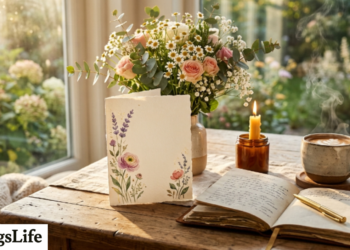
My grandmother kept a small, faded card tucked inside her Bible. On it, in handwriting that had softened with age, was a blessing she’d copied down decades ago: “May the road rise up to meet you.” She’d pull it out at weddings, funerals, and sometimes just on a random Tuesday when someone needed a little hope. That’s the thing about traditional Irish blessings — they show up exactly when you need them.
If you’ve ever searched for the right words to say at a wedding toast, a sympathy card, or a housewarming gift, you’ve probably stumbled across these blessings before. There’s a reason they’ve survived centuries. They carry warmth. They carry history. And somehow, they still feel personal, even though millions of people have used them before you.
In this guide, we’re going to walk through the most beloved traditional Irish blessings, where they came from, what they actually mean, and how you can use them in real life — whether you’re writing a card, giving a toast, or just looking for a little comfort on a hard day.
Why Traditional Irish Blessings Still Matter Today
There’s something almost stubborn about how these blessings have held on. In a world of quick texts and copy-paste greeting cards, people still reach for words written generations ago.
Why? Because they say what we struggle to say ourselves.
Grief, love, hope, gratitude — these are hard emotions to put into fresh language every single time. Traditional Irish blessings do that heavy lifting for us. They’ve been shaped and reshaped by real families, real losses, real celebrations, until only the truest parts remained.
Think about it this way: when you say “may the wind be always at your back,” you’re not just reciting a poem. You’re joining a conversation that started long before you and will continue long after.
A Quick Note on Origins
Most traditional Irish blessings grew out of an oral tradition — spoken at hearths, in fields, at wakes, long before anyone wrote them down. Ireland’s history of storytelling, faith, and close-knit community life shaped these words.
Many blend Celtic imagery (wind, rain, roads, fields) with Christian faith, since Ireland’s spiritual life has long carried both threads. That’s part of why they feel both earthy and sacred at the same time.
The Most Famous Traditional Irish Blessing (And Why It Endures)
Ask almost anyone to name an Irish blessing, and they’ll say some version of this:
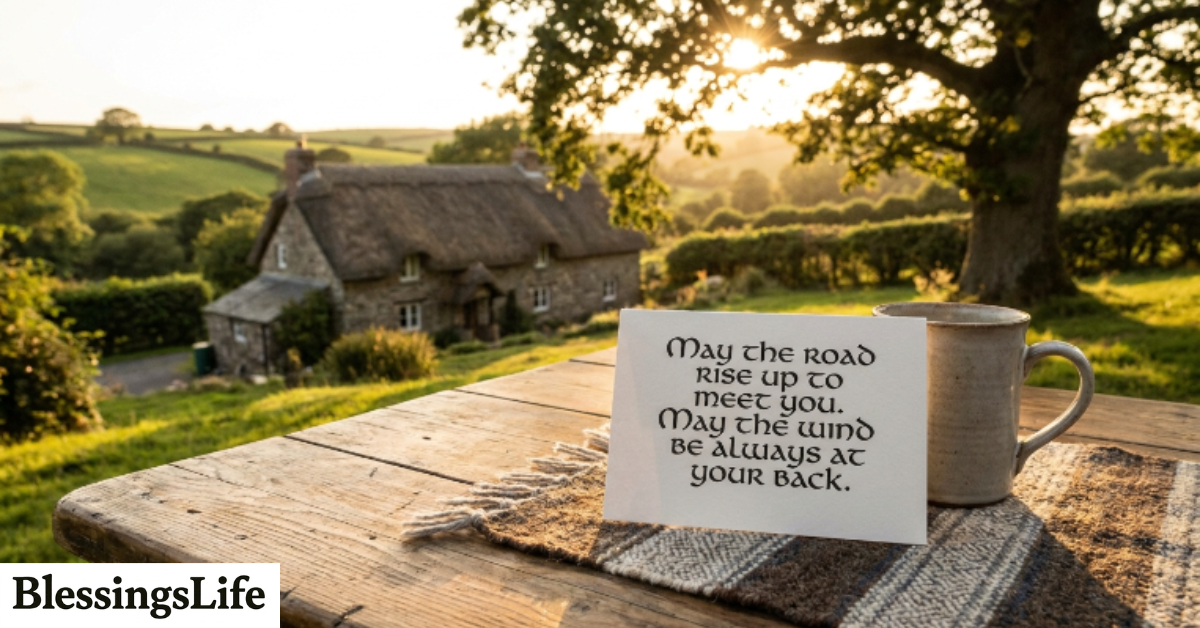
“May the road rise up to meet you, May the wind be always at your back, May the sun shine warm upon your face, The rains fall soft upon your fields, And until we meet again, May God hold you in the palm of His hand.”
I’ve heard this read at three different funerals and one wedding. Each time, it landed differently — softer at a goodbye, hopeful at a beginning. That’s the beauty of traditional Irish blessings like this one. They flex to fit the moment.
Notice the imagery: roads, wind, sun, rain, fields. These aren’t abstract ideas. They’re the daily texture of a farming, seafaring, weather-watching people. It’s a blessing built from lived experience, not lofty theology.
Traditional Irish Blessings for Weddings
Weddings call for words that feel both joyful and a little sturdy — because marriage, as anyone who’s been married will tell you, needs more than confetti and cake.
Here are a few traditional Irish blessings people often use in vows, toasts, or wedding cards:
- “May you have warm words on a cold evening, a full moon on a dark night, and the road downhill all the way to your door.”
- “May your home always be too small to hold all your friends.”
- “May love and laughter light your days, and warm your heart and home.”
A friend of mine used the “too small to hold all your friends” line in her wedding speech last spring. Half the room laughed, the other half teared up. That’s a good blessing — it does both.
Why These Work So Well at Weddings
Wedding blessings from Irish tradition tend to focus on the home rather than just the couple. There’s a quiet wisdom in that. A marriage isn’t just two people — it becomes a household, a gathering place, a small world other people get pulled into.
Traditional Irish Blessings for Funerals and Grief
This is where these words really earn their keep.
Grief makes people go quiet in strange ways. You want to say something meaningful to a grieving friend, but everything sounds hollow once it leaves your mouth. Traditional Irish blessings step in when your own words fall short.
Some commonly used ones for loss include:
- “May the light of heaven shine upon your grave, and may the light of God’s love shine upon your soul.”
- “May the roads rise to meet those we love, and may they find peace beyond all understanding.”
- “Death leaves a heartache no one can heal, love leaves a memory no one can steal.”
That last one — about memory no one can steal — is often read at Irish wakes. I’ve watched it stop a room mid-sob, in a good way. It doesn’t try to explain grief. It just sits with it.
A Gentle Reminder
If you’re sending a sympathy card and you’re not sure what to write, borrowing a traditional Irish blessing isn’t a cop-out. It’s actually one of the kindest things you can do — because it tells the grieving person, “this pain is old, and people have survived it before, and here are words that have carried others through.”
Traditional Irish Blessings for New Homes and New Beginnings
Moving into a new house? Starting a new job? Welcoming a baby? There’s a blessing for that too.
- “Bless this house, O Lord, we pray, make it safe by night and day.”
- “May your walls know joy, may every room hold laughter, and every window open to great possibility.”
- “May there always be work for your hands to do.”
I gave a framed version of “may there always be work for your hands to do” to my brother when he opened his first workshop. He rolled his eyes a little (he’s not sentimental), but I noticed it hanging on his wall a year later. That’s when you know a blessing has done its job — it outlasted the eye-roll.
Quotes and Examples Box: Traditional Irish Blessings for Every Occasion
Here’s a quick-reference box you can save or screenshot — a small collection of traditional Irish blessings sorted by moment:
For a wedding: “May your marriage bring you all the beauty of springtime and there be beauty in the years that follow.”
For a friend going through hardship: “May you always have walls for the winds, a roof for the rain, and tea beside the fire.”
For a new baby: “May the light always find you on a dreary day. May the road always rise to greet you and may the wind be ever at your back.”
For someone leaving on a journey: “May you be half an hour in heaven before the devil knows you’re dead.” (Yes, it’s a little cheeky — Irish blessings aren’t always solemn.)
For everyday encouragement: “May you live as long as you want, and never want as long as you live.”
For gratitude: “May the blessings of light be upon you — light without and light within.”
Feel free to mix these with your own words. That’s actually how the tradition has always worked — nothing here is meant to be recited like a legal document.
How to Use Traditional Irish Blessings Without Sounding Rehearsed
Here’s the tricky part: these blessings are so well-known that they can sometimes come across as generic if you just drop them in without context.
A few tips that help:
- Add a personal line before or after it. Something like, “I thought of you when I read this” changes everything.
- Match the blessing to the actual relationship. A cheeky one for a close friend, a gentle one for someone you don’t know as well.
- Say it slowly if you’re speaking aloud. These lines were written for rhythm and breath, not for rushing.
- Don’t over-explain it. Let the words sit. Silence after a blessing is often more powerful than commentary.
Honestly, the biggest mistake people make is rushing through it like they’re reading a grocery list. Slow down. Let it breathe.
The Emotional Thread Running Through Every Irish Blessing
If you read enough traditional Irish blessings, you start noticing a pattern. They’re rarely about grand achievements — wealth, fame, success. They’re about small, sturdy things:
- Warmth
- Shelter
- Companionship
- Safe roads
- A full house
- A peaceful ending
Maybe that says something about what actually matters to us, once all the noise is stripped away. Isn’t it interesting that centuries-old words about wind and rain and doorways still hit harder than a lot of modern greeting cards?
There’s a humility to these blessings too. They don’t promise a perfect life. They ask for gentler weather, safer paths, and people who love you along the way. That feels more honest than most modern wishes, if you ask me.
Bringing These Blessings Into Your Own Life

You don’t need Irish heritage to use these words meaningfully. You just need a moment that calls for something a little deeper than “good luck” or “thinking of you.”
Write one in a card. Read one at a dinner table before a big meal. Frame one for a friend’s new apartment. Say one quietly to yourself on a hard morning.
That little card my grandmother kept? I have it now. The ink is barely legible, but I don’t need to read it anymore — I know it by heart. That’s really what a traditional Irish blessing is meant to become: not just words on paper, but something that settles into you and stays.
Conclusion
Traditional Irish blessings have lasted this long for a simple reason — they speak to the parts of life that never really change. Love, loss, hope, new beginnings, the wish for someone’s safety on the road ahead. Words like these don’t go out of style because the feelings behind them never do.
So next time you’re stuck on what to say — in a card, a toast, or just to someone you love — maybe reach for one of these. Say it slowly. Mean it. And if it moves you, pass it along to someone else who needs it today.
If this guide helped you find the right words, share it with a friend who’s planning a wedding, comforting someone in grief, or just looking for a little warmth this week. Sometimes the kindest thing you can do is hand someone a blessing that isn’t even yours.
FAQs
What is the most well-known traditional Irish blessing?
The most recognized one begins with “May the road rise up to meet you.” It’s used at weddings, funerals, and farewells because its imagery of roads, wind, and sun feels fitting for almost any life transition.
Are traditional Irish blessings religious?
Many blend Christian faith with older Celtic imagery, but not all are overtly religious. Some focus purely on nature, home, and community, making them suitable for both religious and secular occasions.
Can I use an Irish blessing at a non-Irish wedding or event?
Absolutely. These blessings are widely used around the world regardless of heritage, since their themes — love, home, hope — are universal rather than exclusive to one culture.
What’s a good Irish blessing for a sympathy card?
“Death leaves a heartache no one can heal, love leaves a memory no one can steal” is a gentle, comforting choice often used at Irish wakes and in sympathy notes.
Where do traditional Irish blessings come from?
Most originated in oral tradition, spoken at homes, gatherings, and wakes long before being written down. They reflect Ireland’s history of storytelling, farming life, and deep community ties.
Is it okay to personalize a traditional Irish blessing?
Yes, and it’s actually encouraged. Adding a personal sentence before or after the blessing, or adapting a line slightly, keeps the tradition alive while making it feel genuine to your relationship.