
There’s a reason the image of Jesus on the cross has survived thousands of years, countless wars, cultural shifts, and generations of doubt and belief alike. It’s not just a symbol hanging on church walls or worn as jewelry. It’s a story — a raw, painful, deeply human story about love that refused to quit.
If you’ve ever stared at a crucifix and wondered what it actually meant, you’re not alone. Maybe you grew up going through the motions at church. Maybe you’re exploring faith for the first time. Or maybe you just found yourself here, curious, at 1 a.m., typing questions into Google.
Wherever you’re coming from, let’s talk about it — honestly, and without the churchy jargon.
Why the Image of Jesus on the Cross Still Moves People
Think about the last time something truly broke your heart open. Maybe it was watching a parent sacrifice everything for their child. Maybe it was a friend who took the blame for something they didn’t do, just to protect you.
That feeling — that gut-punch of “someone did this for me” — is at the very center of the crucifixion story.
Jesus on the cross isn’t just a historical event. It’s an emotional one. It’s the image of someone innocent, choosing pain, so that others could be free of a burden they couldn’t carry alone.
- It’s why hospitals hang crosses in hallways.
- It’s why soldiers carry small crucifixes into battle.
- It’s why grieving families clutch rosaries at funerals.
There’s something about that image that meets people exactly where they are — in their lowest, most desperate moments.
The Story Behind Jesus on the Cross
Let’s rewind for a second, because context matters here.
According to the Gospels, Jesus was arrested after a tense final week in Jerusalem. He’d flipped tables in the temple, challenged religious leaders, and gathered a following that made Roman authorities nervous.
He was betrayed by someone close to Him. Denied by another. Beaten, mocked, and eventually sentenced to death by crucifixion — one of the cruelest execution methods the Roman Empire had.
Picture it plainly:
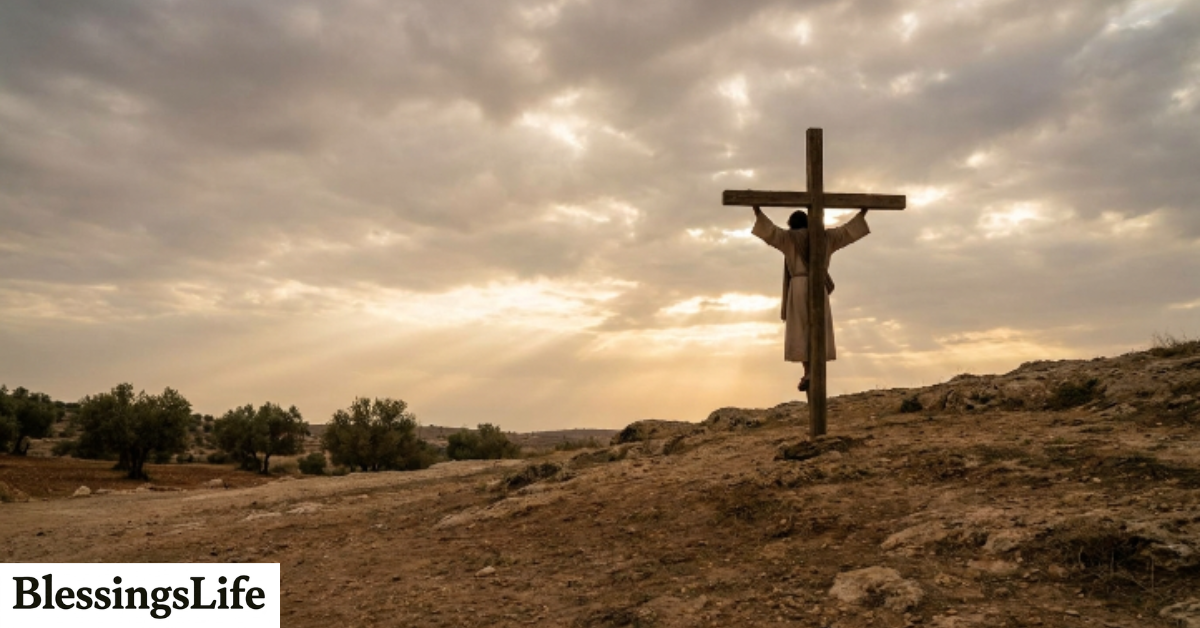
A man, exhausted and bleeding, forced to carry a heavy wooden beam through jeering crowds. Nails driven through flesh. Hours of suffocating pain. And yet, according to the accounts, His response wasn’t rage. It was forgiveness.
“Father, forgive them, for they do not know what they are doing.”
That single sentence has echoed through history for good reason. It wasn’t weakness. It was radical, almost incomprehensible grace.
What Jesus on the Cross Symbolizes for Believers

Here’s where it gets personal for a lot of people.
For Christians, Jesus on the cross isn’t just about a death. It’s about a trade.
The belief is simple, but heavy: humanity’s mistakes, guilt, and brokenness were placed on Him, so that people could be free of that weight.
Think of it like this — imagine owing a debt so large you could never repay it in a hundred lifetimes. Then someone walks in, quietly, and pays it in full. No conditions. No “you owe me later.” Just done.
That’s the emotional core of the cross for millions of believers:
- Forgiveness that isn’t earned
- Love that isn’t conditional
- Grace that isn’t rationed
It’s why so many people, even in their darkest seasons, return to this image again and again.
A Story That Feels Familiar, Even Today
You don’t have to be religious to understand sacrifice.
Think of a single mother working three jobs so her kids never feel the hunger she once did. Think of a soldier who steps in front of danger so his friend can go home to his family.
Now imagine that sacrifice, but infinite. No limits. No conditions. No “I’ll help you if…”
That’s the emotional weight behind Jesus on the cross — a suffering not forced by fate, but chosen willingly, out of love.
It’s not hard to see why, even in a world that questions everything, this story still lands hard.
Reflections & Quotes on Jesus on the Cross
Sometimes words say what explanations can’t. Here are a few reflections that capture the emotional depth of this moment:
“Greater love has no one than this: to lay down one’s life for one’s friends.” — John 15:13
“The cross is not a burden, it’s a bridge.”
“He carried the weight so we wouldn’t have to.”
“Love wasn’t just spoken on that hill — it was proven.”
“Even in agony, He chose forgiveness over anger.”
These aren’t just poetic lines. For many, they’re daily reminders — whispered during hard mornings, hospital visits, or quiet prayers before bed.
The Emotional Side Most People Don’t Talk About
Here’s something rarely discussed: Jesus on the cross wasn’t a clean, peaceful moment. It was chaos. Fear. Physical agony. Emotional abandonment.
At one point, He even cried out, “My God, my God, why have you forsaken me?”
That’s important.
Because it means even in that most divine moment, there was real human suffering, real doubt, real pain.
And maybe that’s exactly why so many people connect with it during their own dark nights — moments of illness, loss, heartbreak, or loneliness.
It’s comforting to know that even in suffering, He wasn’t distant from human emotion. He felt it.
Why People Turn to This Image During Hard Times
Ever notice how, during grief or crisis, people instinctively reach for a cross — whether it’s around their neck, on a wall, or in their mind?
There’s a reason for that.
Jesus on the cross represents a promise: pain is not the end of the story.
For many, it becomes:
- A source of strength during illness
- A symbol of hope during loss
- A reminder that suffering can lead to something greater
- A quiet companion during sleepless, anxious nights
It’s not about ignoring pain. It’s about believing pain has meaning — and doesn’t get the final word.
How This Story Still Shapes Lives Today
You’ll find the image of Jesus on the cross in hospital chapels, prison ministries, war memorials, and quiet countryside churches. But its influence isn’t just architectural — it’s deeply personal.
People recovering from addiction often say this image reminded them they were still worth saving.
Parents who’ve lost children have said it gave them permission to grieve and still hope.
Even people who’ve walked away from religion altogether admit — there’s something about that image that stays with them.
Maybe it’s because sacrifice, at its core, is a universal language.
Bringing It Back to You
So, why does any of this matter to you, right now, reading this?
Maybe you’re carrying something heavy. Maybe you feel unseen, unworthy, or just plain tired.
The story of Jesus on the cross isn’t meant to be a distant historical fact you nod at and move on from. It’s meant to feel personal — a reminder that love, real love, sometimes shows up in the form of sacrifice.
And maybe, just maybe, that’s worth sitting with for a moment.
Final Thoughts
At the end of the day, Jesus on the cross isn’t just a religious symbol — it’s a story about love that chose to stay, even when it hurt.
Whether you view it through faith, history, or simple human emotion, there’s no denying its impact.
If this resonated with you, take a moment today to reflect, share it with someone who might need to hear it, or explore more stories of faith and hope on our blog.
Sometimes, the smallest reminder of love can carry someone through their hardest day.
FAQs
Why was Jesus crucified?
Jesus was crucified after being accused of blasphemy and sedition by religious and political leaders who saw His growing influence as a threat. Crucifixion was a common Roman punishment meant to serve as a public deterrent.
What does Jesus on the cross symbolize?
It symbolizes sacrificial love, forgiveness, and redemption. For Christians, it represents Jesus taking on humanity’s sins so believers could experience grace and salvation.
What were Jesus’ last words on the cross?
According to the Gospels, His final words included, “Father, forgive them, for they do not know what they are doing,” and “It is finished.”
How long was Jesus on the cross before He died?
Historical and biblical accounts suggest Jesus was on the cross for about six hours, from mid-morning until His death in the afternoon.
Why do Christians wear the cross as jewelry?
Wearing a cross is a personal reminder of faith, sacrifice, and hope. It serves as a symbol of protection, identity, and connection to their beliefs.
What is the significance of Good Friday?
Good Friday commemorates the day Jesus was crucified. Despite the sorrow of the event, it’s called “good” because Christians believe His sacrifice ultimately led to salvation and new life.