
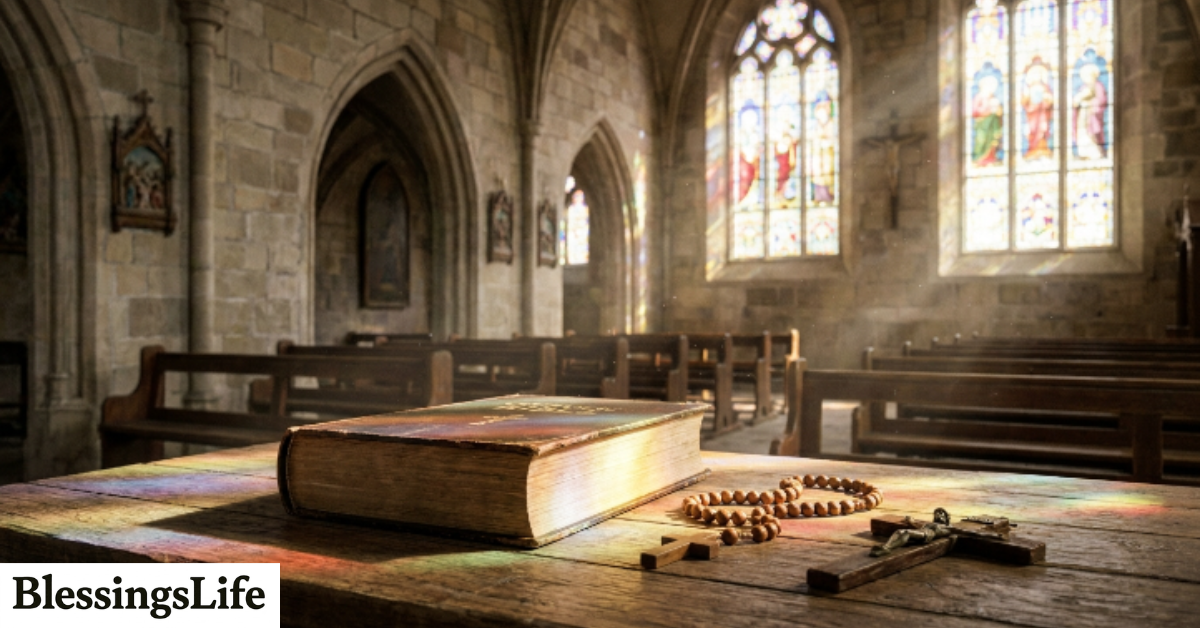
I still remember the first time I held my grandmother’s Catholic Bible. The leather cover was cracked, the pages soft as fabric, and tucked inside were little holy cards from funerals long past. She used to say that book had “extra chapters” compared to what her Protestant neighbor read. I didn’t understand what she meant back then. Years later, when I started digging into it myself, I realized the Catholic Bible carries a depth of history most people never get to hear about.
If you’ve ever wondered why your Catholic Bible looks a little different from the one your coworker or friend uses, you’re not alone. It’s one of the most searched questions among people rediscovering their faith or exploring Christianity for the first time.
So let’s talk about it — honestly, simply, and with the kind of warmth this topic deserves.
What Exactly Is the Catholic Bible?
At its core, the Catholic Bible is the collection of sacred texts recognized by the Catholic Church as divinely inspired scripture. It includes the Old Testament, the New Testament, and a set of additional books often called the Deuterocanonical books.
Here’s the part that surprises most people: the Catholic Bible contains 73 books, while most Protestant Bibles contain 66. That seven-book difference has sparked centuries of conversation, confusion, and even a little family debate (trust me, I’ve had a few at Thanksgiving dinner).
Those extra books — like Tobit, Judith, Wisdom, Sirach, Baruch, and 1 & 2 Maccabees — were part of the Greek Septuagint, an ancient translation used by early Christians, including the apostles themselves.
Why Does the Catholic Bible Have More Books?
This is probably the number one question people type into Google at 1 a.m. when they can’t sleep and start Googling theology (we’ve all been there).
The short answer: it comes down to history, not conspiracy.
- Early Christians used the Septuagint, a Greek version of Jewish scriptures that included these extra books.
- In the 16th century, during the Protestant Reformation, Martin Luther and other reformers chose to align the Old Testament with the shorter Hebrew canon used by Jewish scholars at the time.
- The Catholic Church, at the Council of Trent (1546), officially reaffirmed the 73-book canon that had already been in use for over a thousand years.
So really, the Catholic Bible didn’t “add” anything — it kept what was already there.
A Personal Story: Rediscovering Faith Through the Catholic Bible

A friend of mine, Maria, told me something that stuck with me. She’d drifted from her Catholic upbringing in her twenties — busy job, busy life, faith quietly fading into the background. Then her father passed away, and she found his old Catholic Bible in a drawer, dog-eared at the Book of Wisdom.
She started reading it just to feel close to him again. What she didn’t expect was how much comfort those pages would give her during grief. The Book of Sirach, in particular, became her nightly read.
That’s the thing about the Catholic Bible — it’s not just theology. It’s often a bridge back to family, memory, and meaning.
The Structure of the Catholic Bible
Understanding the Catholic Bible gets a lot easier once you break it into sections.
1. The Old Testament (46 Books)
This includes:
- The Pentateuch (Genesis through Deuteronomy)
- Historical books (like Joshua, Judges, and the Books of Kings)
- Wisdom literature (Psalms, Proverbs, Job)
- The Deuterocanonical books mentioned earlier
- The Prophets (Isaiah, Jeremiah, Ezekiel, and the minor prophets)
2. The New Testament (27 Books)
This part is actually identical across nearly all Christian Bibles — Catholic, Protestant, Orthodox. It includes:
- The four Gospels (Matthew, Mark, Luke, John)
- Acts of the Apostles
- The Letters (Pauline and Catholic epistles)
- Revelation
So the real difference isn’t in the New Testament at all — it’s entirely in those Old Testament additions.
Popular Catholic Bible Translations
If you’ve ever stood in a bookstore aisle overwhelmed by Bible options, you’re not imagining things — there are a lot of choices.
Here are a few widely trusted Catholic Bible translations:
- New American Bible (NAB) – commonly used in U.S. Catholic Mass readings
- Douay-Rheims Bible – an older, more traditional English translation
- Revised Standard Version, Catholic Edition (RSV-CE) – praised for literary beauty and accuracy
- New Jerusalem Bible – known for scholarly depth and readability
Each has its own tone. Some feel poetic, some feel direct, some feel almost like reading a letter from someone who truly loves you. It’s worth trying more than one to see which speaks to your heart.
Quotes and Passages People Turn to Most
Certain verses from the Catholic Bible show up again and again — in prayers, in tattoos, in cards people send during hard times. Here are a few that carry real emotional weight:
“Be still, and know that I am God.” — Psalm 46:10
“I can do all things through him who strengthens me.” — Philippians 4:13
“The Lord is my shepherd; I shall not want.” — Psalm 23:1
“Trust in the Lord with all your heart, and do not rely on your own insight.” — Proverbs 3:5
“For God so loved the world that he gave his only Son.” — John 3:16
People don’t memorize these because they’re pretty sentences. They memorize them because, at 3 a.m. during a hospital waiting room or a hard season of life, these words become an anchor.
How the Catholic Bible Is Used in Daily Catholic Life
The Catholic Bible isn’t meant to sit on a shelf collecting dust — it’s woven into everyday practice.
- At Mass: Readings follow a three-year cycle (Years A, B, C), pulling from both Old and New Testaments.
- In Lectio Divina: A slow, prayerful reading practice where believers meditate on a passage rather than just reading it quickly.
- In the Rosary: Many mysteries of the Rosary are directly tied to Gospel events.
- In personal prayer: Many Catholics keep a daily reading plan, especially during Lent and Advent.
My aunt, for instance, reads one Psalm every morning with her coffee. She says it “sets the tone” before the chaos of the day begins. Simple, but powerful.
Common Misunderstandings About the Catholic Bible
Let’s clear up a few things people often get wrong.
- Myth: Catholics aren’t allowed to read the Bible on their own.
Truth: Personal Bible reading is actively encouraged by the Church. - Myth: The Catholic Bible was created to support Catholic doctrine.
Truth: The canon was formally recognized based on historical use, not invented for convenience. - Myth: The extra books are “less holy.”
Truth: The Deuterocanonical books are considered fully inspired scripture within Catholic teaching.
Misunderstandings like these often come from a lack of context rather than bad intentions — which is exactly why conversations like this one matter.
Why the Catholic Bible Still Matters Today
In a world that moves fast and rarely slows down, there’s something grounding about opening a book that has survived empires, wars, translations, and centuries of human hands turning its pages.
Whether you’re Catholic by birth, returning after years away, or simply curious about the roots of your faith, the Catholic Bible offers more than religious instruction. It offers companionship. History. A sense that you’re not the first person to feel lost, afraid, grateful, or hopeful.
That’s really the heart of it, isn’t it? We don’t turn to scripture because it’s convenient — we turn to it because, somehow, it still speaks to exactly where we are.
Final Thoughts
The Catholic Bible isn’t just a religious text — it’s a living thread connecting generations of believers, including maybe your own grandmother, father, or someone else whose faith shaped who you are today.
If this article helped clear up a few questions, consider sharing it with someone who might be curious too — or leave a comment about which verse or book means the most to you. Sometimes the smallest conversations lead people back to something they didn’t know they were missing.
FAQs
What makes the Catholic Bible different from other Bibles?
The Catholic Bible includes seven additional Old Testament books, known as the Deuterocanonical books, which most Protestant Bibles do not include.
How many books are in the Catholic Bible?
The Catholic Bible contains 73 books total — 46 in the Old Testament and 27 in the New Testament.
Is the New Testament different in the Catholic Bible?
No, the New Testament is essentially the same across Catholic, Protestant, and Orthodox Bibles, containing the same 27 books.
What is the most recommended Catholic Bible translation for beginners?
The New American Bible (NAB) is widely recommended since it’s used in Mass readings and offers accessible, modern language.
Can non-Catholics read the Catholic Bible?
Absolutely — anyone can read it. Many readers find the additional wisdom literature, like Sirach and Wisdom, valuable regardless of their religious background.
Why were some books removed from Protestant Bibles?
During the Reformation, Protestant leaders chose to align the Old Testament with the shorter Hebrew canon, removing books that weren’t part of that specific tradition.