


A Prayer That Has Outlived Empires
I still remember the first time I heard the Aaronic blessing spoken over a room full of strangers.
It was at a small chapel, tucked between two hills, and the pastor lifted his hands and said words that felt older than the walls around us. “The Lord bless you and keep you…”
Something shifted in that room. People who’d been fidgeting with their phones went quiet. A woman two rows ahead of me wiped her eyes.
That’s the strange power of the Aaronic blessing. It’s not flashy. It doesn’t shout. But it lands somewhere deep, somewhere most modern words can’t reach.
If you’ve ever wondered where this blessing comes from, why it’s still used in churches and synagogues thousands of years after it was first spoken, or how you can use it in your own life — you’re in the right place. Let’s dig into it together.
What Exactly Is the Aaronic Blessing?
The Aaronic blessing gets its name from Aaron, the brother of Moses and the first high priest of Israel.
You’ll find it in the Book of Numbers, chapter 6, verses 24-26. God instructs Moses to teach Aaron and his sons a specific blessing to speak over the Israelites.
Here’s the blessing in its most familiar form:
“The Lord bless you and keep you; the Lord make his face shine on you and be gracious to you; the Lord turn his face toward you and give you peace.”
Simple, right? But there’s nothing simple about what it carries.
This isn’t just a nice sentiment someone wrote down. It’s considered one of the oldest continuously used prayers in human history. Archaeologists even found it inscribed on small silver scrolls dating back over 2,600 years — the oldest known biblical text ever discovered.
Think about that for a second. People have been whispering these exact words for thousands of years, through wars, exiles, weddings, funerals, and quiet Tuesday mornings. That’s not just tradition. That’s something holding on to us as much as we hold on to it.
Why Do We Call It the “Aaronic” Blessing?
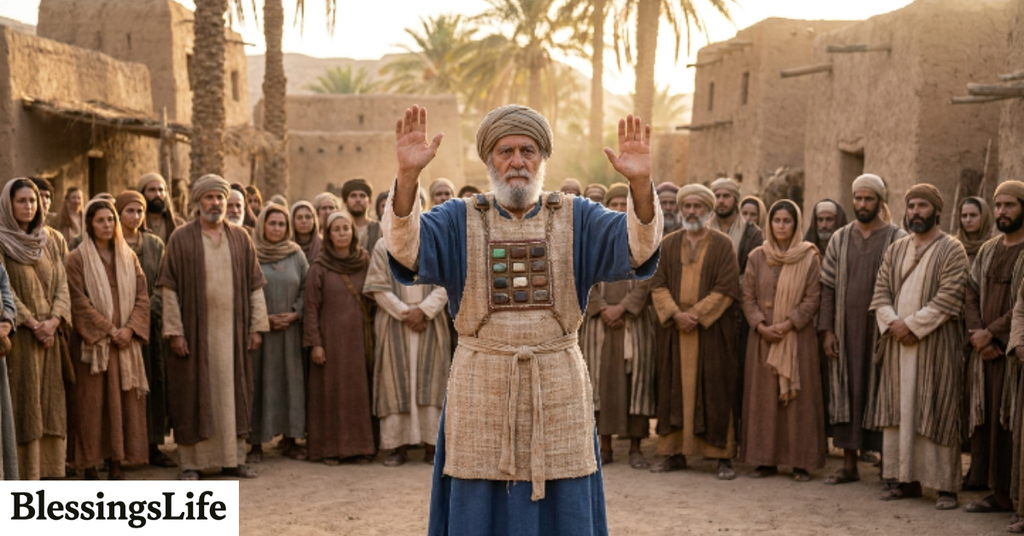
It’s named after Aaron because he was the one chosen to speak it first.
In ancient Israelite worship, priests held a specific role — they stood between the people and God, offering sacrifices, teaching the law, and blessing the community. Aaron was the very first of these priests.
When God gave him these words in Numbers 6, it wasn’t a suggestion. It was a command:
- “Speak to Aaron and his sons, saying, Thus you shall bless the people of Israel.”
So this blessing became tied to the priesthood itself. For generations, only priests descended from Aaron’s line could speak it in the temple.
Today, of course, many pastors, rabbis, chaplains, and even parents use it freely. But the name stuck — a small nod to where it all began.
Breaking Down the Meaning, Line by Line
I think people sometimes rush past this blessing because it sounds poetic but not always practical. So let’s slow down and actually look at what each line means.
“The Lord bless you and keep you”
This isn’t a vague wish for good vibes. In Hebrew thought, blessing meant provision — food, safety, prosperity, protection from harm.
“Keep you” carries the idea of being guarded, watched over, like a shepherd keeping an eye on wandering sheep.
Picture a parent standing at the door, watching their kid walk to the bus stop, making sure nothing bad happens on the way. That’s the heartbeat of this line.
“The Lord make his face shine on you and be gracious to you”
This is where it gets emotionally rich.
In ancient near-eastern culture, a king’s “face” turning toward you meant favor. His face turning away meant rejection, punishment, or being forgotten.
So when this line asks for God’s face to “shine” on someone, it’s asking for warmth, closeness, attention — the opposite of being ignored or abandoned.
Haven’t we all felt what it’s like to be the person nobody notices in the room? This line flips that. It says: you are seen. You are not invisible.
“The Lord turn his face toward you and give you peace”
The Hebrew word here is shalom — and it means so much more than “no conflict.”
Shalom means wholeness. Completeness. Nothing broken, nothing missing. A life that fits together the way it’s supposed to.
So this final line isn’t just “have a nice day.” It’s a deep hope that a person’s entire life — relationships, health, mind, spirit — would be whole.
Real Stories: How This Blessing Shows Up in Ordinary Life
Numbers and definitions are one thing. But blessings live in real moments. Here are a few ways I’ve seen the Aaronic blessing show up in everyday life.
A grandmother’s bedtime ritual. A friend once told me her grandmother said this blessing over her every single night before bed, from childhood until she left for college. She said even now, decades later, she can’t hear those words without tearing up.
A hospital room. A chaplain I spoke with shared how he uses this blessing with patients before surgery. Not to promise outcomes, he said, but to give people something steady to hold onto when everything else feels uncertain.
A wedding blessing. Many couples now ask their officiant to close the ceremony with these words, tying their new life together to something ancient and unshaken.
A parent’s goodbye. Some parents whisper this blessing over their kids before they leave for military service, college, or even just a long day at school.
None of these people are priests. None of them need special permission. They just needed words big enough to carry what they were feeling — and this blessing fit.
Quotes & Reflections Box: Voices on the Aaronic Blessing
“It is not a wish. It is a declaration over a life.” — Anonymous pastor, on the weight of speaking this blessing aloud
“These six lines have outlasted kingdoms. They’ll outlast our worries too.” — A reflection often shared in Jewish teaching circles
“When someone else speaks blessing over you, it lands differently than when you say it to yourself.” — Common sentiment among chaplains and counselors
“The face that shines is not distant. It is near, warm, present.” — A common devotional reflection on Numbers 6
These aren’t official scripture quotes — just the kind of thoughts people carry after sitting with this blessing for a while. Sometimes reflection says as much as the original text.
How Different Faith Traditions Use It Today
You’ll find the Aaronic blessing woven through several traditions, each with its own flavor.
- Judaism — Still recited during the Priestly Blessing (Birkat Kohanim), especially during major holidays like Yom Kippur and Sukkot.
- Catholic and Orthodox Christianity — Often used in benediction at the close of Mass or liturgy.
- Protestant churches — Extremely common as a closing benediction, especially in Lutheran, Anglican, and Reformed traditions.
- Personal and family use — Increasingly used outside formal religious settings, in homes, hospitals, and even at graduations.
It’s interesting, isn’t it, how a blessing written for one specific priestly family thousands of years ago somehow became something almost universal?
Why This Ancient Blessing Still Matters in a Noisy World
We live surrounded by noise. Notifications. Deadlines. Comparison. Constant low-grade anxiety humming under everything.
Maybe that’s exactly why this blessing still resonates.
It doesn’t ask you to fix your life. It doesn’t demand you perform, achieve, or prove anything.
It simply says: may you be watched over. May you be seen. May your life be whole.
There’s something almost rebellious about that in a culture obsessed with hustle and self-improvement.
The Aaronic blessing doesn’t compete with your to-do list. It interrupts it — gently reminding you that you’re allowed to just be held for a moment.
How You Can Use the Aaronic Blessing Yourself
You don’t need a robe, a title, or a pulpit to speak this blessing. Here’s how people use it in ordinary life:
- Over your children — before bed, before school, before big life changes.
- Over a friend going through hardship — illness, grief, job loss, heartbreak.
- At the end of a gathering — family dinners, small groups, community events.
- As a personal prayer — speaking it over yourself during hard seasons.
- In written form — cards, letters, or even a quiet text message to someone who needs it.
There’s no formula you have to get exactly right. The heart behind it matters more than perfect delivery.
A Gentle Reminder Before We Close
Isn’t it strange how the oldest words are often the ones that hold up best?
We chase new self-help trends, new mantras, new five-step plans for peace — and yet this ancient blessing, written for a small desert community thousands of years ago, still quiets something restless in us.
Maybe that’s the whole point. Maybe we don’t always need new words. Sometimes we just need the old ones spoken over us again, slowly, like someone finally paying attention.
If this blessing moved something in you today, consider sharing it with someone who needs it — a friend going through a hard season, a parent worried about their kid, or even just someone who could use a reminder that they’re not invisible.
And if you’d like to go deeper, take a look at our related piece on biblical blessings and their meanings — there’s a whole world of comfort waiting there too.
FAQs
What does the Aaronic blessing mean?
It’s a blessing from Numbers 6:24-26 asking for God’s protection, favor, and peace over someone’s life. It’s less about luck and more about being watched over and made whole.
Who can say the Aaronic blessing?
While it was originally reserved for priests descended from Aaron, today many pastors, rabbis, chaplains, and even everyday people speak it over loved ones.
Is the Aaronic blessing only for Christians?
No. It comes from the Hebrew Bible and is still used in Jewish worship today, especially during Birkat Kohanim, alongside its widespread use in Christian traditions.
What is the significance of “God’s face shining” in the blessing?
In ancient culture, a ruler’s face turning toward you meant favor and closeness. This line asks for God’s warm attention rather than distance or rejection.
Can I say the Aaronic blessing over myself?
Yes. Many people use it as a personal prayer during hard seasons, speaking the words over their own life as a reminder of hope and protection.
Why is the Aaronic blessing considered one of the oldest prayers?
Archaeologists discovered it inscribed on silver scrolls dating back over 2,600 years, making it the oldest known biblical text ever found — still spoken today almost unchanged.