
Introduction
I still remember sitting in my grandmother’s kitchen, watching her pray over a pot of soup like it was the most natural thing in the world. No dramatic gestures. No performance. Just quiet conversation with someone she trusted completely.
That’s my earliest memory of Christianity — not a sermon, not a stained-glass window, but a woman talking to God while stirring soup.
If you’ve ever wondered what Christianity actually is, beyond the churches and holidays and headlines, you’re not alone. Millions of people search for answers about this faith every single day — some out of curiosity, some out of doubt, some because they’re standing at a crossroads in their own life.
This article won’t lecture you. It’ll walk you through what Christianity really means, where it came from, why it still matters to over two billion people today, and how ordinary humans experience it in their everyday lives.
What Is Christianity, Really?
At its core, Christianity is the belief that Jesus Christ was the Son of God, that he died for humanity’s sins, and that he rose from the dead. That’s the short version.
But faith is rarely just a definition. For most believers, Christianity isn’t a checklist — it’s a relationship.
Think of it like this: knowing facts about a person isn’t the same as knowing them. You can memorize someone’s birthday, their job, their favorite food. But real connection comes from time spent together, conversations shared, trust built slowly.
That’s how many Christians describe their faith — not as rules to follow, but as a relationship they’re still learning to understand.
Where It All Began
Christianity traces back roughly 2,000 years to a small, dusty region called Judea, part of the Roman Empire. Jesus of Nazareth taught, healed, and challenged the religious and political systems of his time.
He was executed by crucifixion — a brutal Roman punishment. His followers claimed that three days later, he rose from the dead.
That claim changed everything.
A handful of frightened, ordinary fishermen and tax collectors became the foundation of a movement that would eventually spread across continents, survive persecution, outlive empires, and shape the modern world.
- It started with 12 disciples.
- It grew through underground house churches.
- Today, it’s practiced by roughly one-third of the world’s population.
That’s not a small story. That’s history bending around one life.
The Heart of the Belief System
Christianity isn’t one-size-fits-all. There are Catholics, Protestants, Orthodox Christians, Evangelicals, and dozens of smaller denominations. They disagree on plenty.
But most share a few core convictions:
- God exists as a loving, all-powerful creator.
- Jesus Christ is both fully human and fully divine.
- The Bible serves as sacred scripture and moral guidance.
- Grace and forgiveness are freely offered, not earned.
- Eternal life awaits those who believe.
I once asked a pastor friend to explain grace in one sentence. He said, “It’s getting a gift you didn’t work for and don’t deserve — and choosing to accept it anyway.” That stuck with me.
A Faith Lived, Not Just Believed

Here’s something people often miss: Christianity isn’t just Sunday mornings in a pew.
For many believers, it shows up in small, unglamorous moments.
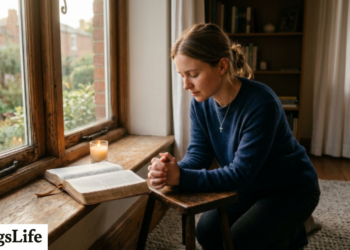
A single mom praying in her car before a job interview. A teenager forgiving a friend who betrayed them. A grieving widower finding strange comfort in a verse he memorized decades ago.
My neighbor, Maria, isn’t the type to talk about religion much. But when her husband was diagnosed with cancer, she told me something I’ve never forgotten: “I don’t understand why this is happening. But I’m not walking through it alone.”
That’s Christianity in its rawest form — not certainty, but companionship through uncertainty.
Common Practices and Traditions
Christian practice varies widely, but certain elements show up again and again:
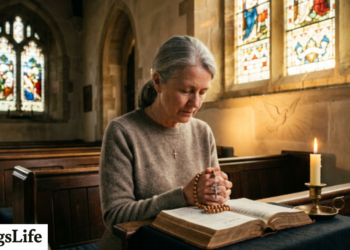
- Prayer — personal, communal, spoken or silent
- Worship services — usually weekly, often on Sundays
- The Bible — read individually and studied in groups
- Sacraments — like baptism and communion, especially in Catholic and Orthodox traditions
- Holidays — Christmas (Jesus’s birth) and Easter (his resurrection) as the two major celebrations
None of these are magic rituals. They’re rhythms — ways of staying connected to something bigger than daily stress and deadlines.
Why Christianity Still Matters Today
Skeptics sometimes ask: in a world of science and logic, why does an ancient faith still hold so much weight?
Maybe because it answers questions science was never built to answer.
Why am I here? What happens when I die? Is there meaning behind my suffering? Is there something — or someone — who sees me?
These aren’t intellectual puzzles. They’re the questions people whisper at 3 a.m. when sleep won’t come.
Christianity offers answers rooted not in abstract theory, but in a person — Jesus — who claimed to have walked through suffering, death, and grief himself.
A Box of Reflections: Words That Capture the Faith
“Faith is taking the first step even when you don’t see the whole staircase.” — attributed to a common Christian teaching on trust
“Grace means there is nothing you can do to make God love you more — and nothing you can do to make Him love you less.”
“Hope is being able to see the light despite all the darkness.”
These aren’t just decorative quotes. For many, they’re lifelines on hard days.
Misconceptions People Often Have
Let’s clear up a few things that trip people up:
- Myth: Christianity says you have to be perfect.
Truth: It teaches that no one is perfect — that’s the whole point of grace. - Myth: All Christians believe identical things.
Truth: There’s massive diversity in interpretation and practice. - Myth: Faith and doubt can’t coexist.
Truth: Many well-known Christian thinkers wrestled publicly with doubt.
Doubt, ironically, is often part of the journey — not the opposite of faith.
How People Come to Faith
There’s no single path. Some grow up in it, like breathing familiar air. Others stumble into it during a crisis — a divorce, an addiction, a diagnosis, a 2 a.m. breakdown on a bathroom floor.
Some find it through logic and philosophy. Others through a feeling they can’t fully explain, a sense of being met by something outside themselves.
Is one way more “valid” than another? Most Christians would say no. The destination matters more than the route.
Living With Faith in a Skeptical World
Practicing Christianity today often means holding two things at once: deep conviction and genuine humility.
It means loving people who believe differently without needing them to agree with you. It means wrestling with hard questions instead of pretending they don’t exist.
It means showing up — messy, uncertain, imperfect — and trusting that’s still enough.
Conclusion
Christianity isn’t just an ancient religion tucked away in history books. For those who hold it, it’s a living, breathing relationship — full of doubt and wonder, grief and hope, ordinary Tuesdays and life-altering moments.
Maybe you’re exploring this faith for the first time. Maybe you grew up in it and drifted away. Maybe you’re just curious.
Wherever you’re standing, the story is still unfolding — for two billion people, and maybe, in some quiet way, for you too.
If this gave you something to think about, share it with someone who might need it today — or drop a comment about what faith means to you.
FAQs
What is the main belief of Christianity?
Christianity centers on the belief that Jesus Christ is the Son of God who died and rose again to offer forgiveness and eternal life to those who believe in him.
How is Christianity different from other religions?
Unlike many faiths built primarily on teachings or laws, Christianity centers on a relationship with Jesus Christ, emphasizing grace over earning salvation through good deeds alone.
What are the main denominations of Christianity?
The major branches include Catholicism, Protestantism, and Eastern Orthodoxy, each with distinct traditions, though they share core beliefs about Jesus and the Bible.
Do Christians have to go to church to be considered faithful?
While church attendance is encouraged for community and worship, most denominations teach that faith is primarily a personal relationship with God, not dependent solely on attendance.
Can someone be Christian and still have doubts?
Yes, doubt is common even among devoted believers, and many theologians view honest questioning as part of a maturing, authentic faith journey rather than a failure of belief.
What are the two most important Christian holidays?
Christmas, celebrating Jesus’s birth, and Easter, commemorating his resurrection, are considered the most significant holidays in the Christian calendar.