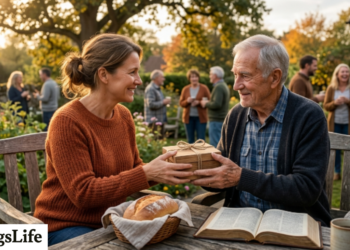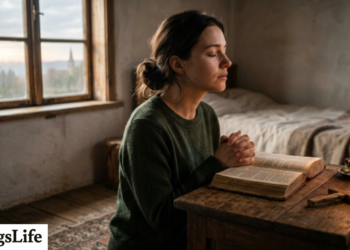

There’s a moment many of us hit — usually late at night, staring at a ceiling — where we finally admit we don’t have it all figured out. Maybe you’ve felt it too. That quiet, uncomfortable realization that you’re not as strong, as in-control, or as “together” as you pretend to be.
It’s in that exact moment that the words “blessed are the poor in spirit” stop sounding like an old Bible verse and start sounding like they’re talking directly to you.
This phrase opens the Beatitudes in Matthew 5:3, and honestly, it’s one of the most misunderstood lines in all of Scripture. People hear “poor” and think it means broke, or begging, or somehow less-than. But that’s not it at all.
In this article, we’re going to unpack what blessed are the poor in spirit truly means, why Jesus chose to start His most famous sermon with it, and how this ancient teaching can genuinely change the way you carry your struggles today.
What Does “Blessed Are the Poor in Spirit” Actually Mean?
Let’s clear something up right away. When Jesus said blessed are the poor in spirit, He wasn’t talking about your bank account.
He was talking about your heart.
The Greek word used here, ptochos, describes someone who is utterly destitute — not just low on funds, but completely empty-handed, dependent on others for survival. Applied to “spirit,” it paints a picture of someone who knows, deep down, that they cannot save themselves.
Think of it this way:
- Rich in spirit = self-sufficient, proud, convinced you’ve got this on your own
- Poor in spirit = humbled, aware of your need, open-handed before God
It’s not about self-hatred or thinking you’re worthless. It’s about honesty. It’s admitting, without pretense, “I need help. I can’t do this alone.”
And that kind of honesty? It’s rare. Most of us are trained from childhood to project confidence, to never show weakness, to “fake it till we make it.” So when someone finally drops the mask, something sacred happens.
Why Did Jesus Start With This One?
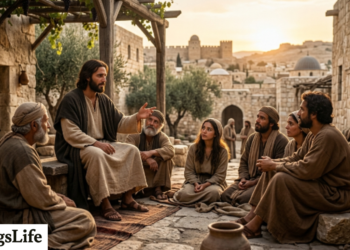
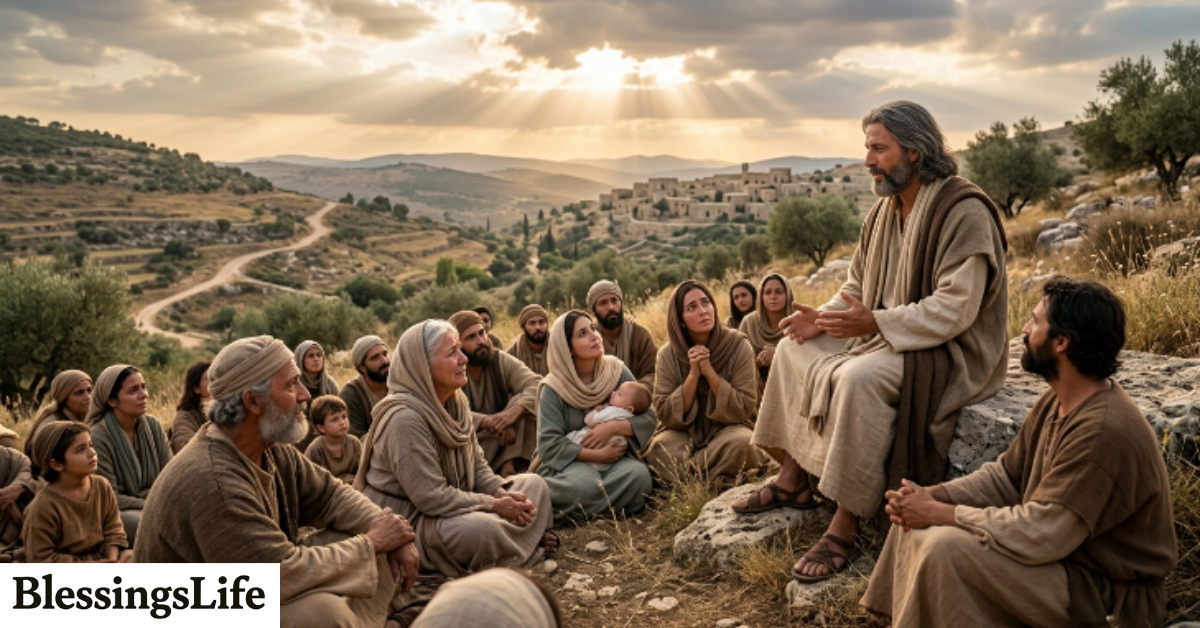
Out of everything Jesus could have opened His famous Sermon on the Mount with, He chose this. Not “blessed are the successful” or “blessed are the strong.” He started with poverty of spirit.
That’s not an accident.
Think about the order of a house. You don’t build the roof before the foundation. And spiritually speaking, poverty of spirit is the foundation everything else stands on.
- You can’t be truly comforted (Beatitude 2) until you admit you’re mourning something.
- You can’t be meek (Beatitude 3) until you let go of the illusion of control.
- You can’t hunger for righteousness (Beatitude 4) until you recognize you’re spiritually empty.
So when Jesus says blessed are the poor in spirit, He’s essentially saying: this is where real change begins. Not with achievement. With admission.
A Story That Brings It to Life
I once knew a man — let’s call him David — who spent almost two decades building a business from nothing. Success, on paper, was written all over his life. Big house. Nice cars. People who admired him.
But behind closed doors, he was drowning. A failing marriage, a body worn down by stress, and a gnawing sense that none of it actually meant anything.
It wasn’t until he lost nearly everything in a business downturn that something shifted. Sitting in his car outside a bank, having just been told his loan was denied, he broke down and whispered, “I don’t know what I’m doing anymore. I need help.”
That was it. That was the moment.
David later said that sentence — that admission of need — did more for his soul than any of his previous “successes” ever had. He wasn’t broken by poverty. He was set free by it.
That’s the heart behind blessed are the poor in spirit. It’s not a punishment. It’s an invitation.
The Difference Between Being Poor and Being “Poor in Spirit”
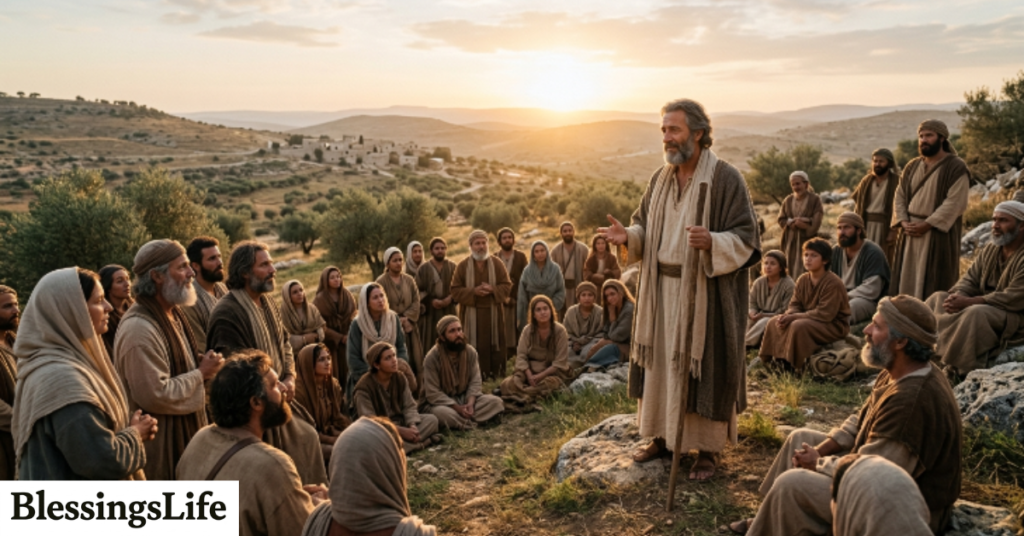
People often confuse the two, so let’s separate them clearly.
Financial poverty is a circumstance. It’s about what’s in your wallet.
Poverty of spirit is a posture. It’s about what’s in your heart.
You can be wealthy and still be poor in spirit — humble, dependent, aware of your need for something greater than yourself. And you can be financially poor while still being spiritually proud, bitter, or self-reliant in unhealthy ways.
So when Scripture says blessed are the poor in spirit, it’s not glamorizing poverty or telling struggling people to just accept their lot. It’s describing an inward posture available to absolutely anyone — rich or poor, successful or struggling.
Quotes & Reflections on Being “Poor in Spirit”
Sometimes short, powerful words say what paragraphs can’t. Here are a few reflections worth sitting with:
“Blessed are the poor in spirit, for theirs is the kingdom of heaven.” — Matthew 5:3
“It is not until we are broken that we understand our dependence on God.” — A common pastoral reflection on humility
“Humility is not thinking less of yourself, it’s thinking of yourself less.” — C.S. Lewis (often quoted alongside this Beatitude)
“The empty hand is the one God can fill.”
Each of these, in its own way, points back to the same truth: real strength often begins with an honest admission of weakness.
How to Actually Live This Out (Not Just Understand It)
Knowing what blessed are the poor in spirit means is one thing. Living it is another entirely. Here’s what that can look like in daily life:
- Practice honest prayer. Skip the polished, “everything is fine” version. Say what’s actually true.
- Ask for help before you’re desperate. Waiting until crisis hits isn’t humility — it’s often pride in disguise.
- Notice when you’re performing. Are you presenting a version of yourself that isn’t real? Poverty of spirit invites you to drop the act.
- Sit with your limits. You don’t have to fix everything today. That’s not weakness — that’s being human.
- Celebrate others without comparison. Envy often grows from a “rich in spirit” mindset that needs to always measure up.
None of these are dramatic. They’re small, quiet choices. But over time, they reshape how you carry yourself in the world.
Why This Beatitude Brings Comfort, Not Shame
Here’s something beautiful people often miss: the reward attached to this Beatitude isn’t distant.
“Theirs is the kingdom of heaven” — present tense. Not “theirs will be.” Theirs is.
In other words, the moment you stop pretending and admit your need, you’re not further from grace. You’re closer to it than ever.
Isn’t that the opposite of how the world usually works? We’re told that admitting weakness costs us something — respect, status, control. But in this upside-down kingdom, admitting weakness is actually how you gain everything that matters.
That’s not shame. That’s relief.
When Life Makes You “Poor in Spirit” Whether You Like It or Not
Sometimes we don’t choose this posture — life forces it on us.
A diagnosis. A layoff. A divorce papers on the kitchen table. A child who won’t speak to you anymore. These moments strip away our illusions of control fast, and often violently.
If you’re in one of those seasons right now, please hear this: you are not being punished. You may, in fact, be standing exactly where blessed are the poor in spirit says you’re blessed to be.
It doesn’t feel like a blessing in the moment. Grief rarely does. But there’s a strange, quiet grace that tends to show up in the empty-handed places of life — a grace that’s much harder to notice when your hands are already full.
Bringing It Into Everyday Life
You don’t need a crisis to practice this. Small daily moments count too:
- Admitting to your spouse, “I was wrong,” without excuses tacked on
- Telling a friend, “I’m struggling,” instead of “I’m fine”
- Praying, “I don’t understand this, but I trust You anyway”
- Letting someone help carry your groceries, your workload, your burden — without insisting you’ve got it
Each of these is a tiny act of poverty of spirit. And tiny acts, repeated, become a life.
Final Thoughts
So, what does blessed are the poor in spirit really ask of us?
Not perfection. Not performance. Just honesty.
It asks us to stop pretending we’ve got it all together and admit, simply, “I need.” And in that admission — as strange as it sounds — we find ourselves closer to peace than all our striving ever brought us.
If this spoke to something in you today, maybe sit with it a little longer. Share it with someone who needs the reminder that weakness isn’t the end of the story — it might just be the beginning of something better.
FAQs
What does “blessed are the poor in spirit” mean in simple terms?
It means being humble and honest about your need for God, rather than relying only on your own strength. It’s not about financial poverty — it’s a heart posture of humility and dependence.
Where in the Bible is “blessed are the poor in spirit” found?
This phrase opens the Sermon on the Mount in Matthew 5:3, the first of the Beatitudes taught by Jesus.
Is “poor in spirit” the same as low self-esteem?
No. Poverty of spirit isn’t self-hatred or feeling worthless — it’s honest humility. It’s recognizing your need for God while still knowing you’re deeply valued.
Why are the poor in spirit called “blessed”?
Because their humility opens them to receive grace and the kingdom of heaven. Pride blocks connection with God, while humility invites it in.
How can I become “poor in spirit” in daily life?
Practice honest prayer, ask for help instead of hiding struggles, and resist the urge to appear like you have everything under control.
Does “poor in spirit” mean I should stay financially poor?
No, this Beatitude isn’t about money at all. It’s entirely about your inward posture — you can be wealthy and humble, or poor and prideful. The heart is what matters.