
I still remember the first time those words landed on me like a warm blanket. My grandmother, hands shaking from age, held my face and whispered, “May the Lord bless you and keep you.” I was seventeen, scared about leaving for college, and I had no idea that a sentence written thousands of years ago could still make a teenager cry in a kitchen in 2009.
That’s the strange, beautiful power of this blessing. It’s not just a line from the Bible. It’s something people whisper over babies, write in sympathy cards, say at weddings, and text to a friend going through chemo. If you’ve landed here wondering what “may the Lord bless you and keep you” actually means, where it comes from, or how to use it in your own life, you’re in exactly the right place.
Let’s walk through it together — the history, the heart behind it, and why it still matters so much today.
Where Does “May the Lord Bless You and Keep You” Come From?
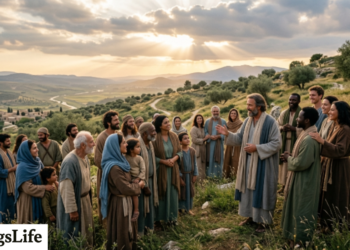
This phrase isn’t a modern invention. It’s ancient. It comes from the Book of Numbers, chapter 6, verses 24-26, in the Old Testament. Scholars often call it the Priestly Blessing, or the Aaronic Blessing, because God instructed Aaron and his sons — the priests — to speak it over the people of Israel.
The full blessing reads:
“The Lord bless you and keep you; the Lord make his face shine on you and be gracious to you; the Lord turn his face toward you and give you peace.”
Three thousand years later, we’re still saying it. Think about that for a second. Empires have risen and crumbled since these words were first spoken, yet a grandmother in Ohio and a pastor in Nairobi are still using the exact same phrase to bless the people they love.
That’s not a coincidence. It’s because “may the Lord bless you and keep you” taps into something every human heart craves — protection, warmth, and peace.
A Blessing Older Than Written Scripture Itself
Here’s something that gives me chills. Archaeologists actually found this exact blessing inscribed on tiny silver scrolls dating back to around 600 BC, buried in a tomb near Jerusalem. That makes it one of the oldest pieces of biblical text ever discovered outside the Dead Sea Scrolls.
People were carrying these words close to their bodies, like a talisman of hope, long before most of the Bible was even compiled. That’s how much this blessing meant to them.
Breaking Down What Each Line Actually Means
It’s easy to say “may the Lord bless you and keep you” without really sitting with what it’s asking for. Let’s slow down and unpack it, piece by piece.
“The Lord Bless You”
This isn’t just about money or good luck. In the original Hebrew, the word for bless (barak) carries the idea of kneeling — of God bending down toward you in kindness. It’s intimate. It’s personal. It means favor, fruitfulness, and goodness flowing into every corner of your life.
“And Keep You”
The word “keep” here means to guard, to protect, like a shepherd watching over sheep at night. It’s not a passive wish. It’s asking God to actively stand guard over your life — your health, your family, your future.
“Make His Face Shine on You”
Picture someone’s face lighting up the moment they see you walk into a room. That’s the image here. It’s a picture of delight, not distance. God isn’t scowling from far away; He’s smiling at you.
“Be Gracious to You”
Grace means getting kindness you didn’t earn. It’s the parent who forgives instead of punishes. It’s the second chance you didn’t deserve but received anyway.
“Turn His Face Toward You”
This is about attention. Presence. Not a distracted glance, but full, undivided focus — like a mother locking eyes with her newborn.
“Give You Peace”
The original word is shalom, and it means so much more than “no conflict.” It means wholeness. Nothing missing, nothing broken. A life that’s complete.
When you say “may the Lord bless you and keep you,” you’re really saying all of that in one breath. No wonder it still moves people to tears.
Why This Blessing Still Matters in Everyday Life

You don’t need to be a theologian to feel the weight of this phrase. I’ve seen it show up in the most human, ordinary moments — and that’s exactly where it belongs.
- A mother whispering it over her newborn at 3 a.m., rocking a colicky baby back to sleep.
- A soldier’s family writing it on a care package before deployment.
- A pastor closing a Sunday service, sending tired, overwhelmed people back into their week.
- A friend texting it to someone waiting on medical test results.
- A grandparent tucking it into a graduation card, knowing they might not see many more milestones.
None of these people are reciting ancient Hebrew scholarship. They’re just reaching for words big enough to hold their love and their worry at the same time. And somehow, “may the Lord bless you and keep you” still fits.
A Real Story: My Neighbor Martha
My neighbor Martha lost her husband of 42 years two winters ago. I brought over a casserole (because that’s what you do, right?) and didn’t know what to say. I just squeezed her hand and said, “May the Lord bless you and keep you, Martha.”
She told me later that of everything people said to her that week — and people said a lot — that was the sentence she kept coming back to. Not because it fixed anything. It didn’t bring her husband back. But it made her feel held.
Sometimes that’s all a blessing is supposed to do. Not solve. Just hold.
How to Use “May the Lord Bless You and Keep You” Today
If you’re wondering when it’s appropriate to say this blessing, the honest answer is: almost anytime you want someone to feel seen, protected, and loved. Here are a few ideas.
- At the end of a phone call with someone going through a hard season.
- In a card for weddings, baby showers, graduations, or funerals.
- As a text message when someone tells you they’re scared or anxious.
- Over your children before bed or before they leave for school.
- In a toast at a family gathering or holiday dinner.
- As a closing line in a letter to someone far away, like a soldier or a missionary.
You don’t need permission to say it. You don’t need a church title. You just need a heart that wants good for someone else.
Quotes & Examples Box: Ways People Have Used This Blessing
Here’s a small collection of real-world ways this blessing shows up, gathered from conversations, cards, and community stories.
“May the Lord bless you and keep you, and may He give you strength for the road ahead.” — said at a retirement dinner
“To our daughter on her wedding day: may the Lord bless you and keep you, always.” — handwritten in a wedding card
“Before every deployment, I write this verse inside my son’s helmet.” — a mother’s tradition, shared in an online forum
“May the Lord bless you and keep you’ was the last thing my father said to me before he passed. I say it to my own kids now.” — shared by a reader
“Our pastor ends every service with this blessing. After twenty years, it still gives me chills.” — a longtime church member
Notice something? None of these are fancy. They’re plain, honest, human moments. That’s the whole point.
The Difference Between a Blessing and a Wish
Here’s something worth thinking about. A wish is passive — “I hope things go well for you.” A blessing is active — it’s asking someone with authority (in this case, God) to actually do something on your behalf.
That’s part of why “may the Lord bless you and keep you” hits differently than “good luck” or “take care.” It’s not leaving things to chance. It’s an appeal. A request. Almost like knocking on a door and asking someone powerful to step in.
Isn’t that a more comforting thought than just hoping for the best?
Common Misunderstandings About This Blessing
A few things trip people up when they first encounter this phrase, so let’s clear them up.
- It’s not a magic formula. Saying it doesn’t guarantee a specific outcome, like healing or wealth. It’s a request for God’s presence and care, not a spell.
- It’s not only for Christians. Because it comes from Numbers in the Old Testament, Jewish communities also use this blessing regularly, especially during services and at the Western Wall.
- It’s not outdated language. Yes, the wording sounds formal, but the sentiment behind it — protection, favor, peace — is exactly what people are craving in 2025 just as much as they were in 500 BC.
How Different Faith Traditions Use This Blessing
It’s worth noting that “may the Lord bless you and keep you” isn’t locked into one denomination.
- Jewish tradition uses it as the Birkat Kohanim, recited by rabbis and often by parents over their children on Friday nights during Shabbat.
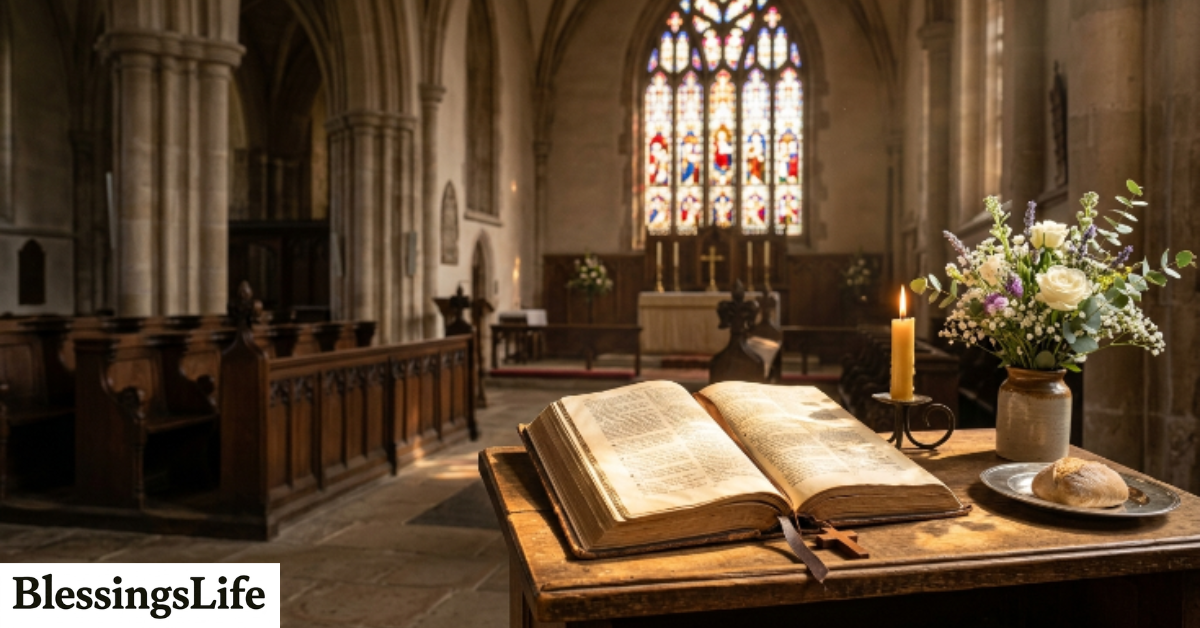
- Catholic and Protestant churches frequently use it as a benediction to close worship services.
- Interfaith and secular settings sometimes borrow the sentiment, even without the religious framing, simply because the words are so universally comforting.
That’s rare for a piece of ancient text. Most things that old feel distant. This one still feels like it’s speaking directly to you.
Why Short Blessings Like This One Stick With Us
Psychologists who study memory will tell you that short, rhythmic phrases are far easier for our brains to hold onto than long paragraphs. “May the Lord bless you and keep you” has a natural cadence to it — almost musical.
That’s probably part of why it has survived for thousands of years without needing a modern rewrite. It doesn’t just inform you. It stays with you, quietly repeating in your head on hard days.
Have you ever noticed a phrase looping in your mind during a stressful moment? For a lot of people, this blessing becomes exactly that kind of anchor.
Final Thoughts: A Blessing Worth Passing On
Life is loud. Between deadlines, group chats, and the news cycle, we don’t get a lot of quiet moments where someone stops and says, “I want good things for you, and I’m asking for help to make that happen.”
That’s what “may the Lord bless you and keep you” really is. Not a cliché. Not a Hallmark line. A genuine, ancient request for someone else’s wellbeing.
So here’s a small challenge. The next time someone you love is scared, tired, celebrating, or grieving, try saying it out loud. Or write it in a card. Or send it as a text at 11 p.m. when you don’t know what else to say.
You might be surprised how much it means to them — and honestly, how much it means to you too.
If this article gave you a bit of comfort or a new perspective, consider sharing it with someone who could use a blessing today. And if you have your own story about this phrase, drop it in the comments below. I’d genuinely love to read it.
FAQs
1. What does “may the Lord bless you and keep you” mean? It’s a blessing asking God to show favor, protection, and peace over someone’s life. It comes from Numbers 6:24-26 and is meant as a heartfelt request for someone’s wellbeing, not just a polite phrase.
2. Where in the Bible is “may the Lord bless you and keep you” found? It’s found in the Old Testament, in Numbers 6:24-26, spoken originally by the priests over the Israelites. It’s often called the Priestly Blessing or Aaronic Blessing.
3. Can I say this blessing over someone who isn’t religious? Yes. Many people share it as a genuine expression of love and hope, even in casual or interfaith settings. The sentiment of wishing someone protection and peace resonates with almost anyone.
4. Is this blessing only used in Christianity? No. It’s also central to Jewish tradition, where it’s known as the Birkat Kohanim and is recited during services and family blessings, especially on Shabbat.
5. What’s the full version of this blessing? “The Lord bless you and keep you; the Lord make his face shine on you and be gracious to you; the Lord turn his face toward you and give you peace” (Numbers 6:24-26).
6. When is it appropriate to say “may the Lord bless you and keep you”? It fits almost any meaningful moment — weddings, funerals, graduations, illness, farewells, or simply to comfort a friend having a hard week. There’s no wrong time to offer someone this kind of blessing.