
There’s a particular kind of tired that sleep doesn’t fix.
It’s the tired that comes from waiting for a diagnosis, a phone call, a paycheck, an apology that never comes. It’s the tired of smiling through a Tuesday when inside you’re barely holding the pieces together. If that’s where you are right now, I want you to know something before you read another word: you’re not the only one who has whispered a prayer for hope and faith into a dark room, just hoping someone was listening.
This article isn’t going to hand you a magic fix. Life doesn’t work that way, and honestly, if someone promises you it does, be a little suspicious. What I want to give you instead is something steadier — a prayer, a perspective, and a handful of small truths that have carried people through their worst nights and into mornings they didn’t think they’d see.
Let’s sit with this together for a while.
Why We Reach for Prayer When Hope Feels Thin
Think about the last time you felt truly stuck. Maybe it was a job loss. Maybe it was a marriage falling apart quietly, the kind no one else notices. Maybe it was standing in a hospital hallway, waiting for a doctor to come back with news.
In those moments, most of us do the same thing, whether we call ourselves religious or not. We look up. We whisper something. We ask for help from somewhere bigger than ourselves.
That instinct isn’t weakness. It’s wiring.
Psychologists have long noted that people under extreme stress often turn to prayer or meditation as a way of regulating fear and finding a sense of control. It’s less about ritual and more about relief — a way of saying, “I can’t carry this alone anymore.”
A prayer for hope and faith works the same way. It’s not a spell. It’s a release valve for a heart that’s been holding too much for too long.
A Prayer for Hope and Faith You Can Say Right Now
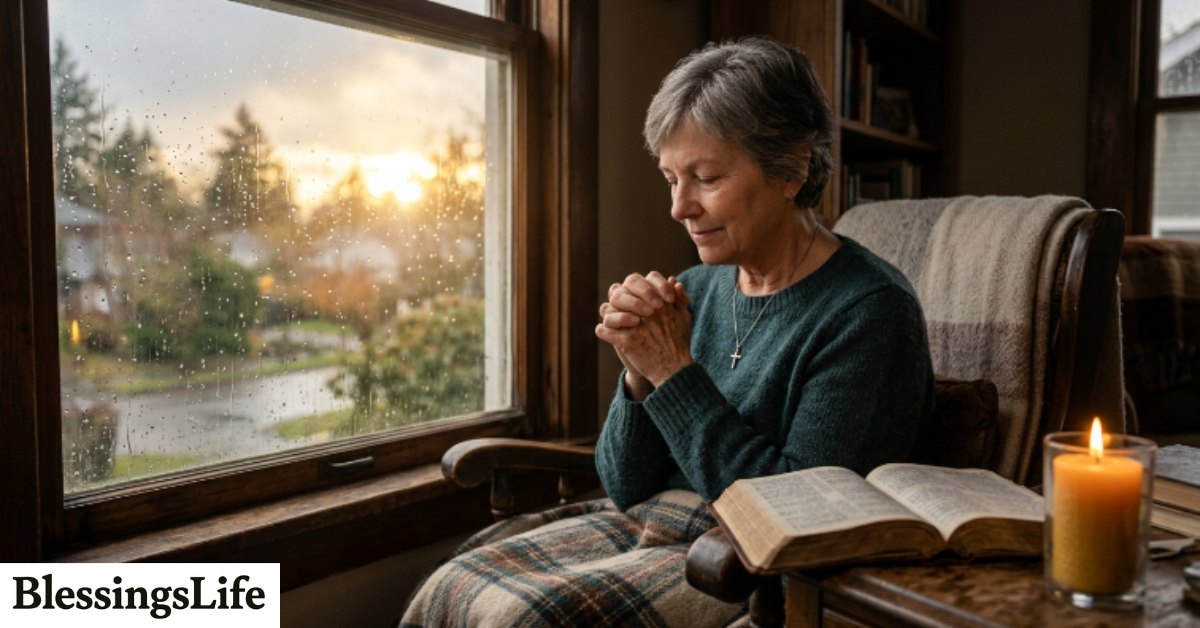
You don’t need perfect words. You don’t need to be in a church, a mosque, a temple, or anywhere formal at all. You can say this in your car, in the shower, on a walk, or lying awake at 2 a.m.
“I don’t have all the answers right now, and that’s okay. Give me the strength to take one more step, even when I can’t see the whole path. Remind me that I am not alone in this. Fill the empty, scared parts of me with hope. Help my faith grow even in the waiting. Even when I doubt, hold onto me. Amen.”
Read it slowly. Say it out loud if you can. There’s something different about hearing your own voice ask for hope instead of just thinking it.
Some people write prayers like this in a journal and return to them daily. Others say a version of it every morning before their feet even hit the floor. There’s no wrong way to use it — only the way that helps you breathe a little easier.
The Difference Between Hope and Faith (And Why You Need Both)

People often use these words like they’re the same thing. They’re not, and understanding the difference actually matters.
Hope is the feeling that things can get better. It’s forward-looking. It’s the flicker that says, “Maybe tomorrow will be different.”
Faith is the trust that you’re not walking through it alone, even when nothing visibly changes. It’s steadier. It doesn’t need proof.
Here’s the thing — hope can rise and fall with your circumstances. One good phone call and hope surges. One bad test result and it crashes. Faith is what holds you when hope takes a hit.
A prayer for hope and faith asks for both because you genuinely need both. Hope gives you a reason to keep going today. Faith gives you the ground to stand on when today falls apart.
A Story Worth Remembering
I once knew a woman — we’ll call her Maria — who lost her job, her father, and her sense of direction all within eight months. She told me later that during that stretch, she stopped praying for things to “get better” because it felt naive. Instead, she started praying just for the strength to get through each individual day.
“I didn’t ask God to fix it,” she said. “I asked Him to walk beside me while it was broken.”
That shift changed everything for her. She wasn’t waiting for a miracle anymore. She was building faith one ordinary day at a time — and somewhere in that process, hope quietly came back on its own.
That’s often how it works. We think hope has to come first, roaring in like a rescue. Usually, it tiptoes back in after faith has already done the heavy lifting.
Short Prayers for Different Kinds of Hard Days
Not every hard day looks the same, so not every prayer needs to either. Here are a few shorter ones for specific moments.
When you’re anxious about the future: “Help me trust the next step, even when I can’t see the whole staircase.”
When you feel forgotten or alone: “Remind me I am seen, even in silence. Let hope find me here.”
When you’re grieving: “Hold what I cannot carry today. Let faith be my rest.”
When you’re waiting for an answer: “Give me patience in the in-between, and hope that doesn’t run out.”
When you feel like giving up: “One more day. One more breath. I trust there’s a reason to stay.”
Keep one of these on a sticky note. Save it as a phone lock screen. Whisper it in traffic. These small anchors matter more than we usually give them credit for.
Quotes and Verses That Speak to Hope and Faith
Sometimes someone else’s words say exactly what we can’t quite find on our own. Here’s a small collection worth sitting with.
“Faith is taking the first step even when you don’t see the whole staircase.” — Martin Luther King Jr.
“Hope is being able to see that there is light despite all of the darkness.” — Desmond Tutu
“For I know the plans I have for you, plans to give you hope and a future.” — Jeremiah 29:11
“She is clothed with strength and dignity; she can laugh at the days to come.” — Proverbs 31:25
“Faith is the bird that feels the light and sings when the dawn is still dark.” — Rabindranath Tagore
Read these when your own words run dry. Sometimes a borrowed sentence is enough to get you through an hour you didn’t think you’d survive.
Small Habits That Keep Hope and Faith Alive
A prayer for hope and faith isn’t meant to be a one-time thing you say and forget. Faith, like any relationship, grows through small, repeated moments of attention.
Here are a few habits that genuinely help:
- Pray at the same time each day — even 60 seconds, right when you wake up or right before bed.
- Keep a hope journal — write down one small good thing daily, even on bad days. Especially on bad days.
- Say your prayer out loud, not just in your head. Hearing it changes how it lands.
- Surround yourself with people who still believe, even when you’re struggling to. Faith is easier to carry in community.
- Revisit old prayers that were answered. It’s proof, in your own handwriting, that things have shifted before.
None of these are complicated. That’s the point. Faith rarely grows from grand gestures — it grows from small, consistent ones.
What To Do When You Pray and Still Feel Nothing
Let’s be honest about something most articles skip over: sometimes you pray and you still feel empty. You say the words and nothing lifts. That’s real, and it doesn’t mean you’re doing it wrong.
Faith isn’t a feeling you’re supposed to manufacture on command. Some days it’s quiet. Some days it’s just showing up and saying the words anyway, even when your heart isn’t fully in it.
That’s not failure. That’s actually one of the most honest forms of faith there is — choosing to keep reaching out even when you can’t feel anything reaching back yet.
Give it time. Keep the practice going. The feeling often returns after the commitment, not before it.
Letting This Prayer Become Part of Your Everyday Life
You don’t need a special occasion to pray for hope and faith. You don’t need to wait until things are falling apart to reach for it.
Say it on good days too, as a kind of gratitude — a way of saying, “Thank you for getting me here, and please keep going with me.”
Say it on ordinary Tuesdays. Say it while making coffee. Say it in the car before you walk into a room you’re dreading.
The more familiar this prayer becomes, the more natural it feels to lean on it when things get hard — because by then, it’s not a last resort. It’s already part of how you move through the world.
A Gentle Reminder Before You Go
If you’ve made it this far, maybe you’re in one of those seasons — the kind that doesn’t photograph well, the kind you don’t post about. I want you to know that reaching for a prayer for hope and faith isn’t giving up. It’s actually one of the bravest, most honest things a person can do.
You’re allowed to not have it figured out. You’re allowed to ask for help from something bigger than your circumstances. And you’re allowed to believe, even quietly, even shakily, that this isn’t the end of your story.
Say the prayer again if you need to. Say it every day this week. And if it helped even a little, consider sharing it with someone else who might be having a hard week too — sometimes the smallest nudge is exactly what someone needed today.
FAQs
What is a good short prayer for hope and faith?
A simple one is: “Give me strength for today and hope for tomorrow. Help my faith hold steady, even when I can’t see the way forward.” Short, honest prayers like this are often more powerful than long, formal ones.
How do I pray for hope when I feel like giving up?
Start small — ask only for the strength to get through the next hour, not the whole problem. Focus on staying present rather than fixing everything at once. Hope often returns gradually, not all at once.
What’s the difference between praying for hope and praying for faith?
Hope is about believing things can improve; faith is about trusting you’re not alone while you wait. A prayer for hope and faith covers both — the wish for change and the strength to endure until it comes.
Can prayer actually help with anxiety and stress?
Many people find that prayer lowers anxiety because it creates a sense of release and control during uncertain times. It won’t erase the situation, but it often makes it feel more bearable.
What Bible verse is best for hope and faith?
Jeremiah 29:11 and Proverbs 31:25 are commonly turned to for hope and inner strength. Both remind readers that difficult seasons are not the whole story — there’s still a future being written.
How often should I say a prayer for hope and faith?
Daily, if possible — even just a minute in the morning or before bed. Consistency matters more than length; a short prayer said often builds faith more than a long one said rarely.