
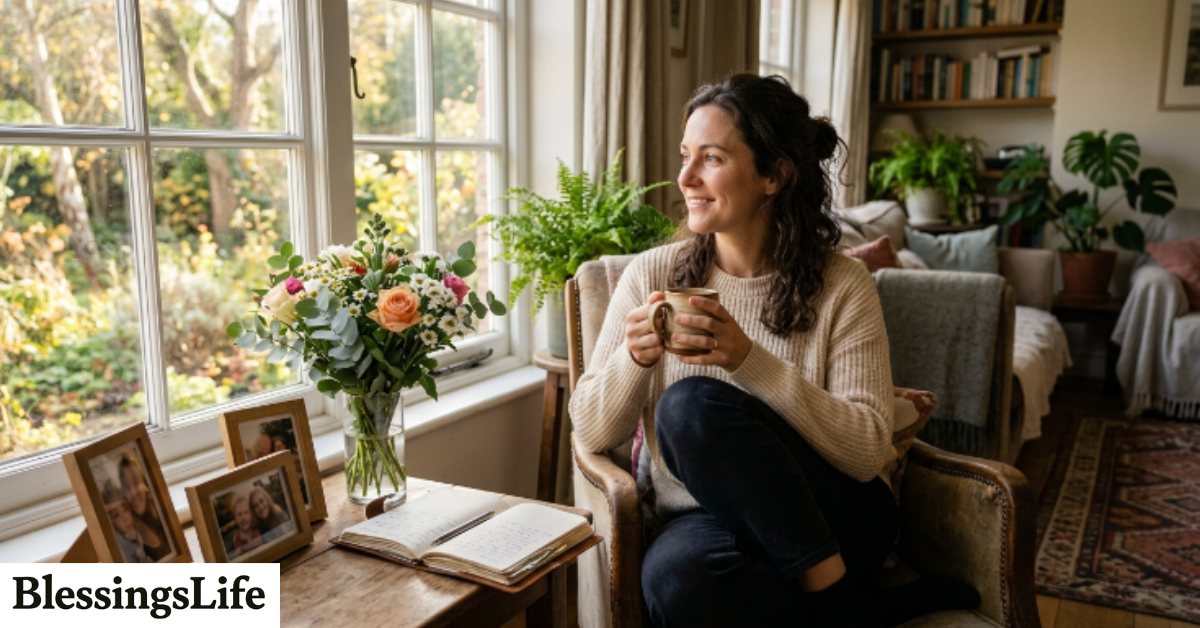
There’s a moment I still think about. My grandmother, sitting on her porch with a cup of tea gone cold, told me, “You keep waiting for the big blessing, and you’re stepping right over the small ones.”
I laughed it off at the time. I was twenty-something, chasing promotions and plans, convinced that the blessing I needed was somewhere out there — a bigger paycheck, a better apartment, a relationship that finally clicked. It took a rough year, a job loss, and a lot of quiet mornings for me to understand what she meant.
The blessing isn’t always the thing you’re praying for. Sometimes it’s the thing you already have, sitting quietly, waiting for you to notice it.
This article is for anyone who’s ever wondered why they feel like they’re missing something even when life looks fine on paper. Let’s talk about what a blessing really is, why we walk past it so often, and how you can start recognizing it again — starting today.
What Do We Really Mean by “The Blessing”?
Ask ten people to define a blessing, and you’ll probably get ten different answers.
For some, it’s spiritual — a gift from God, answered prayer, grace that shows up uninvited. For others, it’s simpler: good health, a roof over their head, people who show up when it matters.
Here’s the thing though. A blessing doesn’t have to be dramatic to count.
It can be:
- A stranger holding the elevator door
- Waking up without pain in your body
- A phone call from an old friend at exactly the right time
- Rain after a long drought
- Simply having someone to eat dinner with
None of these make headlines. But strip them away, even for a week, and you’ll feel exactly how much they mattered.
Why We Miss the Blessing Right in Front of Us
Here’s an uncomfortable truth: we’re wired to notice what’s missing before we notice what’s present.
Psychologists call this negativity bias. Your brain is built to scan for threats and gaps, not to celebrate what’s already working. So the blessing sitting quietly in your everyday life doesn’t stand a chance against that overdue bill or that argument you had this morning.
Think about the last time something good happened. Did you sit with it? Or did your mind already jump to the next worry?
Most of us live one sentence ahead of our own lives. We’re grateful for five seconds, then back to planning, complaining, or scrolling.
That’s not a character flaw. It’s just how the human brain works. But it does mean we have to be intentional if we want to actually feel the blessing instead of just acknowledging it exists.
The Comparison Trap
Social media makes this worse. You see someone else’s vacation, their new house, their “perfect” family photo, and suddenly your own blessing — the one you had five minutes ago — feels small and forgettable.
Comparison doesn’t just steal joy. It blinds you to the blessing that was never meant to look like anyone else’s.
Real Stories: Ordinary Moments That Turned Out to Be Blessings
A friend of mine, Sara, once told me about the year she got laid off from a job she loved. She cried in her car in the parking lot before telling anyone.
Eight months later, she started a small baking business from her kitchen. Today, she supplies three cafés in her city and says, without hesitation, that losing that job was the biggest blessing of her adult life.
She didn’t see it that way in the moment. Nobody does.
I’ve heard similar stories more times than I can count:
- A man whose flight got cancelled, forcing him to stay one more day — the day he met his future wife at the hotel bar
- A woman whose car broke down outside a church she’d never visited, where she found a community that changed her life
- A father who lost his savings in a bad investment, only to rebuild in a way that made his family closer than ever
None of these people asked for hardship. But the blessing showed up anyway, dressed as something they didn’t want.
The Blessing in Hard Times
This is the part people struggle with most. How do you call something a blessing when it hurts?
You don’t have to call the pain itself a blessing. That’s not what this is about. Losing a job isn’t a blessing. Grief isn’t a blessing. But what grows out of those seasons — resilience, clarity, deeper relationships, a life rebuilt on steadier ground — that often is.
There’s an old saying that goes something like this: what breaks you open sometimes makes room for what you actually needed.
It doesn’t erase the pain. It just means the pain wasn’t the whole story.
If you’re in a hard season right now, you don’t need to force gratitude you don’t feel. Just stay open to the idea that this chapter might not be the end of the book.
A Little Blessing Box: Words Worth Holding Onto
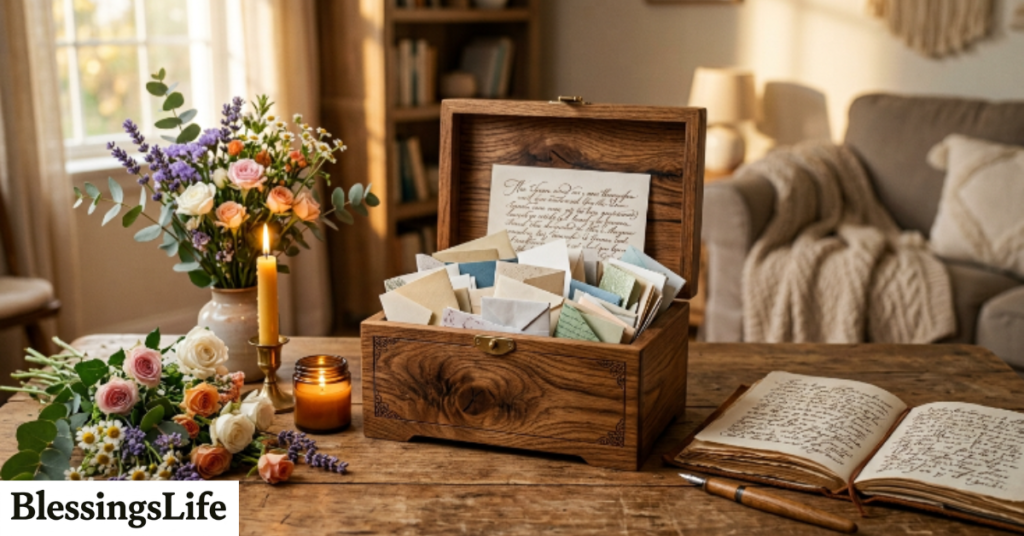
Sometimes the right words at the right time land harder than any explanation. Here are a few that people come back to again and again:
“Every blessing ignored becomes a curse.” — Paulo Coelho
“Gratitude turns what we have into enough.”
“Count your blessings, not your problems.”
“The soul that gives thanks can find comfort in everything; the soul that complains can find comfort in nothing.”
“Blessed are those who see beautiful things in humble places where other people see nothing.” — Camille Pissarro
Read those slowly. Which one hits closest to home for you right now?
How to Start Recognizing the Blessing in Your Own Life
Noticing a blessing isn’t a personality trait some people have and others don’t. It’s a habit. Like any habit, it gets easier with repetition.
Here’s a simple way to start:
- Name one blessing out loud every morning. Not written, not thought — spoken. It sounds strange, but hearing your own voice say it makes it real.
- Keep a small notebook by your bed. Before you sleep, write down one good thing from the day, even something tiny.
- Say thank you more than you ask for things. In prayer, in conversation, in your own head — flip the ratio.
- Revisit old hard seasons. Ask yourself what came out of them that you’re grateful for now. It reframes the present too.
- Slow down at the ordinary moments. The coffee, the walk, the goodnight hug. Don’t rush past the blessing to get to the next task.
None of this requires extra time. It just requires attention.
A Quick Story About Attention
I once challenged myself to text one person a day and simply say, “I’m grateful you’re in my life.” No occasion, no reason.
By day ten, people were replying with things like “you have no idea how much I needed this today.”
Turns out, naming a blessing doesn’t just help you notice it. It multiplies it, because gratitude has a way of spreading to whoever’s standing next to you.
The Blessing of Relationships
If you ask people on their deathbeds what mattered most, almost none of them mention their job title or bank balance. They talk about people.
The blessing of relationships is easy to take for granted because it doesn’t come wrapped in a box. It shows up as:
- A parent who still calls just to check in
- A friend who remembers the small details of your life
- A partner who stays through the boring, unglamorous days
- Children who make you laugh in the middle of exhaustion
We tend to notice this blessing loudest in its absence — after a breakup, after a loss, after distance grows between people who used to be close.
Don’t wait for absence to teach you what presence already offered.
Making the Blessing a Daily Practice
Gratitude fades if you don’t feed it. Here’s how people keep it alive long-term:
- Weekly reflection. Every Sunday, list three blessings from the week, big or small.
- Gratitude jars. Drop in a note whenever something good happens. Read them at year-end.
- Family dinner ritual. Everyone shares one blessing from their day before eating.
- Faith-based practice. For many, prayer or dua is the anchor — a quiet space to acknowledge the blessing before asking for more.
It doesn’t matter which method you choose. What matters is that you build a rhythm, not a one-time event.
Because here’s the truth nobody tells you: the blessing rarely announces itself with fireworks. It waits to be noticed. And if you build the habit of noticing, you start living a completely different life — same circumstances, different eyes.
Final Thoughts
My grandmother passed a few years ago. I still think about that porch conversation more than almost anything else she ever told me.
She was right. I was so busy waiting for a blessing to arrive that I nearly missed the ones already sitting beside me — her voice, that cold tea, an ordinary afternoon that I now wish I could have back.
You don’t need a perfect life to feel blessed. You need open eyes.
So today, before you close this tab and go back to your to-do list, try this: name one blessing, right now, out loud if you can. Then notice how it feels to actually let it in.
If this article gave you something to sit with, share it with someone who needs the reminder today. And if you’ve got a story of your own — a moment that turned out to be a blessing in disguise — drop it in the comments. Someone else might need to read it.
FAQs
What does “the blessing” actually mean?
A blessing is anything that adds good to your life — big or small, spiritual or ordinary. It can be a gift, an answered prayer, or simply something good you almost overlooked, like your health or a kind word from a stranger.
How do I recognize a blessing when life feels hard?
Look past the immediate pain to what it’s teaching or building in you. Not every hardship is a blessing itself, but many hardships lead to growth, clarity, or relationships that become real blessings later.
Why do people say “blessing in disguise”?
Because some of life’s hardest moments — a lost job, a cancelled plan, a broken relationship — often lead somewhere better than where you were headed. The blessing isn’t visible until time reveals it.
How can I feel more blessed in daily life?
Start small. Name one blessing out loud each morning, keep a gratitude notebook, and slow down enough to actually notice good moments instead of rushing past them.
Is counting blessings the same as being religious?
Not necessarily. While many faiths encourage gratitude and blessing-counting as spiritual practice, it’s also a proven habit for improving mental health and outlook, regardless of belief system.
What’s a simple daily habit to notice more blessings?
Try writing down one good thing before bed every night, no matter how small. Over weeks, this rewires your brain to notice the blessing already present instead of only what’s missing.