

There’s a moment every parent remembers. The nurse hands you this tiny, impossibly light bundle, and something in you wants to say words bigger than “I love you.” Words old enough to carry weight. That’s exactly what my grandmother did over me — and what her grandmother did over her. She spoke the Aaronic Blessing, hands trembling slightly, voice barely above a whisper: “The Lord bless you and keep you…”
I didn’t understand it then. I just felt it.
The Aaronic Blessing is one of the oldest prayers still spoken by human lips — over 3,000 years old, in fact, and yet it shows up at baptisms, weddings, hospital bedsides, and quiet Sunday mornings like it was written yesterday. If you’ve ever heard it and felt a lump in your throat you couldn’t quite explain, you’re not alone. This article will walk you through where it came from, what each line actually means, and why it still lands so deeply on the human heart.
What Is the Aaronic Blessing, Exactly?
The Aaronic Blessing — sometimes called the Priestly Blessing or the Numbers 6 Blessing — comes from the Hebrew Bible, specifically Numbers 6:24-26. God instructs Moses to give it to Aaron, the first high priest, so Aaron and his sons could bless the people of Israel.
Here’s the blessing in its most familiar English form:
“The Lord bless you and keep you; the Lord make his face shine on you and be gracious to you; the Lord turn his face toward you and give you peace.”
Short. Simple. And somehow it holds an entire ocean of meaning in three short lines.
What makes the Aaronic Blessing different from a regular prayer is who is speaking it. It isn’t a request going up to God — it’s God’s own words being spoken down over people. That’s part of why it feels different in your chest when you hear it. It’s not someone hoping for good things on your behalf. It’s a declaration.
Where the Aaronic Blessing Actually Comes From
Let’s rewind about 3,400 years.
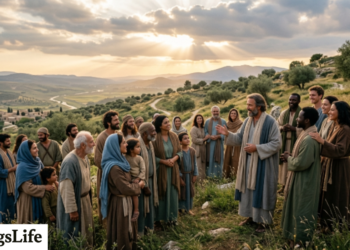
The Israelites had just escaped slavery in Egypt. They were exhausted, scared, and wandering through a desert with no map and no guarantees. In the middle of all that uncertainty, God gives Moses very specific instructions — not for building weapons, not for winning battles, but for blessing people.
That detail matters. In a season of total instability, the first tool God hands over is words of comfort.
Aaron, as the high priest, was told to lift his hands over the people and speak this blessing before every major gathering. It wasn’t reserved for special occasions — it became a rhythm, a heartbeat, something the community heard again and again until it lived in their bones.
Archaeologists actually found proof of just how old this blessing is. In 1979, two tiny silver scrolls were discovered in a burial cave near Jerusalem, dating back to around 600 BCE. Engraved on them? The Aaronic Blessing — making it the oldest known biblical text ever found. People were carrying these words against their skin, close to their hearts, long before most of the Bible was even written down.
That’s not just history. That’s evidence of how much people needed these particular words.
Breaking Down Each Line (Because the Meaning Runs Deep)
It’s easy to read the Aaronic Blessing quickly and let it wash over you without really absorbing it. So let’s slow down.
“The Lord bless you and keep you”
This isn’t a vague wish for good luck. The Hebrew word for “keep” here (shamar) means to guard, to protect, to watch over like a shepherd watches a flock at night. It’s the same word used to describe guarding a garden.
Think about that. You are being asked to imagine yourself as something worth guarding.
“The Lord make his face shine on you and be gracious to you”
In ancient Hebrew culture, someone’s “face” turning toward you or shining on you meant favor, warmth, attention. Think of how a parent’s whole face lights up when their child walks into the room — that’s the picture here.
It’s the opposite of feeling invisible. It’s being seen, fully, and delighted in anyway.
“The Lord turn his face toward you and give you peace”
The Hebrew word for peace, shalom, means so much more than “no conflict.” It means wholeness. Completeness. Nothing missing, nothing broken. It’s the peace of a life that’s fully put back together.
So really, the Aaronic Blessing is asking for three things: protection, connection, and wholeness. Isn’t that what all of us are quietly hoping for, no matter what we believe?
Why the Aaronic Blessing Still Matters Today
You’d think a 3,000-year-old prayer would feel outdated by now. It doesn’t.
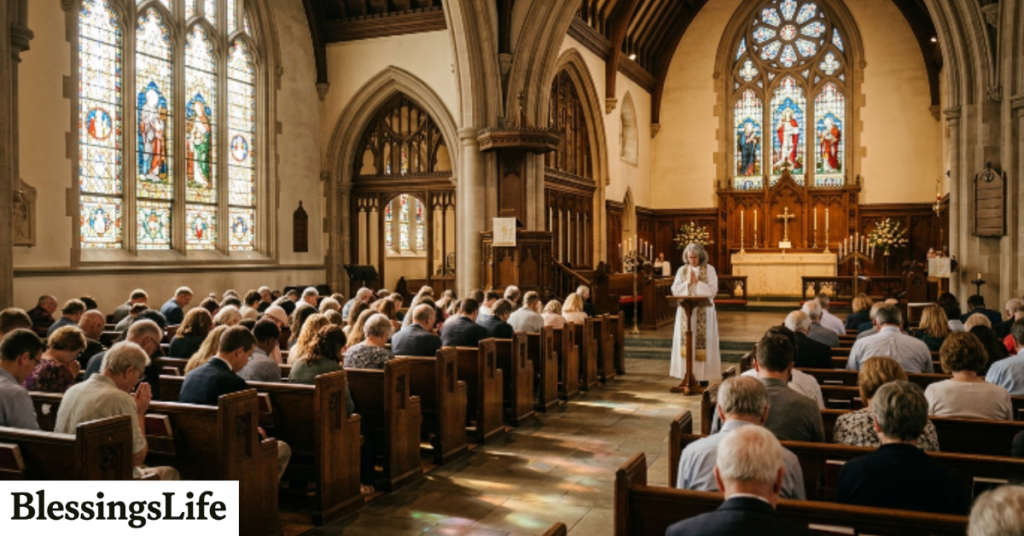
Walk into almost any church on a Sunday and you’ll likely hear the Aaronic Blessing spoken as a benediction — the closing words before everyone heads back into their ordinary, complicated lives. There’s something about ending a service with someone else’s hands raised over you, speaking blessing instead of instruction, that resets something in the soul.
I once spoke to a hospice chaplain who told me the Aaronic Blessing is one of the last things families ask for. Not sermons. Not lectures. Just those same three lines, spoken quietly over someone in their final hours.
“It’s the words people reach for,” she said, “when there’s nothing left to say.”
That’s the strange power of the Aaronic Blessing — it works at the beginning of life and at the end of it, at weddings and at funerals, in celebration and in grief. It doesn’t need the moment to be happy to make sense. It just needs the moment to matter.
A Few Everyday Places You’ll Still Hear It
- Baby dedications and baptisms
- Wedding ceremonies, especially as a closing blessing
- Military deployments and homecomings
- Hospital and hospice bedsides
- Sunday worship services as a benediction
- Jewish Shabbat blessings over children
- Graduations and other rites of passage
It shows up wherever people are stepping into something uncertain and need reassurance that they’re not walking into it alone.
Quotes and Reflections on the Aaronic Blessing
Sometimes the simplest words say the most. Here are a few reflections people have shared over the years about what the Aaronic Blessing means to them:
“I said the Aaronic Blessing over my son the night before his surgery. I couldn’t fix what was happening to him, but I could still bless him. That had to be enough.” — a father, shared in a hospital chaplaincy newsletter
“My rabbi blessed me with these words on my wedding day, and again when my first child was born. Same words, completely different tears.” — a mother reflecting on tradition
“There’s a reason it’s survived 3,000 years. It’s not clever. It’s just true.” — a pastor describing why he still closes every service with it
“The Lord bless you and keep you” — the opening line alone has been engraved on jewelry, tattooed on skin, and whispered into the ears of newborns for generations.
These aren’t scripted lines. They’re real reactions from real people who felt something shift when the Aaronic Blessing was spoken over them.
How to Use the Aaronic Blessing in Your Own Life
You don’t need to be a pastor, priest, or rabbi to speak this blessing. It was written for ordinary hands to lift and ordinary voices to say.
Here are a few gentle ways people incorporate it into daily life:
- Over your children at bedtime. A short, steady ritual that says “you are watched over” every single night.
- Before a hard conversation or decision. Speaking it over yourself can settle a racing mind.
- At the bedside of someone who’s sick. Words that don’t require you to have answers, only presence.
- As a daily or weekly practice. Some families say it every Friday evening, echoing the Jewish Shabbat tradition.
- In a card or letter. Writing it out for someone going through a hard season can mean more than advice ever could.
There’s no wrong way to say it. The power isn’t in performance — it’s in presence.
The Aaronic Blessing Across Faith Traditions
While its roots are Jewish, the Aaronic Blessing has traveled far beyond its original context. Christian churches across nearly every denomination — Catholic, Orthodox, Protestant — use it as a closing benediction. Composers from Franz Schubert to modern worship artists have set it to music. Jewish families still speak it over children every Friday night at the start of Shabbat, hands resting gently on small heads.
What’s remarkable is how the blessing hasn’t been diluted by its popularity. If anything, its reach proves something simple: people across cultures, centuries, and belief systems are all reaching for the same thing — to be kept safe, to be seen with warmth, and to find peace.
A Personal Kind of Closure
My grandmother passed a few years ago. In her final week, my mother sat by her bed and spoke the Aaronic Blessing over her, the same way it had been spoken over three generations before.
I wasn’t in the room, but my mother told me about it later, her voice cracking slightly on the phone. “It felt like handing her back,” she said. “Like saying, we’ve got her from here, but I’m giving her a peaceful road there.”
That’s the Aaronic Blessing in a nutshell. It doesn’t erase pain. It doesn’t answer every question. But it wraps whatever you’re walking through in something older and steadier than your fear.
So maybe the next time life feels uncertain — a diagnosis, a goodbye, a new baby, a hard decision — these are words worth borrowing. Say them over someone you love. Say them over yourself. They’ve held up for thousands of years. They can hold you too.
If this article gave you a little more clarity or comfort, consider sharing it with someone who might need these words today — or leave a comment below about what the Aaronic Blessing means to you.
FAQs
What does the Aaronic Blessing actually say?
“The Lord bless you and keep you; the Lord make his face shine on you and be gracious to you; the Lord turn his face toward you and give you peace.” It comes from Numbers 6:24-26 in the Hebrew Bible.
Who is allowed to say the Aaronic Blessing?
Anyone can speak it. While priests and pastors often use it as an official benediction, families and individuals commonly say it over loved ones at home, in hospitals, or during personal prayer.
Why is it called the “Aaronic” Blessing?
It’s named after Aaron, Moses’s brother and Israel’s first high priest, who was instructed by God to bless the people using these exact words.
Is the Aaronic Blessing only used in Christianity?
No. It originated in Judaism and is still spoken during Jewish Shabbat blessings, and it’s also widely used across nearly every Christian denomination as a closing benediction.
Why do people say the Aaronic Blessing at funerals and hospital bedsides?
Because it offers comfort without requiring explanation. Its focus on protection, presence, and peace makes it fitting for moments when words otherwise feel inadequate.
Can I say the Aaronic Blessing over myself?
Yes. Many people speak it quietly over themselves during anxious or uncertain seasons, finding comfort in its steady, ancient promise of being kept and given peace.