
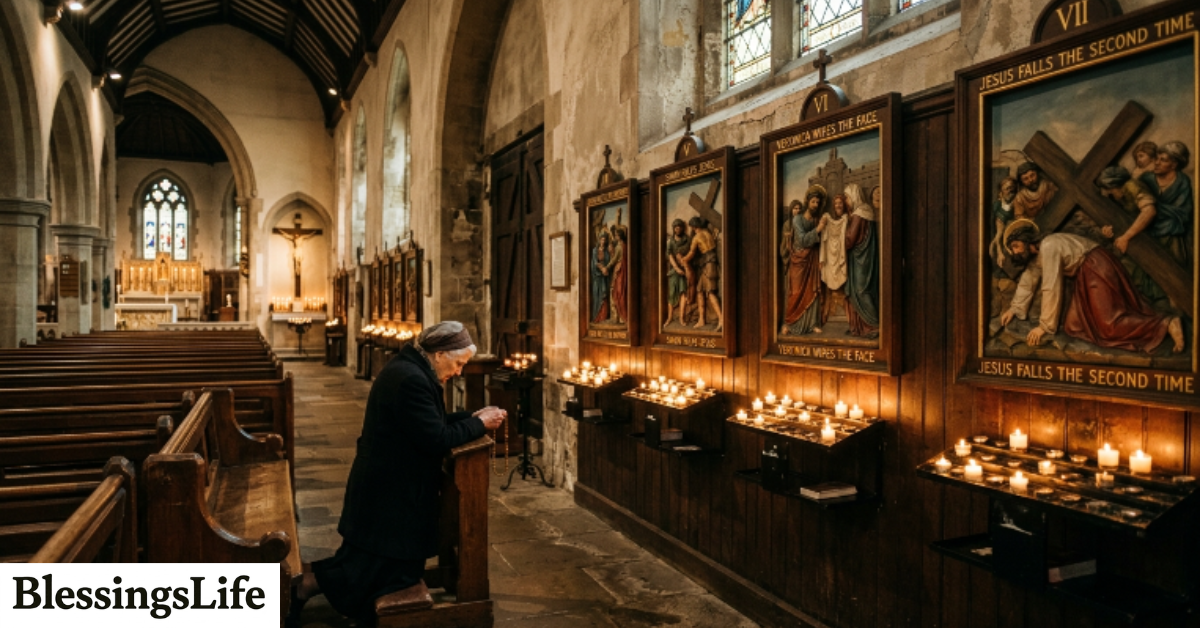
I still remember the first time I walked the Stations of the Cross with my grandmother during Lent. I was maybe nine years old, shuffling behind her in a cold, quiet church, watching candlelight flicker against stone carvings on the wall. I had no idea what I was looking at. I just knew it felt important. Years later, I finally asked her the question that had been sitting in the back of my mind since that day: how many stations of the cross are there, exactly?
Her answer was simple — “Fourteen, sweetheart. Some churches even add a fifteenth now.” That short conversation sent me down a path of understanding a tradition that has shaped Christian worship for centuries.
If you’ve ever stood in a church during Lent, seen the small plaques along the walls, or heard someone mention “walking the stations,” and found yourself quietly wondering what it all means — you’re not alone. This guide will walk you through it, step by step, the way my grandmother once walked me through that church.
So, How Many Stations of the Cross Are There?
Let’s answer the big question right away, because I know that’s what brought you here.
There are 14 traditional Stations of the Cross, and many parishes today also include a 15th station representing the Resurrection.
These fourteen stations trace the final hours of Jesus Christ’s life — from His condemnation by Pontius Pilate to His burial in the tomb. Each station represents a specific moment along His path to Calvary, known as the Via Dolorosa, or “Way of Sorrows.”
It’s a devotion that’s part meditation, part physical journey, and part emotional pilgrimage — even if you never leave the building.
A Quick History: Where Did the Stations of the Cross Come From?
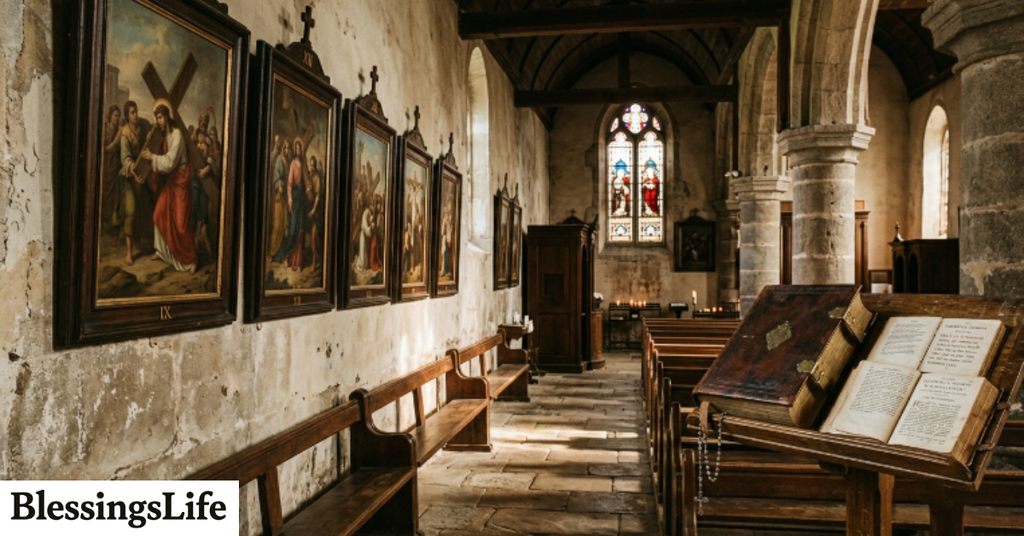
Here’s something that surprised me when I first researched this: the Stations of the Cross didn’t appear overnight as a neat set of fourteen images.
The tradition grew slowly, over hundreds of years, shaped by pilgrims and priests trying to help ordinary people experience Jerusalem without ever leaving home.
- Early Christian pilgrims in Jerusalem would walk the actual path Jesus took to His crucifixion.
- By the Middle Ages, this became known as the Via Dolorosa.
- Since not everyone could travel to the Holy Land, Franciscan friars began building smaller, symbolic versions in local churches across Europe.
- By the 1700s, Pope Clement XII officially fixed the number at fourteen stations for the whole Catholic Church.
It’s honestly kind of moving when you think about it — someone in a small village in France or Italy, who could never afford the journey to Jerusalem, could still walk in Christ’s footsteps, station by station, right in their own parish.
The 14 Stations of the Cross Explained (With Meaning Behind Each One)
This is the heart of it. Let’s go through each station together, the way you might if you were actually walking through a church.
Station 1: Jesus Is Condemned to Death
This is where it begins. Pontius Pilate, despite finding no real fault in Jesus, gives in to the pressure of the crowd and condemns Him to death.
It’s a station about injustice — about how easily a crowd’s noise can drown out truth. Most of us have felt that pressure at some point, even in small ways, when it was easier to go along with the group than to stand alone.
Station 2: Jesus Carries His Cross
Jesus accepts the heavy wooden cross and begins the walk toward Calvary.
There’s something deeply human about this moment. He doesn’t run from it. He picks it up. Many people relate this station to their own burdens — the things in life we didn’t choose but still have to carry.
Station 3: Jesus Falls the First Time
Weakened by beatings and blood loss, Jesus falls under the weight of the cross.
This station often resonates with anyone who has felt like they hit a wall — physically, emotionally, or spiritually — and wondered if they had the strength to keep going.
Station 4: Jesus Meets His Mother
Mary stands along the road and sees her son in this condition.
Ask any parent how this station feels, and you’ll likely see their eyes soften. It’s not a theological moment as much as it is a deeply personal one — a mother’s heartbreak, witnessed in silence.
Station 5: Simon of Cyrene Helps Carry the Cross
A stranger, Simon, is pulled from the crowd and forced to help Jesus carry the cross.
This station is often described as the “station of unexpected kindness.” Simon didn’t volunteer — but he showed up anyway. Sometimes the people who help us most weren’t planning to.
Station 6: Veronica Wipes the Face of Jesus
According to tradition, a woman named Veronica steps forward and wipes the blood and sweat from Jesus’s face with her veil.
It’s a small act. A simple gesture of comfort in the middle of chaos. And yet it’s remembered, centuries later, as one of the most tender moments in the entire journey.
Station 7: Jesus Falls the Second Time
He falls again, still carrying the weight of the cross.
This station reminds many people that setbacks aren’t failures — they’re part of the road. Falling once might be an accident. Falling again is simply part of being human.
Station 8: Jesus Meets the Women of Jerusalem
Jesus pauses to speak with grieving women, telling them not to weep for Him but for themselves and their children.
Even in His own suffering, He turns outward, toward others. It’s a station that often gets overlooked, but it says a lot about compassion under pressure.
Station 9: Jesus Falls the Third Time
The final fall. By now, exhaustion and pain have taken almost everything from Him.
This is often the station people say hits them hardest — not because of what happens, but because of how close He is to the end, and how heavy the weight has become.
Station 10: Jesus Is Stripped of His Garments
Before the crucifixion, His clothes are taken from Him.
It’s a station about humiliation and vulnerability — being stripped, in every sense of the word, in front of a crowd.
Station 11: Jesus Is Nailed to the Cross
This is the moment of the crucifixion itself.
There’s no softening this station. It’s raw, painful, and central to the entire Christian story of sacrifice.
Station 12: Jesus Dies on the Cross
Jesus breathes His last breath.
Many churches observe a moment of silence here. It’s the emotional peak of the journey — heavy, still, and quiet.
Station 13: Jesus Is Taken Down from the Cross
His body is lowered and placed in the arms of His mother, Mary.
This station is often depicted in art as the Pietà — one of the most recognizable images in Christian history. Grief, here, is portrayed not as weakness but as love.
Station 14: Jesus Is Laid in the Tomb
The body of Jesus is placed in the tomb, and the stone is rolled across the entrance.
For centuries, this was the final station. An ending that feels heavy — but one that, in the Christian story, isn’t really the end at all.
What About the 15th Station?
You may have noticed some churches now include a 15th station: the Resurrection.
This addition became more common after Pope John Paul II introduced a “Scriptural Way of the Cross” in 2000, which some parishes adopted alongside or instead of the traditional fourteen.
It’s not officially required in the traditional devotion, but many communities find it meaningful to close the journey with hope rather than grief — moving from the tomb to the empty tomb, from sorrow to new life.
So depending on where you attend, you might hear the answer to “how many stations of the cross are there” as either fourteen or fifteen — and both are considered correct within their own tradition.
Quotes & Reflections Box: Words People Carry Through the Stations
Many people like to reflect on short prayers or reflections as they move from station to station. Here are a few commonly used during this devotion:
“We adore You, O Christ, and we bless You, because by Your holy cross, You have redeemed the world.”
“Lord, help me carry my cross the way You carried Yours — with patience, not perfection.”
“In every fall, there is a chance to rise again.”
“Simon didn’t ask to help. Neither do most of the people who end up changing our lives.”
These aren’t official doctrine — just reflections many worshippers carry with them, quietly, station by station.
How Long Does It Take to Walk the Stations of the Cross?
If you’re planning to attend a Stations of the Cross service, especially during Lent or Good Friday, you might be wondering how much time to set aside.
- A typical parish service takes 30 to 45 minutes.
- Private, personal reflection at each station can take longer, especially if you pause to pray or sit with each moment.
- Outdoor or larger stations, like those found on pilgrimage routes, can take a few hours.
There’s no rush required. This isn’t a race — it’s meant to be a walk, in every sense of the word.
Why This Devotion Still Matters Today
I’ll be honest — in a world of constant notifications and 15-second videos, the idea of slowly walking through fourteen (or fifteen) stations, pausing at each one, can feel almost radical.
But maybe that’s exactly why it still matters.
It forces a kind of stillness that’s hard to find anywhere else. It asks you to sit with discomfort, with grief, with kindness, with failure — and then, eventually, with hope.
Whether you’re deeply religious, quietly curious, or just trying to understand a tradition your family has practiced for generations, walking the stations — even just once — tends to leave a mark.
Final Thoughts
So, how many stations of the cross are there? Fourteen, traditionally — with a growing number of churches adding a fifteenth to close the journey with the Resurrection.
But numbers only tell part of the story. What really matters is what happens in between those numbers — the falls, the small acts of kindness, the grief, and eventually, the hope.
If this guide helped you understand the tradition a little better, consider sharing it with someone who might be curious too, or leave a comment about your own experience walking the stations. Sometimes the best way to understand a tradition is to hear how it touched someone else.
FAQs
How many stations of the cross are there in the Catholic Church?
There are 14 official Stations of the Cross recognized by the Catholic Church. Some parishes also include a 15th station representing the Resurrection, though this isn’t part of the traditional set.
What is the order of the 14 Stations of the Cross?
They begin with Jesus being condemned to death and end with His body being laid in the tomb. Each station represents a specific event along His path to Calvary, in chronological order.
Why are there sometimes 15 stations instead of 14?
The 15th station, added by some churches after the year 2000, represents the Resurrection. It’s meant to end the devotion on a note of hope rather than sorrow.
When are the Stations of the Cross usually prayed?
They’re most commonly prayed during Lent, especially on Fridays, and are a central part of Good Friday services in many Catholic and some Protestant churches.
Can you pray the Stations of the Cross alone?
Yes, absolutely. While many churches hold group services, individuals often walk or reflect on the stations privately, using a prayer booklet, app, or simply their own thoughts.
Where did the Stations of the Cross originate?
They originated from early Christian pilgrims retracing Jesus’s path in Jerusalem, known as the Via Dolorosa. Over time, smaller symbolic versions were built in churches for those unable to travel to the Holy Land.