
There’s a particular kind of quiet that fills a room when someone is grieving. You know the one. No words feel big enough, no advice feels right, and all you can do is sit with the ache.
That’s the exact space where the Sorrowful Mysteries live.
If you’ve ever prayed the Rosary on a day when your chest felt tight and your prayers felt more like whispers than words, you already understand why these five mysteries matter so deeply. They don’t ask you to pretend everything is fine. They ask you to bring your pain straight to God, the way it is, no editing required.
In this guide, we’re going to walk through the Sorrowful Mysteries slowly — not as a checklist, but as a story. A story about suffering that somehow, impossibly, leads to hope.
What Are the Sorrowful Mysteries, Really?
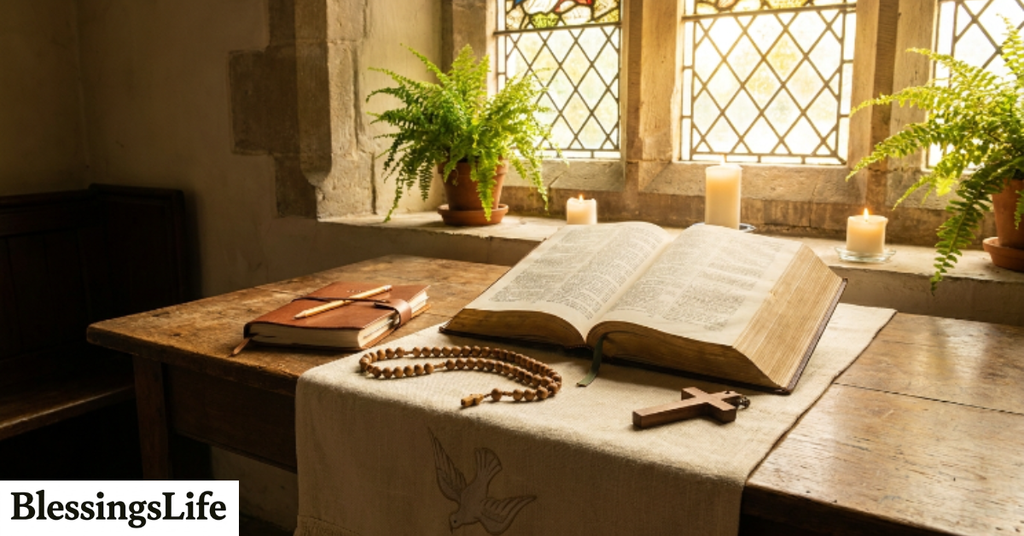
The Sorrowful Mysteries are one of the four sets of mysteries prayed in the Holy Rosary, traditionally recited on Tuesdays and Fridays, and throughout Lent.
They walk through the final hours of Jesus’s earthly life — from the night before His crucifixion to the moment He died on the cross.
But here’s what a lot of people miss on first glance: this isn’t just a historical recap. It’s an invitation.
When you pray the Sorrowful Mysteries, you’re not just remembering what happened to Jesus. You’re placing your own sorrow — your diagnosis, your divorce, your empty chair at the dinner table — right next to His.
That’s the quiet power of this devotion. It doesn’t minimize your pain. It gives it company.
The Five Sorrowful Mysteries, One by One
Let’s slow down and go through each mystery the way you’d walk through a memory with someone you trust.
1. The Agony in the Garden
Picture this: Jesus, hours before His arrest, kneeling alone in the Garden of Gethsemane. He knows what’s coming. He asks God if there’s another way. Sweat falls from Him “like great drops of blood.”
This is the moment before the moment. The dread. The waiting room. The 3 a.m. scroll through your phone when sleep won’t come because tomorrow terrifies you.
Ever sat in a parking lot before a doctor’s appointment, just breathing, trying to find the courage to walk in? That’s Gethsemane. That’s the Agony in the Garden.
What this mystery teaches: It’s okay to feel afraid before the hard thing happens. Even Jesus asked for another way.
2. The Scourging at the Pillar
This mystery is brutal, and it doesn’t try to hide it. Jesus is beaten, mocked, and stripped of dignity before He’s even sentenced.
For anyone who has faced public humiliation, betrayal by people they trusted, or pain inflicted by others simply because they could — this mystery says something important: your suffering is seen, even when it feels senseless.
A woman I once heard speak about her recovery from a difficult marriage said this mystery was the one she prayed most. Not because it was comfortable, but because it was honest about cruelty. It didn’t ask her to explain away what had happened to her.
What this mystery teaches: Suffering inflicted by others is real, and God does not look away from it.
3. The Crowning with Thorns
Here, Jesus is mocked as a fake king — dressed in purple, crowned with thorns, laughed at by soldiers who saw nothing but a joke.
Think about the last time someone laughed at your dream. Your business idea. Your faith. Your choice to keep going when everyone said quit.
This mystery holds space for that particular sting — being mocked for who you are or what you believe.
What this mystery teaches: Being misunderstood or ridiculed doesn’t erase your worth.
4. The Carrying of the Cross
Jesus carries the cross to Calvary — exhausted, wounded, and falling under its weight. Simon of Cyrene is pulled from the crowd to help carry it.
This is, for many people, the most relatable mystery of all. Because most of us aren’t asked to die for our faith. We’re asked to carry something heavy, day after day, without much fanfare. A sick parent. A chronic illness. A job that drains you but pays the bills.
And notice something tender here: Jesus didn’t carry that cross entirely alone. Simon helped Him.
Who’s your Simon? Who has shown up to help carry your weight, even for a mile?
What this mystery teaches: You’re not meant to carry everything by yourself — and it’s not weakness to accept help.
5. The Crucifixion and Death of Jesus
The final mystery. Jesus is nailed to the cross and dies, forgiving those who put Him there.
This is grief at its rawest. If you’ve lost someone — a parent, a child, a marriage, a version of yourself you thought you’d always be — this mystery meets you exactly there.
But it’s not the end of the story. And that’s the quiet promise woven into every sorrowful moment: sorrow is real, but it is not the final word.
What this mystery teaches: Even in death, love and forgiveness have the last say.
A Quotes & Reflections Box for Hard Days
Sometimes you don’t need paragraphs. You just need a line you can hold onto. Here are a few reflections drawn from the Sorrowful Mysteries that people often carry with them:
“Father, if you are willing, take this cup from me; yet not my will, but yours be done.” — Luke 22:42
“Father, forgive them, for they know not what they do.” — Luke 23:34
“By his wounds we are healed.” — Isaiah 53:5
Simon of Cyrene didn’t volunteer — and yet he became part of the story anyway. Sometimes help finds us before we ask for it.
The crown of thorns was meant to mock a king. Instead, it became a symbol of a love that refused to stop, even under ridicule.
Keep one of these close. Write it on a sticky note. Say it in the car before a hard conversation. That’s what these words are for.
How to Pray the Sorrowful Mysteries (Even If You’re New to This)
If you’re new to the Rosary or just rusty, here’s a simple way to begin:
- Start with the Sign of the Cross and the Apostles’ Creed.
- Pray the Our Father, then three Hail Marys for faith, hope, and love, followed by the Glory Be.
- Announce the first mystery (the Agony in the Garden) and briefly reflect on it.
- Pray one Our Father, ten Hail Marys, and one Glory Be while meditating on that scene.
- Repeat for each of the five mysteries.
- Close with the Hail Holy Queen or a prayer of your choosing.
You don’t need a fancy rosary or a quiet cathedral. Kitchen table, car seat, hospital waiting room — all of it counts.
Why People Return to the Sorrowful Mysteries During Suffering
There’s a reason grief counselors, hospice chaplains, and everyday believers keep coming back to this particular devotion, especially during Lent or personal crisis.
It doesn’t rush you toward comfort. It sits in the discomfort first.
Think about it this way: most self-help advice tells you to “stay positive” or “focus on the good.” That’s not always possible when you’re in the thick of it. The Sorrowful Mysteries don’t ask that of you.
Instead, they say: bring your sorrow here. Name it. Sit with it. You are allowed to feel this.
That kind of permission is rare — and it’s healing in its own quiet way.
A hospital chaplain once shared that she encourages patients facing terminal diagnoses to pray these mysteries slowly, one mystery a day if needed. Not to rush toward “healing,” but to feel accompanied in the waiting.
Sorrowful Mysteries and Everyday Life
You don’t have to be facing a major tragedy to find meaning here. These mysteries show up in ordinary Tuesdays too:
- The anxiety before a job interview (Agony in the Garden)
- Being talked over in a meeting, again (Scourging at the Pillar)
- Feeling like a fraud when someone compliments you (Crowning with Thorns)
- The daily grind of caregiving or single parenting (Carrying of the Cross)
- Letting go of a dream that isn’t working out (Crucifixion)
Praying through these mysteries regularly can quietly reshape how you carry your own hard days. Not by removing the weight, but by reminding you that weight has been carried before, by someone who understands.
A Short Story Worth Sitting With
A friend once told me about her grandmother, who prayed the Sorrowful Mysteries every single Friday for over 40 years, without fail. When asked why, she said simply: “Because Fridays remind me that sorrow doesn’t get the last word. Sunday always comes.”
That line has stuck with me for years. Fridays hold the crucifixion. But the story doesn’t end there — Sunday, resurrection, always follows.
Maybe that’s the whole point of the Sorrowful Mysteries. Not to keep you in the sorrow, but to walk you through it, honestly, until you reach the other side.
Bringing It All Together
If you’ve made it this far, maybe you’re going through something heavy right now. Maybe you clicked on this article at 11 p.m. because sleep wasn’t coming and your heart needed something to hold onto.
If that’s you — start with just one mystery tonight. The Agony in the Garden, maybe. Sit with it. Let it say what you can’t quite say yourself.
The Sorrowful Mysteries aren’t a magic fix. They won’t erase what you’re carrying. But they will remind you, gently and repeatedly, that you’re not carrying it alone.
If this reflection helped, consider sharing it with someone who might need it today, or come back and pray along whenever the weight feels heavy again. Sorrow visits everyone eventually — but so, always, does the hope that follows it.
FAQs
What are the five Sorrowful Mysteries of the Rosary?
They are the Agony in the Garden, the Scourging at the Pillar, the Crowning with Thorns, the Carrying of the Cross, and the Crucifixion and Death of Jesus. Each reflects a stage of Christ’s suffering before His death.
What day of the week are the Sorrowful Mysteries prayed?
Traditionally, they’re prayed on Tuesdays and Fridays, and every day during Lent. Many people also turn to them anytime they’re facing grief or hardship, regardless of the day.
Why are the Sorrowful Mysteries important?
They help believers connect their personal suffering to the suffering of Christ, offering comfort, perspective, and a sense of not being alone in pain. They also deepen gratitude for the hope that follows suffering.
How long does it take to pray the Sorrowful Mysteries?
On average, praying all five mysteries takes about 20 to 25 minutes, though this can vary depending on how much time you spend reflecting on each one.
Can beginners pray the Sorrowful Mysteries without a rosary?
Yes. While a physical rosary is traditional, you can pray using your fingers to count, a prayer app, or simply by counting mentally. What matters most is the intention behind the prayer.
What is the spiritual fruit of the Sorrowful Mysteries?
Each mystery is associated with a specific grace, such as sorrow for sin, purity, courage, patience, and perseverance. Reflecting on these fruits can guide how you apply the prayer to daily life.